The FDA Just Opened the Door to Medicines Built for One Person
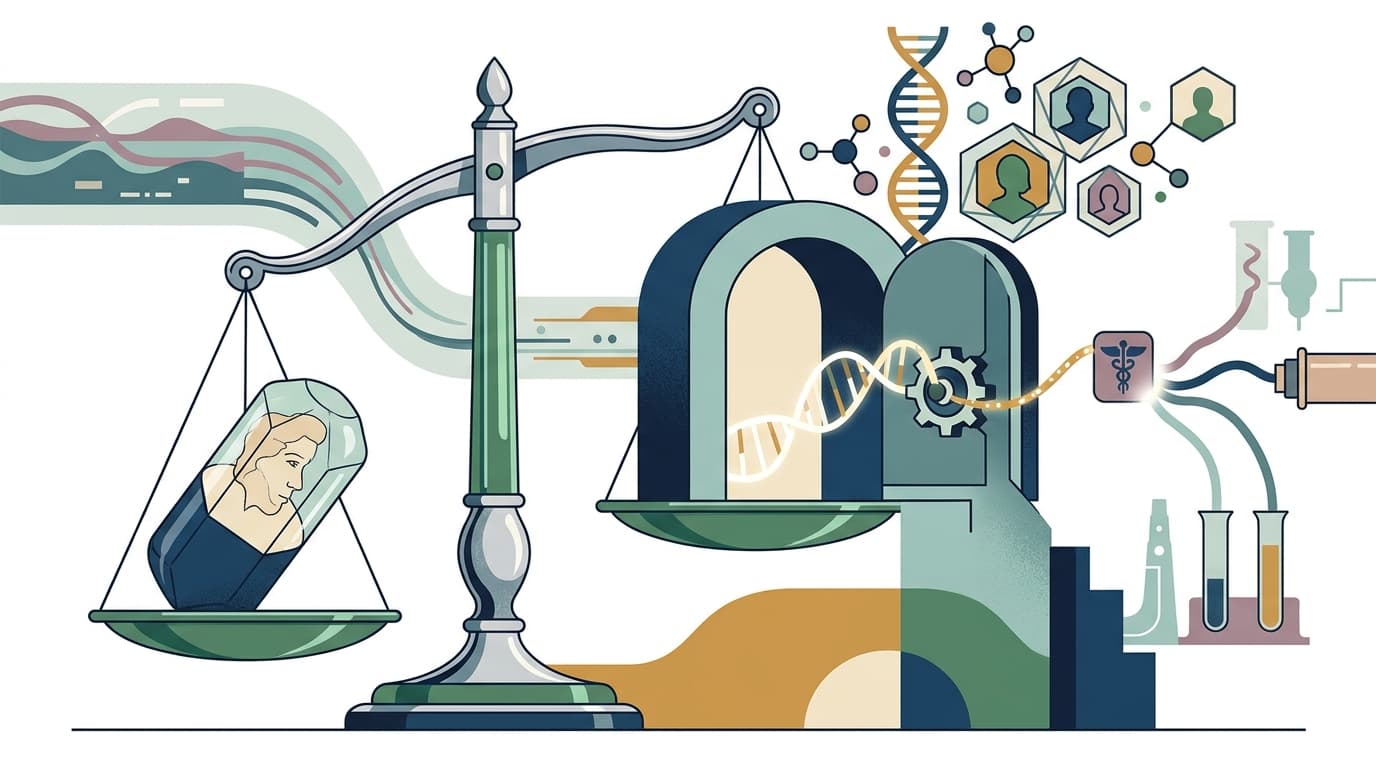
The FDA just built a regulatory highway for gene therapies designed for as few as one patient. It could transform rare disease treatment, but the economics are genuinely terrifying.
Imagine walking into a restaurant where the chef designs an entirely new dish just for you. Not a menu tweak. A meal engineered from scratch based on your biology, your genetics, your one-in-a-billion mutation. Now imagine that restaurant is the FDA, and the dish is a gene therapy.
That's essentially what just happened. The FDA unveiled a regulatory framework for bespoke gene therapies: treatments designed for tiny patient populations, sometimes as small as a single human being. And the agency isn't just opening the door; it's bracing for a stampede. Acting CDER director Tracy Beth Høeg called the guidance "transformational" and expressed optimism about increased industry focus on individualized therapies for rare diseases.
She might be right.
A Pathway That Didn't Exist Before
The core of the new framework is something called the "Plausible Mechanism Framework." In plain English: if you can prove your therapy targets a known genetic cause of disease, and you can show it actually hits that target, the FDA will consider approving it without the massive randomized trials that normally gate every new drug.
This is a big deal because traditional clinical trials require hundreds or thousands of patients. For diseases that affect five people on the planet, that math never works. The new rules let sponsors lean on natural history data (how the disease progresses without treatment), biomarkers, and mechanistic evidence instead.
The framework applies to genome editing tools like CRISPR and RNA-based therapies like antisense oligonucleotides (ASOs), which are short synthetic molecules that can silence or correct faulty genetic instructions. But the FDA left the door open for other technologies too, as long as they meet the core criteria: known genetic cause, therapy that targets it directly, and proof the target is engaged.
The N-Lorem Blueprint
This didn't come out of nowhere. The groundwork traces back to 2021, when the FDA started issuing guidance for individualized ASO therapies after the success of Milasen, a custom-built drug for a single child with a fatal brain disease.
Get tomorrow's biotech intelligence before your competitors.
Join thousands of biotech professionals who start their day with our free, daily briefing.
Since then, a nonprofit called n-Lorem Foundation has been quietly proving the model works. They design one-of-a-kind ASO drugs for patients with "nano-rare" mutations (often affecting just one or two people worldwide) and provide them free, for life. As of early 2026, n-Lorem had filed over 40 INDs with the FDA and was treating more than 30 patients.
The new framework essentially takes what n-Lorem has been doing under investigator-sponsored INDs and builds a broader regulatory highway around it. One that could eventually support commercial approvals, not just compassionate use.
Where the Money Gets Weird
If the science is exciting, the economics are terrifying. Gene therapies already routinely cost $1 to $4 million per dose. At least one therapy has crept toward $4.25 million. For bespoke treatments targeting a handful of patients, traditional pricing math completely breaks down.
Drug development is enormously expensive, with estimates varying widely depending on methodology, and clinical trial success rates are low. Spread those costs across millions of patients and you get expensive but manageable per-dose pricing. Spread it across three patients and, well, you see the problem.
Insurers are already struggling. Health plans run on annual budgets, so a single $3 million gene therapy can blow a hole in a small plan's finances overnight. Medicaid faces even steeper challenges: about 60% of sickle cell disease patients are Medicaid beneficiaries, and state programs often can't absorb large one-time payments. One projection found that a single state Medicaid program could face roughly $30 million per year for a sickle cell gene therapy, even if only 7% of eligible patients got treated.
For bespoke therapies, there's an additional wrinkle. Each treatment may require its own unique vector design, manufacturing run, and regulatory package. There are no economies of scale. The per-patient cost is astronomical even before you set a price.
The "Bespoke Therapy Factory" Bet
Investors and analysts see the framework as a catalyst for a new kind of company: the bespoke therapy factory. The idea is to build a standardized manufacturing platform and regulatory template, then plug in different patient-specific constructs like swapping out cartridges in a printer.
Aurora Therapeutics is already betting on this model. Co-founded by CRISPR pioneer Jennifer Doudna and gene therapy veteran Fyodor Urnov, and led by former Sarepta and Stoke executive Ed Kaye, the company was created specifically to exploit the plausible mechanism pathway.
The strategic logic is appealing: one platform, many micro-indications. Instead of chasing a single blockbuster disease, you build a factory that can serve dozens of ultra-rare conditions. Each new construct reuses your existing CMC data (the chemistry, manufacturing, and controls package), your safety database, and your regulatory playbook.
But the bar is still high. The FDA isn't relaxing scientific rigor; it's compressing late-stage requirements into early-stage trials. Sponsors may get to market with a single clinical study, but that study has to meet standards usually reserved for Phase 3 programs. Robust endpoints, bias controls, and tight manufacturing quality are all non-negotiable.
Post-approval, companies face ongoing obligations too. The FDA can pull products off the market if confirmatory real-world evidence doesn't hold up. Think of it like a provisional driver's license: you can drive, but you're still being watched.
The 15-Year Tail
For genome editing therapies specifically, the FDA recommends at least 15 years of follow-up per patient. That's not a typo. Because CRISPR and similar tools make permanent changes to DNA, regulators want long-term surveillance for off-target edits, chromosomal problems, and cancer risk.
A separate draft guidance now requires sponsors to run comprehensive next-generation sequencing (NGS) analysis to detect unintended edits at non-target sites. That data has to be included in licensing applications.
This is the regulatory equivalent of "measure twice, cut once," except you keep measuring for a decade and a half after the cut.
The Global Chess Match
There's a geopolitical dimension too. Trade analysts note that China has been streamlining its own gene therapy review processes, and the U.S. framework reads partly as a competitive response. FDA and HHS officials have signaled they want to keep early gene therapy innovation anchored domestically.
n-Lorem is already expanding internationally, partnering with the EspeRare Foundation to bring individualized ASO therapies to patients in Switzerland, with plans to scale across Europe.
So What Does This Actually Mean?
The FDA just told the biotech world: if you can build a therapy that targets a proven genetic cause of disease, we'll work with you to get it to patients, even if "patients" means one person. That's genuinely new. The scientific plausibility of your mechanism, not the size of your trial, becomes the centerpiece of your regulatory case.
But the hard problems remain unsolved. Who pays for a drug designed for one person? How do you run a 15-year safety study on a patient population you can count on one hand? How do small biotechs afford the manufacturing infrastructure this demands?
The door is open. Walking through it is another story entirely.
Clinical & Regulatory5 min read
CRISPR Just Got Cleared for Toddlers. Yes, Toddlers.
The FDA just approved a CRISPR gene therapy for kids as young as two, a world first. Casgevy's expansion into toddlers could prevent the silent organ damage that sickle cell disease inflicts from infancy, but delivering a treatment this complex to tiny patients is a whole different challenge.