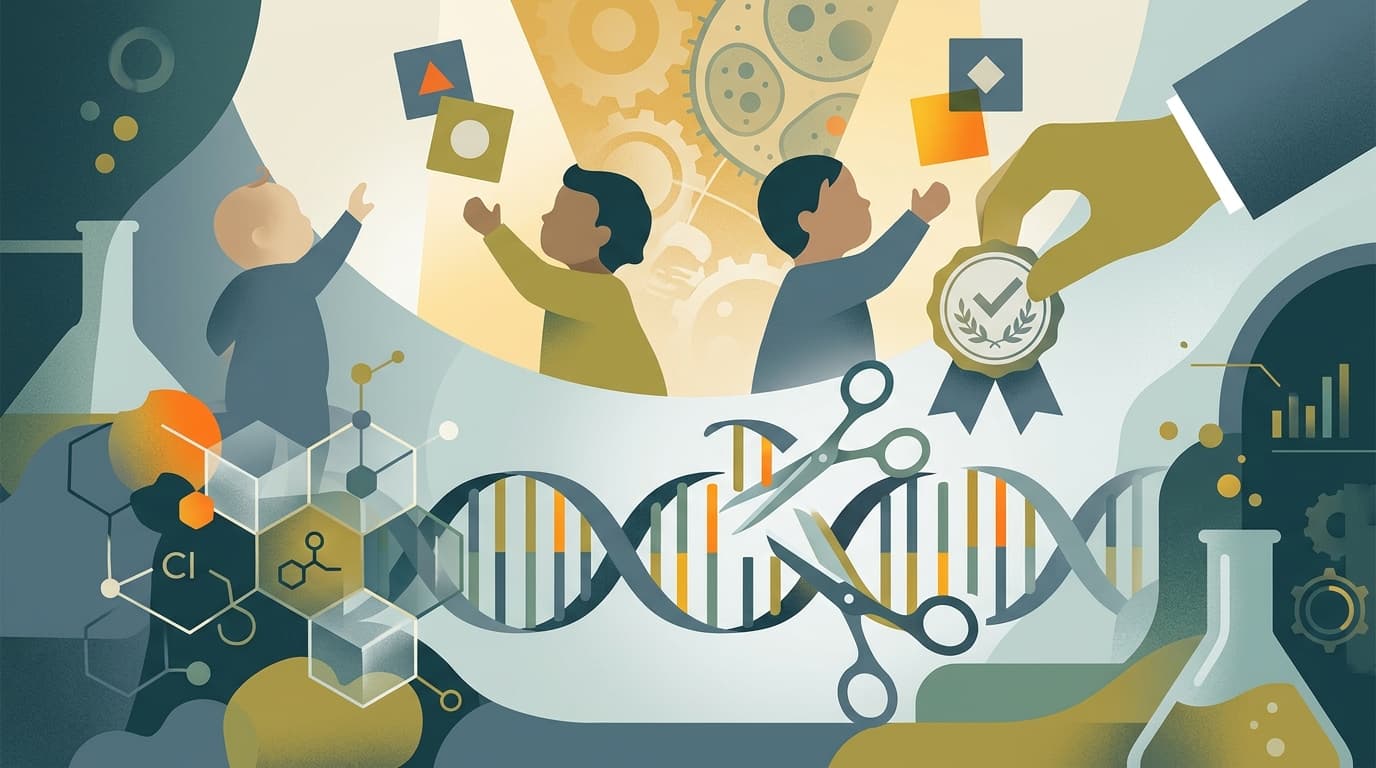

The FDA just approved a CRISPR gene therapy for kids as young as two, a world first. Casgevy's expansion into toddlers could prevent the silent organ damage that sickle cell disease inflicts from infancy, but delivering a treatment this complex to tiny patients is a whole different challenge.
By the time most kids with sickle cell disease blow out their fourth birthday candles, their spleen has already stopped working. Their brain may be quietly losing blood flow. Their kidneys are taking hits they won't feel for years. The damage starts in infancy, long before anyone can see it.
That's why the FDA's latest move matters so much. On July 1, 2026, the agency approved Vertex's CRISPR gene therapy Casgevy for children as young as two years old with sickle cell disease or transfusion-dependent beta-thalassemia. It was previously limited to patients 12 and older. Now, toddlers are eligible.
This is the first time a CRISPR-based medicine has ever been authorized for children this young. Anywhere in the world.
Sickle cell disease is ruthless, and it doesn't wait for adulthood to start doing damage. The disease causes red blood cells to twist into rigid, crescent-shaped forms that clog small blood vessels and starve organs of oxygen. Think of it like trying to push croutons through a coffee straw.
In toddlers, the spleen is the first casualty. Most children with severe sickle cell lose spleen function by age five, leaving them dangerously vulnerable to infections. Before that happens, up to 30% of kids under six can experience acute splenic sequestration, a sudden, life-threatening swelling of the organ.
The brain takes damage early too. Without screening and intervention, roughly 10% of kids with sickle cell will have a stroke. Even those who don't may develop silent learning difficulties and developmental delays from chronic poor blood flow.
Kidneys, lungs, bones, eyes: the list keeps going. By midlife, about 50% of patients have irreversible damage in at least one organ. The cruelest part? Much of that damage accumulates silently during childhood, only showing up clinically years later. Every month without intervention is a month the disease is winning.
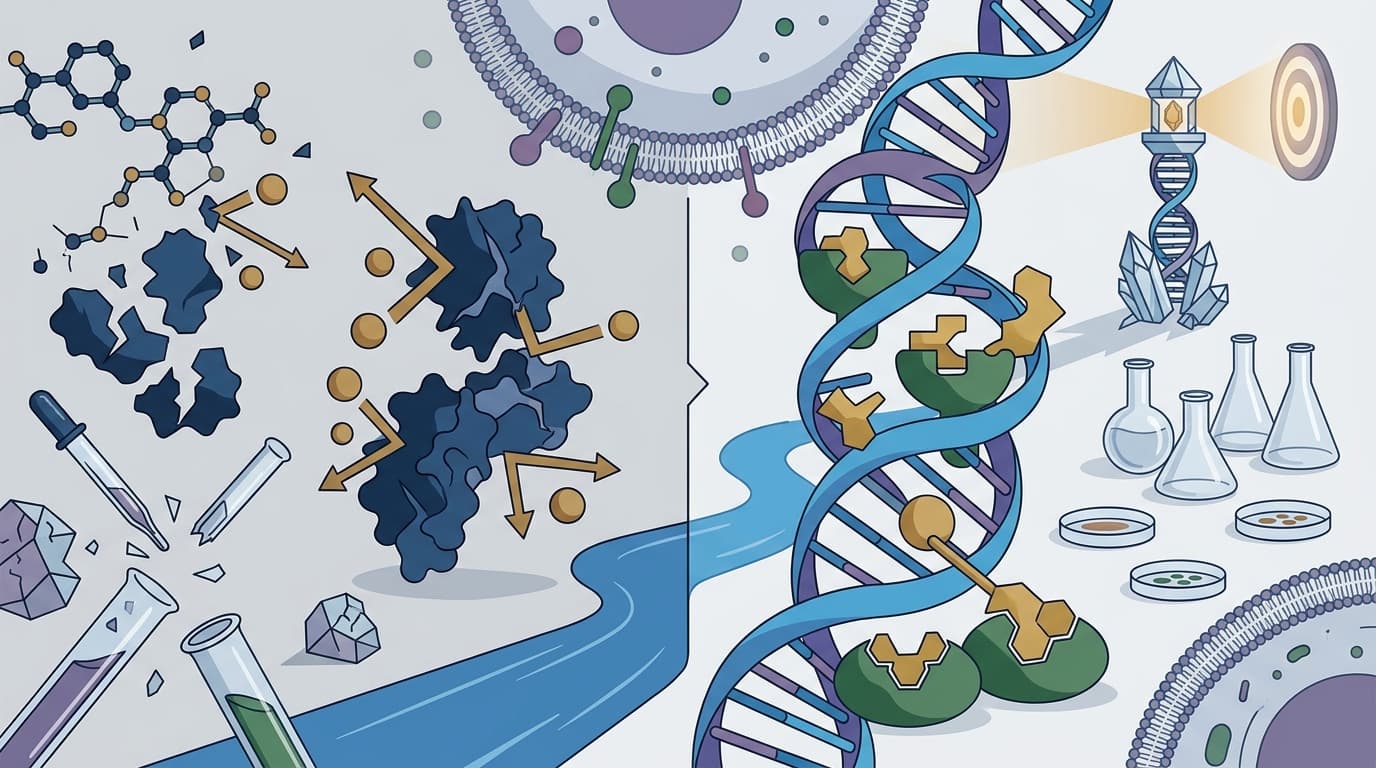
Casgevy works by editing a patient's own blood stem cells using CRISPR/Cas9, the molecular scissors that won a Nobel Prize in 2020. The edit targets a gene called BCL11A, which normally suppresses fetal hemoglobin production after birth. By disabling that genetic switch, the therapy tricks the body into making fetal hemoglobin again, the version of hemoglobin that doesn't sickle.

Eli Lilly's retatrutide just posted the best weight-loss numbers any drug has ever achieved, rivaling bariatric surgery. But its failure to show a clear cardiovascular benefit could limit insurance coverage and hand competitors a surprising edge.


Join thousands of biotech professionals who start their day with our free, daily briefing.

It's a one-time treatment, but the process is anything but simple. Doctors collect the patient's stem cells, edit them in a lab, then give the patient intense chemotherapy (called myeloablative conditioning with busulfan) to wipe out the old bone marrow. Only then are the edited cells infused back. The whole journey from start to finish can take months.
Think of it like renovating a house: you have to tear out the old plumbing before you can install something better.
Vertex ran a Phase 3 trial called CLIMB-151, enrolling children aged 2 to 11 with severe sickle cell. The data that clinched the approval came from 11 children aged 5 to 11 who received Casgevy.
The results were striking. Every single child remained free of painful vaso-occlusive crises (the hallmark emergencies of sickle cell) during follow-up, with the longest crisis-free stretch reaching about two years. Among the eight children tracked long enough to evaluate the primary endpoint, all eight hit it: zero severe crises for at least 12 consecutive months.
Fetal hemoglobin levels rose persistently, matching the pattern seen in older patients. The safety profile looked consistent with what doctors already expected from the conditioning chemotherapy and transplant process, not from the gene edit itself.
One sobering note: across the broader pediatric program (which included beta-thalassemia patients), one child with beta-thalassemia died from hepatic veno-occlusive disease (VOD) caused by the busulfan conditioning, which led to multi-organ failure. That death was attributed to the chemo, not the CRISPR editing, but it's a stark reminder that this treatment carries real procedural risks.
For the youngest group, children aged 2 to 4, the FDA didn't have direct trial data. Instead, the agency used extrapolation: because the disease biology is the same across ages and the therapy works the same way in younger stem cells, regulators concluded it was reasonable to extend the approval downward. The FDA also required 15 years of post-market surveillance to monitor long-term outcomes and watch for any off-target editing effects.
The FDA didn't just approve this; it sprinted. The supplemental application was greenlit in just 53 days, thanks to the Commissioner's National Priority Voucher pilot program. Casgevy also stacked up Orphan Drug, Fast Track, and Regenerative Medicine Advanced Therapy designations.
That speed reflects a broader regulatory philosophy taking shape: for severe childhood diseases where organ damage starts early, the FDA is willing to move fast and use extrapolation when the science supports it. This approval essentially creates a template for how future CRISPR therapies might reach younger patients. Start with adults, prove it works in school-age kids, then extrapolate to toddlers.
Casgevy's clinical story is compelling. Its commercial story is more complicated.
Vertex reported $116 million in Casgevy revenue for all of 2025, with only 64 patients infused over the entire year. For context, the company estimates there are now over 60,000 eligible patients globally across approved regions. The math isn't flattering.
The problem isn't demand exactly; patient starts (people beginning the collection process) tripled from 109 in 2024 to 301 in 2025. The bottleneck is execution. The treatment requires specialized authorized treatment centers, weeks of hospitalization, and harsh conditioning chemo. Patients themselves choose when to schedule infusion, creating wild quarter-to-quarter swings. Q3 2025 revenue dropped 44% from the prior quarter before rebounding to $54 million in Q4.
Vertex is guiding to $500 million or more from non-cystic fibrosis products in 2026, with Casgevy as a major contributor. Analyst estimates for Casgevy specifically range from about $227 million to $344 million for the year. The pediatric expansion adds roughly 5,500 newly eligible children in the U.S. alone, which could help the funnel over time.
But gene therapy isn't like selling a pill. Each patient represents a complex, months-long journey through a limited number of centers. Scaling that is more like opening new restaurant locations than ramping a drug launch.
This approval is bigger than one company or one drug. It establishes that CRISPR gene editing can be used safely enough in toddlers for the FDA to say yes, even without direct trial data in the youngest age group. It proves that extrapolation, a regulatory tool more commonly used for traditional drugs, can work for gene-editing therapies.
For the roughly 100,000 Americans living with sickle cell disease, many of whom are children, this opens a door that was previously locked until age 12. A two-year-old treated today might never experience the organ damage that defined this disease for previous generations.
The science is real. The regulatory path is now charted. The remaining question is whether the healthcare system can actually deliver a treatment this complex to the kids who need it most.
Small cell lung cancer has defeated almost every new drug for decades. GSK and Hansoh's ADC just became the first B7-H3 therapy to show a survival benefit in a phase III trial, and it could reshape one of oncology's most stubborn battlegrounds.