The Cancer That Broke Every Drug That Tried. Until Now.
Small cell lung cancer has defeated almost every new drug for decades. GSK and Hansoh's ADC just became the first B7-H3 therapy to show a survival benefit in a phase III trial, and it could reshape one of oncology's most stubborn battlegrounds.
Small cell lung cancer has a nickname among oncologists: the graveyard of good ideas.
For decades, researchers have thrown everything they have at relapsed SCLC. Targeted therapies, immunotherapy combos, novel chemo regimens. Nearly all of them failed. The few that worked barely moved the needle. Median survival after relapse hovers around five months, a number that has been stubbornly stuck there for years.
So when GSK and its Chinese partner Hansoh Pharma announced that their antibody-drug conjugate (a missile-like drug that delivers chemo directly to cancer cells) beat the old standard in a phase III trial, the oncology world took notice. The drug, called risvutatug rezetecan (mercifully shortened to ris-rez), achieved a statistically significant improvement in overall survival compared to topotecan in patients with advanced or relapsed SCLC.
That sentence sounds routine. It is anything but.
Why This Cancer Breaks Everything
SCLC is the honey badger of cancers. It grows fast, spreads early, and mutates so chaotically that there are almost no clean molecular targets to aim at. Unlike its cousin non-small cell lung cancer (NSCLC), which has specific genetic mutations that drugs can exploit (think EGFR, ALK), SCLC's genomic landscape looks like someone threw a grenade into a filing cabinet.
The tumor initially responds well to platinum-based chemo. Patients feel better. Scans look good. Then, almost inevitably, the cancer roars back with platinum-resistant clones that shrug off treatment like it's nothing.
The track record of drugs in relapsed SCLC tells the whole story. Amrubicin showed promise in Japanese studies, then flopped in a large Western phase III trial against topotecan. EGFR inhibitors, which revolutionized NSCLC? Zero meaningful activity in SCLC. Lurbinectedin got accelerated FDA approval in 2020 based on encouraging phase II data, then its confirmatory phase III trial showed no survival advantage. A systematic review of relapsed SCLC therapies found that 69% of published studies provided low or very-low-quality evidence, and most agents performed no better than topotecan.
Get tomorrow's biotech intelligence before your competitors.
Join thousands of biotech professionals who start their day with our free, daily briefing.
Topotecan, by the way, offers a median survival of roughly six months. That's the bar. And almost nothing has cleared it in decades.
A Guided Missile for a Moving Target
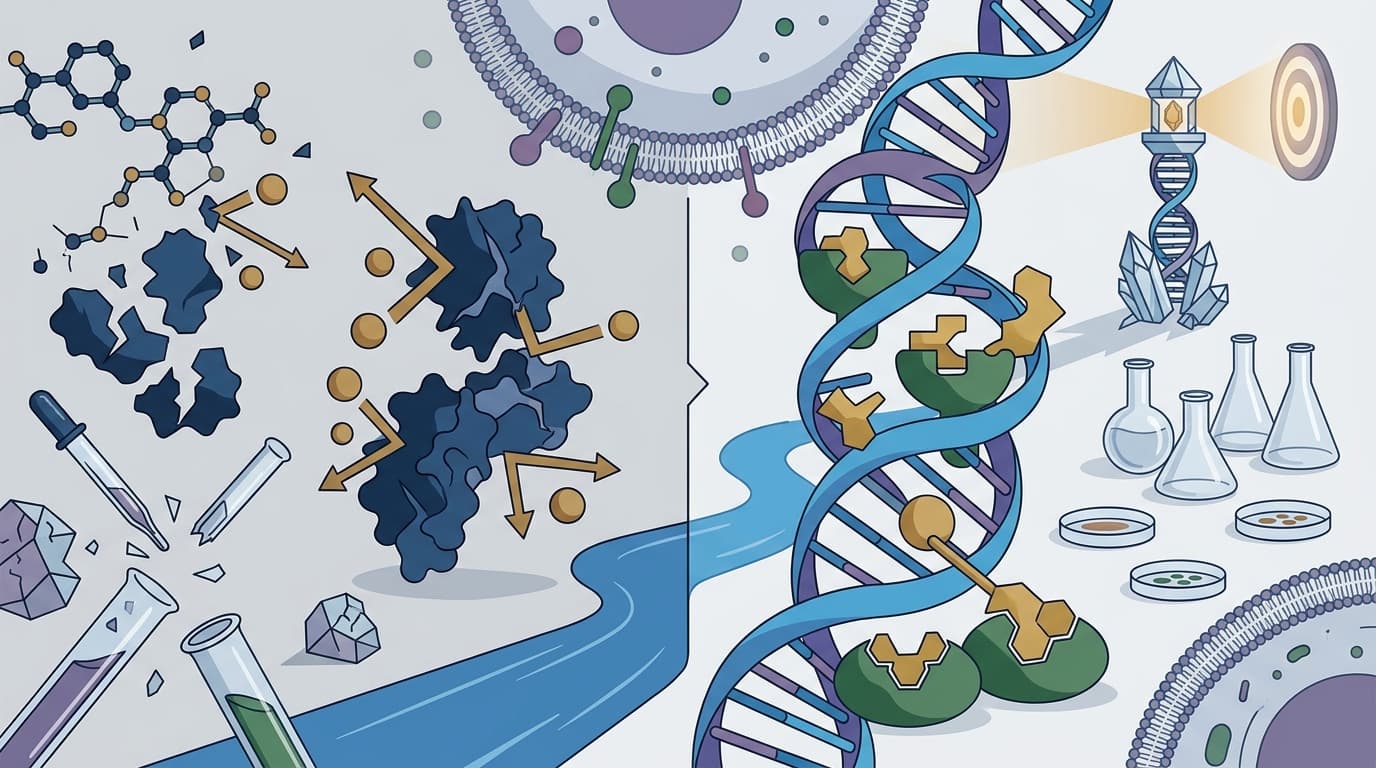
Ris-rez takes a different approach. It's an ADC, which works like a biological smart bomb. Think of it as a delivery truck (the antibody) carrying a package of poison (the chemo payload) with a very specific GPS address (the tumor cell).
The "address" in this case is B7-H3, a protein that sits on the surface of many solid tumors, including SCLC. The antibody locks onto B7-H3, gets swallowed into the cancer cell, and then releases a topoisomerase I inhibitor (a type of chemo that shreds DNA from the inside). The idea is to concentrate the killing power inside tumor cells while sparing healthy tissue.
It's not a new concept; ADCs have been one of oncology's hottest drug classes for years. But pulling it off in SCLC, where so many other approaches have cratered, is what makes this result remarkable.
What the Trial Actually Showed
The phase III study, called ARTEMIS-008, enrolled patients with advanced or relapsed SCLC in China and randomized them to receive either ris-rez or topotecan. The primary endpoint was overall survival: the gold standard in cancer trials, measuring how long patients actually live.
Ris-rez hit it. The trial showed statistically significant and clinically meaningful improvements in overall survival versus topotecan. Progression-free survival (how long patients lived without their cancer getting worse) also showed consistent benefit. The safety profile matched what researchers had seen in earlier studies, with no new red flags.
Now, the caveats. Hansoh hasn't released the actual numbers yet: no median survival figures, no hazard ratios, no Kaplan-Meier curves. Those details will come at a major oncology conference or in a journal publication. We're working with topline data for now, which means the magnitude of benefit remains an open question.
But even without the specifics, the headline result is significant. This is the first positive phase III overall survival result for a B7-H3 ADC in any cancer type. In one of oncology's most notoriously difficult indications, no less.
The Business Side: Who Benefits and How Much?
GSK licensed ris-rez from Hansoh in December 2023 for $185 million upfront, with milestones that could push the total deal value to roughly $1.7 billion. GSK holds exclusive rights everywhere except Greater China, where Hansoh retains control and plans to file for regulatory approval based on ARTEMIS-008.
GSK is already running its own global phase III trial, called EMBOLD SCLC-301, which kicked off in August 2025 with pivotal data expected around 2027. That trial will be the one Wall Street really cares about, since it determines whether ris-rez can win approval in the U.S. and Europe.
Analysts have been cautiously optimistic. The China data validates the B7-H3 target and the ADC platform, which de-risks GSK's broader oncology bet. But SCLC is a smaller market than NSCLC, so near-term revenue expectations are modest. The bigger prize, and the reason GSK paid almost $200 million upfront, is the potential to expand B7-H3 ADCs into other solid tumors like prostate and gastrointestinal cancers.
GSK's stock consensus sits at "HOLD" with about 21 analysts covering the name. The ris-rez news is a positive signal, not a thesis changer. Not yet, anyway.
A Crowded Race With High Stakes
Ris-rez isn't the only new kid on the SCLC block. Tarlatamab, a bispecific T-cell engager from Amgen, earned full FDA approval in 2025 and has quickly become the preferred second-line treatment for relapsed SCLC in the U.S. Meanwhile, ifinatamab deruxtecan (a B7-H3-targeted ADC) holds breakthrough therapy designation and could be next to cross the finish line.
The competitive landscape is shifting fast. One expert predicted that ADCs will eventually push lurbinectedin to third- or fourth-line use, while tarlatamab and ADCs battle it out for second-line dominance. If ris-rez's global trial confirms what ARTEMIS-008 showed, it could carve out a meaningful position in that fight.
The Bottom Line
For a cancer that has humbled nearly every drug thrown at it, a positive survival result is worth celebrating. The full data will determine whether ris-rez is a modest improvement or a genuine leap forward. But in a disease where the bar has barely moved in decades, the simple fact that something finally cleared it matters. A lot.
Clinical & Regulatory5 min read
CRISPR Just Got Cleared for Toddlers. Yes, Toddlers.
The FDA just approved a CRISPR gene therapy for kids as young as two, a world first. Casgevy's expansion into toddlers could prevent the silent organ damage that sickle cell disease inflicts from infancy, but delivering a treatment this complex to tiny patients is a whole different challenge.