The Kidney Drug That Just Graduated From Probation
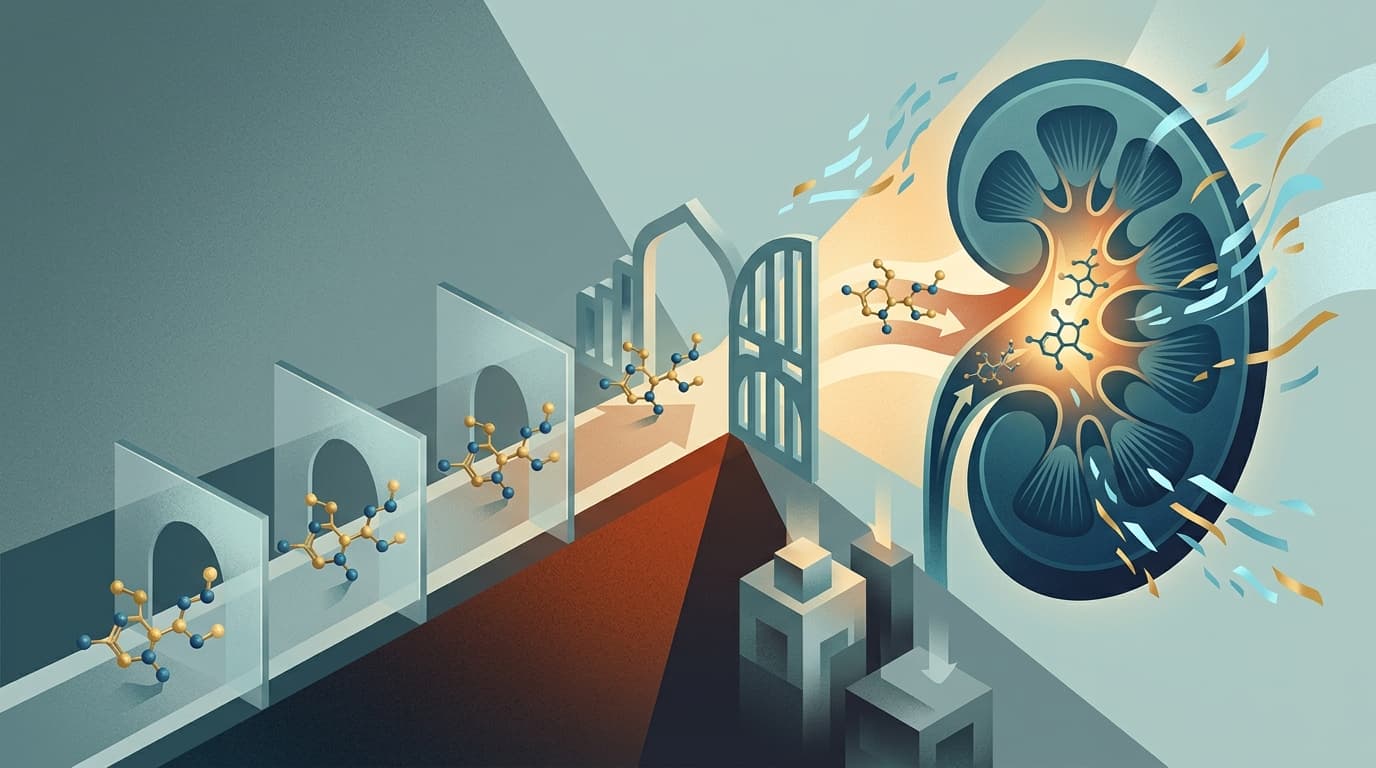
Novartis's Fabhalta just converted its provisional FDA approval into the real thing, becoming the first complement inhibitor proven to protect kidney function in IgA nephropathy. The two-year data that sealed the deal are worth paying attention to.
In August 2024, the FDA gave Novartis a conditional yes. Fabhalta (iptacopan) could go on the market for a common kidney disease called IgA nephropathy, but with a giant asterisk: the agency wasn't sure the drug actually saved kidneys. It only had proof that it reduced protein leaking into the urine, a promising sign but not the real prize. Think of it like hiring someone based on a great interview, with a six-month performance review baked into the contract.
That performance review just came back. And the results were good enough to rip up the contract and offer a permanent position.
From Provisional to Permanent
The Phase III APPLAUSE-IgAN trial delivered strong evidence that Fabhalta slows kidney function decline in adults with primary IgA nephropathy who are at risk of disease progression. That's a meaningful upgrade from its original accelerated approval, which was limited to "reduction of proteinuria" (the protein-in-urine surrogate) and came with an explicit disclaimer: it has not been established whether Fabhalta slows kidney function decline.
Now the data suggest otherwise. For a disease that's the most common form of primary glomerulonephritis worldwide, that's a big deal.
But what exactly made the case so compelling?
The Data That Sealed It
The answer is the Phase III APPLAUSE-IgAN trial, a randomized, placebo-controlled study that tracked patients for two full years. The key metric was eGFR slope, which measures how fast your kidneys are losing their filtering ability over time. Think of eGFR like the odometer on your kidneys; a steeper decline means you're racing toward dialysis.
Patients on Fabhalta lost kidney function at a rate of -3.10 mL/min/1.73 m² per year. The placebo group? -6.12. That translates to a 49.3% slowing of kidney function decline, a gap wide enough to change the trajectory of someone's disease.
The trial didn't stop there. Fabhalta lowered the risk of progressing to kidney failure by 43% compared to placebo. And the proteinuria data that earned the original approval held up beautifully over the long haul: of Fabhalta patients maintained their urine protein below a key threshold for two years, versus just 23.7% on placebo.
Get tomorrow's biotech intelligence before your competitors.
Join thousands of biotech professionals who start their day with our free, daily briefing.
40.7%
Those aren't just statistically significant numbers. They're the difference between a patient who might need a transplant in five years and one who might not.
Why Your Kidneys Attack Themselves (and How Fabhalta Fights Back)
IgA nephropathy is a sneaky disease. Your immune system produces abnormal IgA antibodies that clump together and lodge in the kidney's tiny filters (called glomeruli). Once stuck there, they trigger the complement system, a cascade of immune proteins that's supposed to fight invaders but instead starts shredding your kidney tissue like a paper shredder that can't tell junk mail from tax returns.
Fabhalta targets a specific gear in that shredder: complement Factor B. Factor B is essential for the "alternative pathway" of complement activation, which acts as an amplification loop. Block Factor B, and you interrupt the cycle before it spirals out of control. It's an oral pill, which matters when the alternative is infusions, and it works upstream enough to dampen the whole destructive chain reaction.
The concept of targeting complement in kidney disease has been around for years. But proving it works with hard outcomes data (not just surrogate markers) is what separates theory from standard of care.
A Disease That Was Starving for Options
Until recently, treating IgA nephropathy felt a lot like managing symptoms while hoping for the best. The standard playbook included blood pressure drugs (ACE inhibitors or ARBs), SGLT2 inhibitors, and sometimes steroids, all of which help but none of which directly address the complement-driven damage.
The landscape started shifting around 2022 with targeted-release budesonide (Nefecon/Tarpeyo) and the endothelin receptor antagonist sparsentan. But complement inhibition represents a genuinely different angle of attack, going after the immune amplification loop itself rather than inflammation or blood pressure.
Guidelines from KDIGO now push for aggressive proteinuria targets (below 0.5 g/day, ideally below 0.3) and earlier intervention. Even so, the field still lacks a cure. Every current therapy is about slowing the clock, not stopping it. Fabhalta adds a powerful new tool to that effort, but it's honest about what it is: disease modification, not disease elimination.
Novartis Has the Field to Itself (For Now)
The competitive moat around Fabhalta is real but not permanent. No other complement inhibitor is approved for IgA nephropathy. The closest competitors, including ravulizumab (a C5 antibody), pegcetacoplan (a C3 inhibitor), and a handful of RNA-based therapies targeting Factor B or C3, are mostly stuck in Phase II or early Phase III. None have reported pivotal IgAN data on par with APPLAUSE-IgAN.
That gives Novartis a window of probably two to three years to establish Fabhalta as the go-to complement therapy in IgAN, build real-world evidence, and lock in payer relationships before the next wave arrives.
It's worth noting that Fabhalta already has traditional approval for a blood disorder called paroxysmal nocturnal hemoglobinuria (PNH), granted in December 2023, and approval for C3 glomerulopathy, another rare kidney disease. The IgAN approval rounds out a complement-focused franchise that positions Novartis as the dominant player in this space.
The Fine Print
Fabhalta isn't without caveats. Because it suppresses part of the immune system, it carries a serious risk of infections from encapsulated bacteria (think meningococcal disease). The drug comes with a REMS program requiring specific vaccinations before starting treatment. That adds friction to prescribing and could limit uptake in some patient populations.
There's also the pricing question. Complement inhibitors are historically expensive drugs, and IgA nephropathy is a chronic condition requiring ongoing treatment. How payers respond will shape adoption as much as the clinical data.
The Bigger Picture
Fabhalta's journey from accelerated to traditional approval is a textbook example of how the FDA's two-step system is supposed to work. A promising surrogate endpoint gets a drug to patients faster; hard outcomes data confirms (or denies) the bet. In this case, the bet paid off.
For the roughly millions of people worldwide living with IgA nephropathy, complement inhibition just went from theoretical promise to proven therapy. The kidney drug graduated from probation. Now comes the harder part: making sure the patients who need it can actually get it.
Science & Discovery5 min read
Jennifer Doudna Just Built CRISPR Enzymes That Evolution Never Imagined
Jennifer Doudna's team used AI to design gene-editing enzymes that don't exist in nature, and they work in human cells. The implications for CRISPR's future (and its messy patent landscape) could be enormous.