The $787M Round Designed to Survive a Geopolitical War
Earendil Labs closed a $787 million financing round designed less like a fundraise and more like a geopolitical hedge. With Delaware incorporation, Beijing R&D, a potential Hong Kong IPO, and Sanofi as a strategic backer, the deal offers a blueprint for how biotech might survive the U.S.-China cold war.
Most biotech mega-rounds are about the money. This one is about the map.
Earendil Labs, an AI-powered biologics company, just closed $787 million in private financing. That alone would make headlines. But the real story isn't the dollar figure. It's the architecture behind it: a deal deliberately designed to operate across geopolitical fault lines, hedging against a future where the U.S. and China can't agree on much of anything.
Think of it like building a house with three separate foundations, each in a different country, so that no single earthquake can bring the whole thing down.
A Company With a Passport Collection
Earendil is incorporated in Delaware. Its headquarters are in Beijing. It's exploring a Hong Kong IPO. And its biggest pharma partner, Sanofi, is French.
This isn't accidental. It's strategic origami.
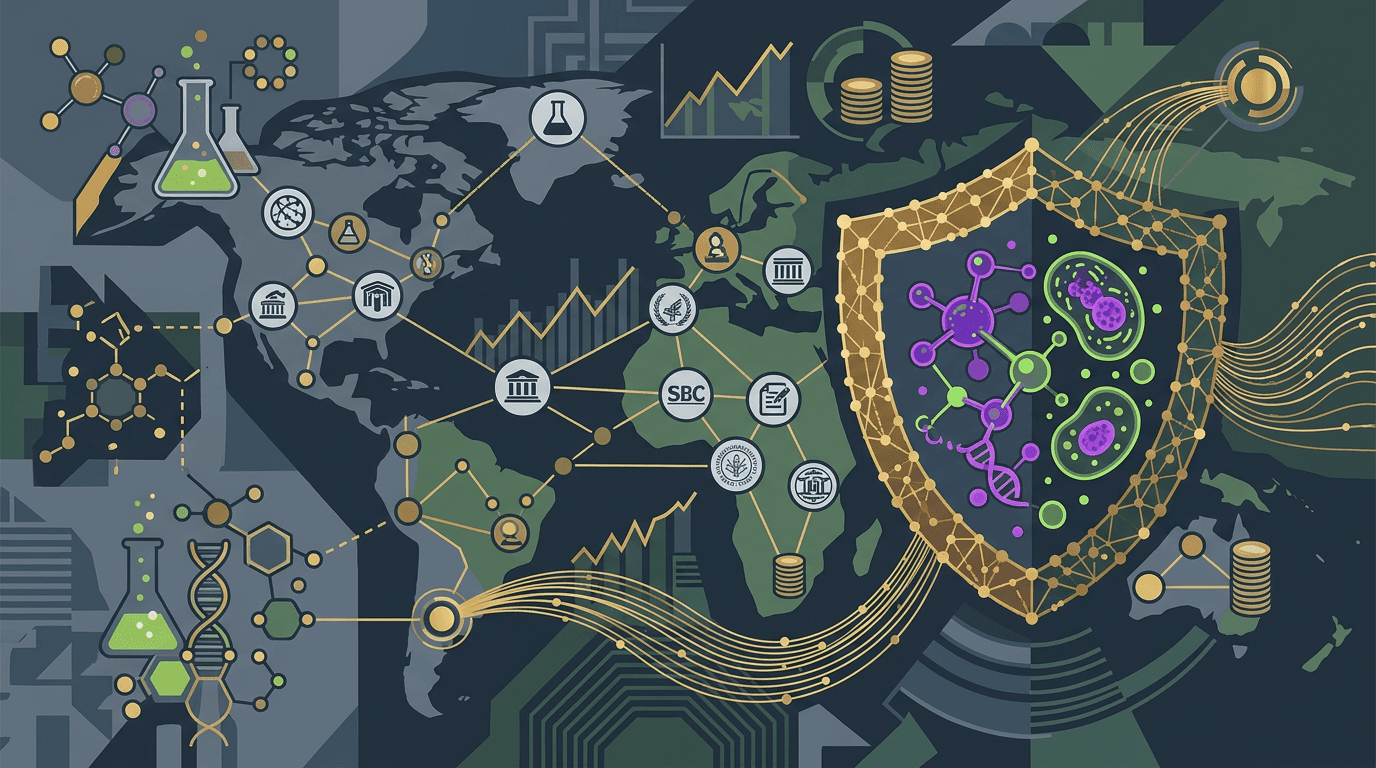
The investor syndicate reads like a United Nations roll call: Dimension Capital and DST Global from the global venture world; INCE Capital, Luminous Ventures, and Miracle Capital from the Asia side; Sanofi representing European pharma; and the Hillhouse-Pfizer Biotech Development Fund bridging East and West. Each investor isn't just writing a check. They're plugging Earendil into a different regulatory, commercial, and capital market ecosystem.
The logic is straightforward, even if the execution is complicated. U.S. law protects the intellectual property. Chinese labs run the R&D at speed and scale. European pharma partnerships open doors to global commercialization. And a potential Hong Kong listing keeps the IPO path open if U.S. capital markets get politicized.
Why the Structure Matters More Than the Money
We're living through a tectonic shift in biotech. The BIOSECURE Act, signed into law as part of the in late 2025, bars federal agencies from buying products or services from designated Chinese "biotechnology companies of concern." It also restricts grants and contracts for companies that rely on those firms in their supply chains.
Get tomorrow's biotech intelligence before your competitors.
Join thousands of biotech professionals who start their day with our free, daily briefing.
FY 2026 NDAA
For most biotechs, this creates a binary choice: stay in the U.S. orbit or operate in China's. Earendil is betting it can do both.
As the Delaware-incorporated overseas affiliate of Helixon Therapeutics, the China-based parent entity, the company keeps more control over its supply chain. If regulators tighten restrictions on a specific vendor, Earendil can rewire. If U.S. exchanges become hostile to companies with Chinese operations, there's a Hong Kong listing waiting in the wings.
It's the corporate equivalent of keeping exits on every side of the building.
The Biotech Cold War Nobody's Talking About
The numbers tell a dramatic story about how fast the landscape is shifting.
China now originates roughly 30% of the world's R&D pipeline. In 2025, Chinese companies surpassed the U.S. in blockbuster deal origination, notching 35 deals worth $1 billion or more compared to roughly 33 for American firms. Chinese out-licensing value hit $135.7 billion last year, more than double what it was in 2024.
Meanwhile, the U.S. still captures about two-thirds of all global biotech venture capital. It remains the place where money lives. But China is increasingly where the science lives.
This creates an awkward dependency. American pharma needs Chinese innovation. Chinese biotechs need American (and European) capital and market access. And both governments keep building higher walls between them.
Europe, for its part, is quietly losing ground. UK biotech funding dropped 51% from Q1 2025 to Q1 2026. The capital that used to flow to London and Zurich is getting pulled toward Boston, San Francisco, and Shanghai instead.
What Earendil Actually Does (Besides Geopolitical Chess)
Beneath the structural gymnastics is a real biotech company with real drugs.
Earendil uses AI to design antibodies and other protein-based therapies (biologics) for autoimmune diseases and cancer. The platform has generated over 40 therapeutic programs so far. Its lead drug, an antibody called HXN-1001 that targets a protein called TL1A, is ready for Phase 2 testing in inflammatory bowel disease.
The Sanofi relationship goes deeper than just an equity investment. In January 2026, the two companies signed a collaboration worth up to $2.56 billion in potential milestones, focused on next-generation bispecific antibodies (drugs that can grab two different targets at once) for autoimmune and inflammatory conditions. Sanofi also licensed two of Earendil's bispecific candidates, HXN-1002 and HXN-1003, for worldwide development.
As Dimension Capital's Zavain Dar put it, the company stands out for its ability to "translate AI innovation into real, scalable R&D execution" and "consistently generate high-quality biologics programs." In other words, this isn't another AI shop selling PowerPoint slides. It's generating actual drug candidates at industrial speed.
The Mega-Round Arms Race
Earendil's $787 million is massive, but it's part of a broader pattern. Biotech financing in 2025 and 2026 has been defined by a strange paradox: fewer deals, but bigger checks.
In 2025, Kailera Therapeutics raised $600 million for its obesity program. Isomorphic Labs pulled in roughly $600 million in the UK. Eight private rounds cleared the $300 million mark that year. Early 2026 has continued the trend, with NewLimit raising $435 million and Parabilis Medicines closing at $305 million.
But deal counts are falling. U.S. biotech round counts hit a five-year low in early 2026, according to S&P Global. Seed-stage funding dropped 59%. The median round size jumped from $20.6 million to $32.8 million, meaning fewer companies are getting funded, but the winners are getting funded big.
It's a winner-take-most market. And Earendil just took a lot.
The Template for What Comes Next
The most interesting question about Earendil's deal isn't whether the company will succeed. It's whether this multi-jurisdictional, geopolitically hedged model becomes the default for ambitious biotechs.
The old playbook was simple: incorporate in Delaware, raise in Boston or San Francisco, list on Nasdaq. That worked when biotech was mostly an American game. It doesn't work as well when your best scientists might be in Beijing, your cheapest manufacturing is in Wuhan, and your biggest licensing partner is in Paris.
Earendil is testing a new playbook. If it works, expect every serious biotech with cross-border ambitions to study the blueprint. If it doesn't, the industry will learn exactly where the geopolitical fault lines crack first.
Either way, the $787 million bet is placed. Now we watch the tectonic plates move.
5 min read
The First Chinese Anesthetic to Crack the FDA
A Chinese pharma company just got FDA approval for a novel anesthetic that could chip away at propofol's 35-year reign. It's the first China-originated IV anesthetic to crack the U.S. market, and the implications go way beyond the operating room.