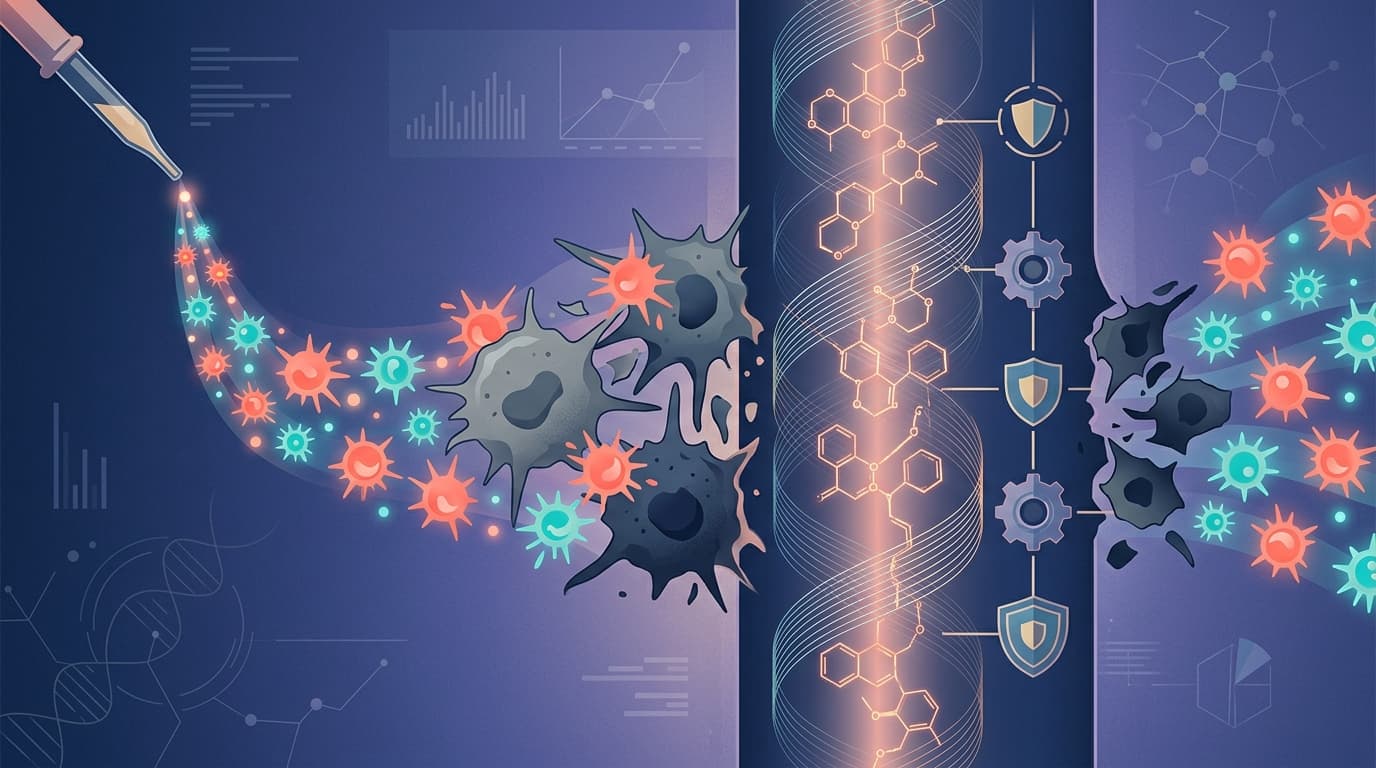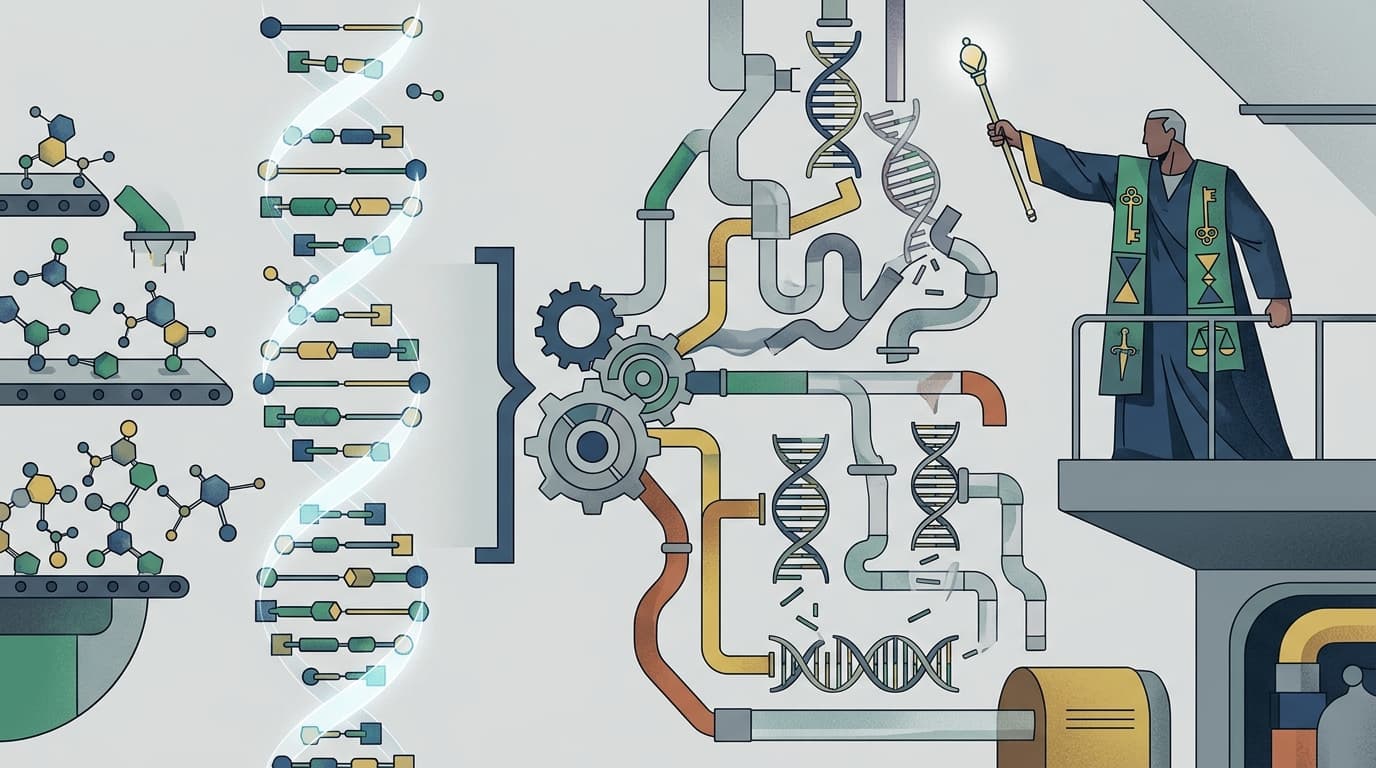

The FDA just told gene therapy developers they can stop rebuilding the same data packages from scratch. Two new draft guidances could reshape how genome-editing therapies and cancer biologics reach patients, but the real winners might surprise you.
Imagine you're a chef opening your fifth restaurant. Every time, the health inspector makes you prove from scratch that you know how to boil water. That's basically what gene therapy developers have been dealing with at the FDA: rebuilding massive data packages for every new product, even when the underlying technology is nearly identical to something they've already proven works.
The FDA just said: enough.
On June 2, the agency released a draft guidance that formally encourages sponsors of genome-editing gene therapies to reuse prior knowledge across their programs. We're talking about CMC data (chemistry, manufacturing, and controls: the stuff that proves your product is made correctly), nonclinical safety results, and even clinical information from earlier programs.
The idea is simple. If you've already shown that your editing platform, your delivery vehicle, and your manufacturing process are safe and well-understood, you shouldn't have to generate all that evidence again for your next product. You can build a scientific bridge between programs instead.
This isn't a free pass, though. FDA requires a clear scientific rationale for every piece of reused data. Think of it less like copying someone's homework and more like citing your own published research. You still have to explain why it applies.
Cell and gene therapy timelines are brutal. And the bottleneck often isn't the science; it's the manufacturing paperwork. Delays in FDA submissions frequently trace back to manufacturing and quality deficiencies, not safety or efficacy concerns. Vector supply constraints, potency tests that take forever to develop, and the nightmare of proving consistency when you scale up production: these are the things that keep regulatory teams up at night.
Now picture a company like Intellia Therapeutics running multiple in vivo editing programs. Under the old approach, each program needed its own full data package, even if the delivery system, the manufacturing process, and the analytical methods were virtually identical across all of them. That's not caution; it's redundancy.

Moderna and Merck's personalized mRNA cancer vaccine just posted three-year data in melanoma that are turning heads across oncology. The benefit isn't fading; it's getting stronger, and the phase 3 is fully enrolled.


Join thousands of biotech professionals who start their day with our free, daily briefing.

The new guidance flips that logic. Validated platforms become regulatory building blocks. A company that invests heavily in characterizing its core technology once can amortize that investment across every subsequent program. It's the difference between building a house from scratch each time and using a proven blueprint.
The genome-editing guidance wasn't the only news. FDA also released a separate draft guidance on streamlining nonclinical safety studies for certain oncology biologics, and this one is arguably even bolder.
For certain cancer biologics (checkpoint inhibitors like PD-1/PD-L1 antibodies, CD3 bispecific T-cell engagers, and antibody-drug conjugates with cytotoxic payloads), the FDA is saying sponsors can skip the traditional three-month animal toxicology study in many cases. Instead, they can submit a "weight-of-evidence" risk assessment that draws on class experience, mechanistic understanding, and newer lab methods.
The reasoning? FDA's own internal analyses found that results from a second animal species rarely changed the overall safety conclusions for many of these biologics. Three-month studies for checkpoint inhibitors and T-cell engagers almost never revealed new toxicities that shorter studies hadn't already flagged.
So the agency is letting science replace ritual. If you're developing a PD-L1 antibody and decades of class experience already tell us what the safety profile looks like, running another three-month monkey study isn't protecting patients. It's just killing monkeys.
This is where the competitive dynamics get interesting. The guidance disproportionately benefits companies with mature, multi-asset platforms. If you're Intellia with a standardized lipid nanoparticle delivery system, or Beam Therapeutics with a base-editing architecture used across several programs, you now have a regulatory incentive to invest even deeper in platform characterization. Every dollar spent on comprehensive safety and manufacturing data for your core technology pays dividends across your entire pipeline.
Smaller biotechs and academic spinouts? They might find themselves in a trickier spot. Without an extensive platform history, it's harder to claim the efficiencies the guidance describes. A single-asset company can't really leverage "platform knowledge" when the platform is the asset. This could push smaller players toward licensing deals and partnerships with established platform owners, reinforcing a trend already visible in gene-editing M&A.
The guidance also creates an interesting incentive around data sharing. FDA explicitly encourages using publicly available information (published studies, shared datasets from consortia) as part of the prior-knowledge package. That's a subtle but powerful signal: precompetitive data sharing now has direct regulatory value. Academic consortia publishing standardized off-target profiles for common editing systems aren't just doing good science; they're building regulatory assets the entire field can use.
Several open questions will likely dominate the comment period. How far can you stretch a platform claim before FDA says, "That's a different product, start over"? If you switch from nuclease editing to base editing, is that still the same platform? What about moving from an ex vivo approach (editing cells outside the body) to in vivo delivery (editing inside a patient)?
FDA will also need to clarify what counts as "reliable" public knowledge. A peer-reviewed Nature paper is one thing; a preprint with limited reproducibility data is another. And for first-in-class programs where no prior platform exists, the guidance doesn't offer much relief. You still need the full package.
Zoom out and you can see a pattern. The platform technology designation program (created by Congress in 2022, first applied to Sarepta's AAV platform, later granted to Krystal Biotech's HSV platform) was the opening move. The streamlined oncology tox guidance and the genome-editing knowledge-sharing framework are the next steps.
FDA is building toward a learning-health-system model for advanced therapies, where data from early programs continuously refine expectations for later ones. It's the regulatory equivalent of compound interest: the more the field learns, the faster and cheaper development becomes for everyone.
For an industry where a single gene therapy can cost over a billion dollars to develop, that's not just a nice policy update. It might be the difference between a pipeline that's economically viable and one that never makes it out of the lab.
A Chinese pharma company just got FDA approval for a novel anesthetic that could chip away at propofol's 35-year reign. It's the first China-originated IV anesthetic to crack the U.S. market, and the implications go way beyond the operating room.