
Crystalys just raised $130M to bring a gout drug already approved in five Asian countries to the U.S. With a competing therapy just rejected by the FDA and millions of American patients stuck with limited options, the timing couldn't be better.
More than 2.2 million patients in Asia have already taken this pill. It's approved in multiple countries. And yet, if you're an American with uncontrolled gout, you can't get it.
That's about to change. Crystalys Therapeutics just closed a $130 million Series B to push dotinurad, a once-daily gout tablet, through U.S. Phase 3 trials. The round was oversubscribed, led by Frazier Life Sciences, and backed by more than 20 investment firms. For a single-drug company chasing a disease most people associate with medieval kings, that's a lot of conviction.
So what makes investors this excited about a gout pill?
Dotinurad is a selective URAT1 inhibitor. In plain English: it blocks a kidney protein that normally recycles uric acid back into your blood. Block that protein, and uric acid gets flushed out through urine instead of building up in your joints.
Think of it like unclogging a drain. Most gout drugs (allopurinol, febuxostat) work by reducing how much uric acid your body produces. Dotinurad takes the opposite approach: it helps your body get rid of what's already there.
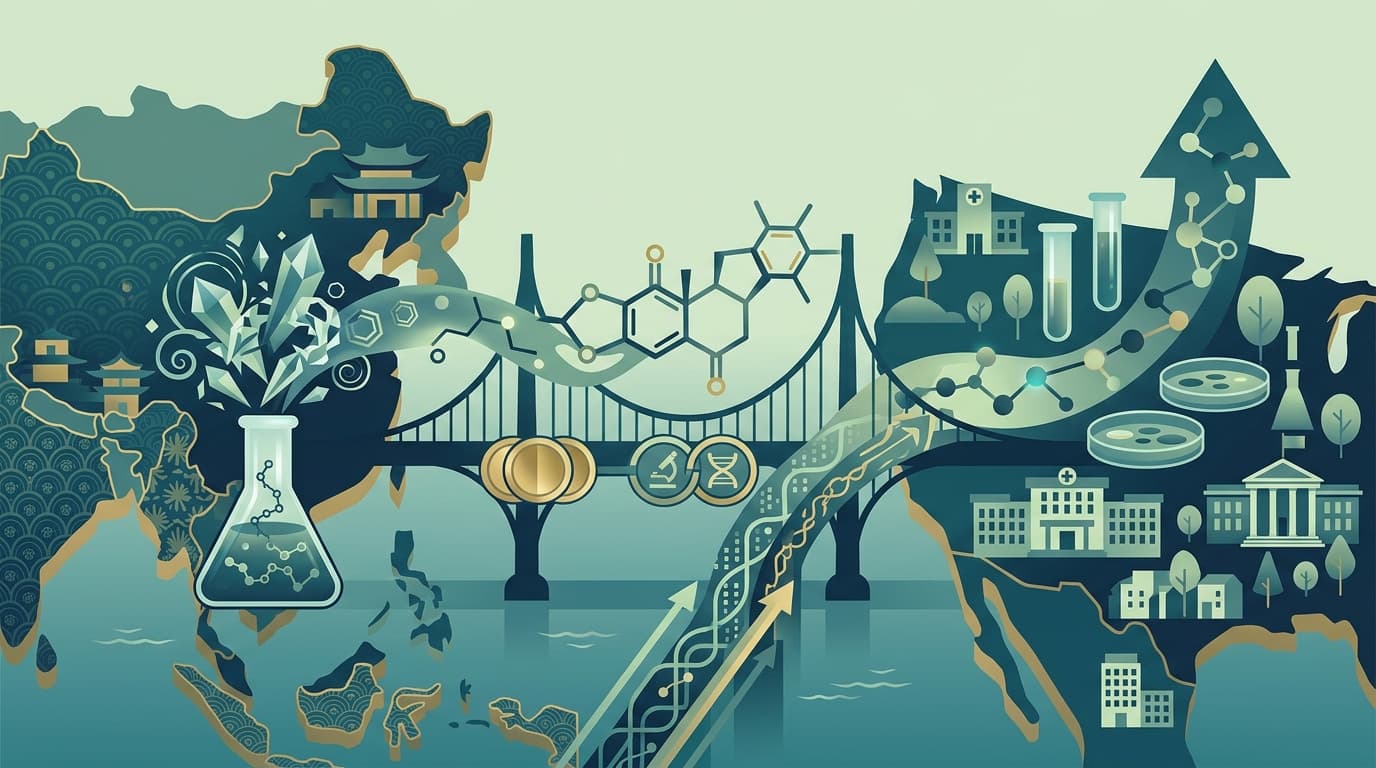
The drug was originally invented by Japan's Fuji Yakuhin and first hit the market in Japan in 2020. Since then, it's been approved in China, the Philippines, and Thailand. It's been prescribed to over 2.2 million patients across Asia under the brand name Urece. That's a real-world track record most Phase 3 candidates can only dream about.
Crystalys isn't starting from zero. It's picking up a proven compound and running it through the FDA's gauntlet, positioning dotinurad as a second-line therapy for patients who don't respond well to first-line treatments.
Gout sounds quaint until you look at the numbers. About 9 million Americans have the disease, and roughly 40% of them are poorly controlled. That's 3 to 4 million people still dealing with excruciating flares, swollen joints, and urate crystal deposits called tophi, even after treatment.

Leqembi just became the first Alzheimer's drug you can take entirely at home, from first dose to last. With nine-month clinic waitlists and infusion-center bottlenecks choking patient access, this FDA approval could reshape who actually gets treated.


Join thousands of biotech professionals who start their day with our free, daily briefing.

These patients aren't just uncomfortable. They're expensive. Total U.S. gout-related costs run north of $20 billion annually, and uncontrolled patients cost more than 1.3 times what controlled patients do. They visit the ER more (55% vs. 38% for controlled patients) and get hospitalized more often.
The treatment ladder for gout in America looks surprisingly bare. Step one is oral drugs like allopurinol. Step two? There's basically a gap. Step three, for the most refractory cases, is Amgen's Krystexxa, an IV infusion that costs a fortune and comes with immunogenicity headaches.
Dotinurad is designed to fill that gap: an oral, once-daily pill slotting in between the generics and the infusion. That's a massive addressable market with almost no competition.
The timing of Crystalys' raise is almost suspiciously good. Just recently, the FDA slapped a Complete Response Letter on Sobi's NASP, a combination biologic that was supposed to challenge Krystexxa as only the second approved therapy for uncontrolled gout.
The rejection wasn't about whether NASP worked (both pivotal trials hit their primary endpoints). It was about manufacturing problems, specifically deficiencies at contract manufacturing facilities and issues with the production control strategy for its biologic component. No new clinical trials were requested, but no approval was granted either.
For Sobi, the CRL means an indefinite delay on a product projected to hit $410 to $620 million in peak sales. For Krystexxa, it means its monopoly in refractory gout stays intact, at least for now.
And for Crystalys? It means the competitive landscape just got a little emptier. While Sobi sorts out its factory problems and Krystexxa remains the only advanced option, dotinurad is marching toward Phase 3 data with a completely different profile: oral, not infused; daily pill, not monthly appointment; and a mechanism that sidesteps the immunogenicity issues plaguing biologic uricases entirely.
Crystalys isn't some garage startup. The company was co-founded by Catalys Pacific and Novo Holdings, and its leadership reads like a gout drug all-star team.
CEO James Mackay has over 40 years in biotech and six drug approvals on his résumé, including a stint leading Ardea Biosciences (which developed lesinurad, one of the few uricosurics that's made it to market). Chief Medical Officer Nihar Bhakta helped lead the team behind the most recent small-molecule FDA and EU approvals for hyperuricemia with gout. The board even added Tim Walbert, former CEO of Horizon Therapeutics (the company that originally commercialized Krystexxa), as an independent director.
These are people who know the gout market inside and out.
Bringing a foreign-approved drug to the U.S. isn't a simple copy-paste job. The FDA can accept foreign clinical data if trials were conducted under Good Clinical Practice standards and the results are relevant to American patients. But "relevant" is where things get tricky.
U.S. gout patients tend to have higher rates of obesity, cardiovascular disease, and chronic kidney disease compared to Asian populations. That means the FDA will almost certainly want to see Phase 3 data from trials that include enough American patients to prove dotinurad works in this population, too.
Crystalys is running two global Phase 3 studies (called RUBY and TOPAZ) designed to meet exactly these requirements. The $130 million, stacked on top of last year's $205 million Series A, gives the company a combined war chest of $335 million to get across the finish line.
Crystalys is making a bet that the fastest path to a blockbuster isn't inventing something new; it's bringing something proven to a market that desperately needs it. Dotinurad has years of real-world data from over two million patients, a mechanism that fills a genuine gap in U.S. gout care, and a competitive landscape that just lost its most promising challenger.
With $335 million in total funding, a seasoned leadership team, and a regulatory strategy built on existing clinical evidence, Crystalys has assembled a compelling hand. The question now is whether the FDA sees an Asian success story as good enough proof for American patients, or whether it demands more.
For the roughly 4 million Americans stuck in gout purgatory between generic pills and expensive infusions, the answer matters a lot.
J&J's OTTAVA just became the first table-integrated surgical robot to earn FDA authorization, creating an entirely new device category. After a decade of delays, billion-dollar lawsuits, and a $900 million write-down, the fight for Intuitive Surgical's robotic surgery throne just got real.