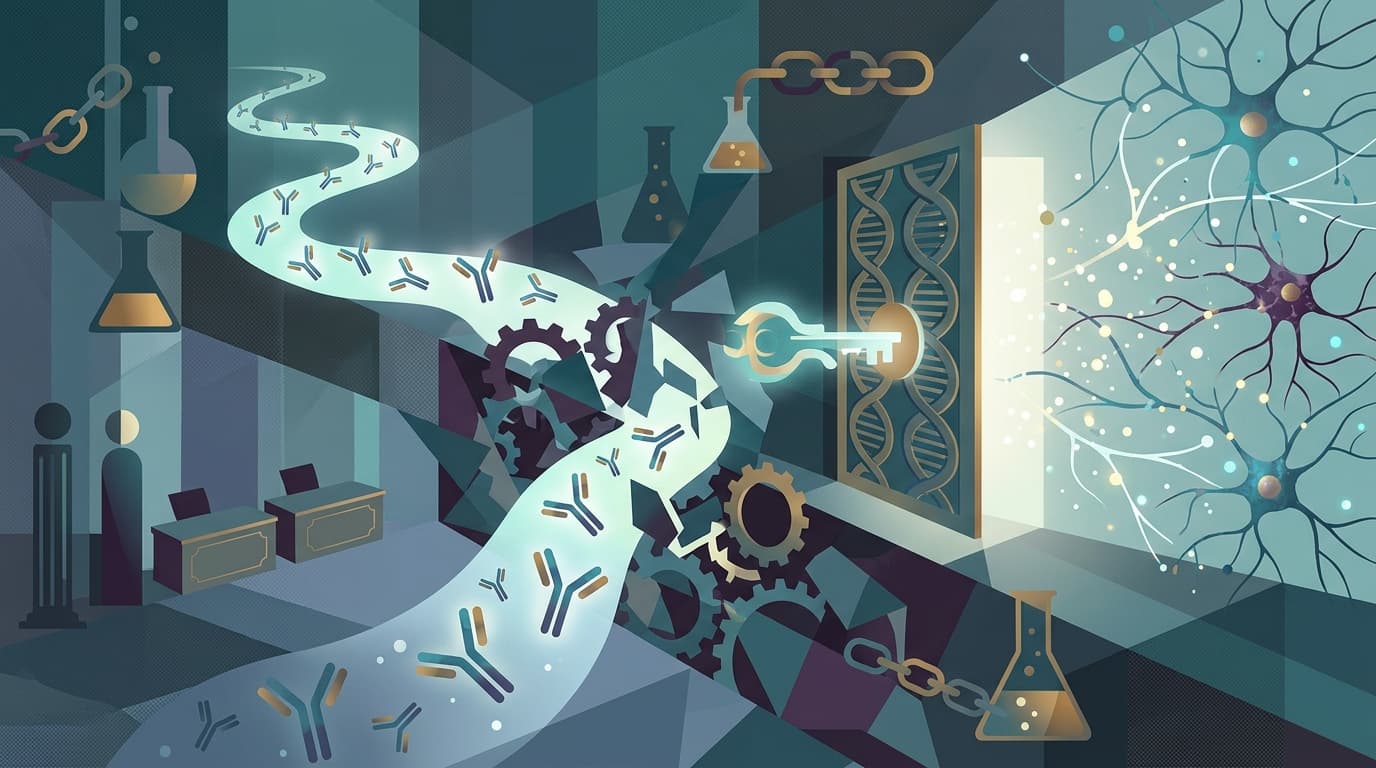
Uncle Sam Just Bet $160M That Gene Therapy Can Work Like Software
ARPA-H just dropped $160 million on seven teams racing to make gene therapy work like a software platform: swap one piece of code, treat a whole new disease. If the aggressive timelines and novel regulatory models pan out, it could reshape how we think about curing the rarest genetic conditions.
Imagine you could treat a rare genetic disease the same way a developer ships a software update: swap one line of code, keep the rest of the system intact, push it live. That's the audacious vision behind a massive new bet from the U.S. government.
ARPA-H, the Pentagon-style health research agency created in 2022, just committed up to $160 million over five years to a program called THRIVE. The acronym stands for "Treating Hereditary Rare Diseases with In Vivo Precision Genetic Medicines," but the ambition is simpler than the name: build genetic medicine platforms so modular that creating a new therapy for a new disease is more like changing a playlist than recording a whole album.
Seven Teams, One Moonshot Goal
THRIVE isn't handing a single lab a giant check. It's funding seven research teams across the country, each tackling a different slice of pediatric rare disease. The roster reads like a biotech all-star lineup.
Children's Hospital of Philadelphia is building a precision platform for metabolic and blood disorders, including urea cycle disorders and hemophilia A. UC Berkeley's Innovative Genomics Institute is going after life-threatening immune deficiencies with in vivo gene editing. St. Jude is targeting bone marrow failure. The Broad Institute (with partners including The Jackson Laboratory) is developing a gene editing platform for pediatric epilepsies like Dravet syndrome.
Then there's GEMMABio working with Profluent Bio on AI-driven modular gene editors. Massachusetts General Hospital is pioneering non-viral delivery for rare blood vessel diseases. And Stanford is developing a topical gene-editing approach for epidermolysis bullosa, a devastating genetic skin condition.
That's a lot of different diseases. And that's the whole point.
Why "Platform" Is the Magic Word
Traditional gene therapy works like a bespoke suit: custom-built for one disease, painstakingly measured, absurdly expensive. THRIVE wants to turn that model into something closer to a modular wardrobe. Keep the jacket (the delivery system), keep the fabric (the editing machinery), and just swap the buttons (the specific genetic instructions) for each new patient or disease.
Get tomorrow's biotech intelligence before your competitors.
Join thousands of biotech professionals who start their day with our free, daily briefing.
In technical terms, the most advanced versions of this approach use a standardized delivery vehicle (often a lipid nanoparticle, basically a tiny fat bubble that ferries genetic cargo into cells) paired with a programmable payload like a CRISPR guide RNA. Change the guide RNA sequence, and you can target an entirely different mutation while reusing everything else.
That reusability is what makes the economics potentially work. Right now, developing a gene therapy for an ultra-rare condition affecting a handful of kids is brutally expensive. Projected U.S. spending on gene therapies is expected to hit roughly $25.3 billion by 2026, but most of that money chases larger patient populations. Kids with one-in-a-million mutations get left behind because the traditional one-drug-one-disease model can't justify the cost.
Platforms flip that equation. If 90% of the development work carries over from one therapy to the next, suddenly treating 50 patients isn't an economic dead end; it's a viable product.
The Timeline Is Aggressive (On Purpose)
ARPA-H isn't writing blank checks and hoping for the best. The funding is milestone-based, meaning teams only get paid when they hit specific targets. And those targets are deliberately intense.
Year one: demonstrate a gene-editing platform capable of generating multiple drug products with similar safety profiles. Year three: start dosing actual patients in first-in-human trials. Year five: expand into umbrella clinical trials covering additional products and diseases.
That year-three deadline is the real pressure cooker. Most academic gene therapy programs take far longer to reach the clinic. ARPA-H is essentially telling these teams: the science is ready, stop polishing it in the lab and get it into patients.
The umbrella trial requirement is equally significant. Instead of filing a separate application for every single personalized therapy, teams will test multiple products under one overarching clinical trial protocol. Think of it as a Netflix series with different episodes (therapies) that all share the same production team (platform), rather than making a whole new movie for each patient.
A Regulatory Sandbox, Not Just a Science Experiment
This might be the most underappreciated part of the whole program. ARPA-H is requiring teams to develop clinical and regulatory innovations alongside their science. That's unusual, and it matters enormously.
The current FDA framework essentially treats each new guide RNA variant as a completely separate drug. Every change requires extensive safety testing, manufacturing documentation, and clinical data, even when the underlying platform is identical. For ultra-rare diseases where each mutation affects a tiny number of patients, that regulatory burden is a dealbreaker.
THRIVE is designed to prototype new approaches: platform-based approvals, template manufacturing packages, standardized safety criteria for related gene editors. If those models work, they won't just benefit THRIVE's seven teams. They'll create blueprints that the entire gene therapy industry can use.
Former THRIVE leadership has stated publicly that the program could "change how regulators approach gene editing." That's not hyperbole; it's the explicit design intent.
Where ARPA-H Fits in the Federal Funding Universe
ARPA-H operates in a different lane than NIH or BARDA. The NIH funds foundational research: the basic biology of disease, early-stage discoveries, enabling technologies. BARDA focuses on medical countermeasures and pandemic preparedness. ARPA-H fills the gap between "interesting science" and "something that actually reaches patients," backing high-risk platform bets that are too speculative for traditional grants but too important to ignore.
The agency received $1.5 billion for fiscal year 2024 and has been steadily building a portfolio in genetic medicine. Its EMBODY program, launched in 2024, awarded tens of millions to companies developing in vivo cell therapies using mRNA and gene-editing platforms. A separate initiative called GIVE is building distributed manufacturing networks for RNA-based medicines.
THRIVE fits squarely in this pattern: fund the infrastructure, not just the individual product.
The Bigger Picture
The global pipeline tells a story of momentum. As of early 2026, approximately 40 gene therapies and 37 RNA therapies had been approved worldwide. Over 1,200 RNA therapeutics were in development, with rare diseases as the top target area.
But most of that pipeline follows the old playbook: one drug, one disease, one long and expensive development cycle. THRIVE is betting that the future looks different. If modular platforms can compress design timelines from years to months, if umbrella trials can test families of therapies under shared protocols, and if regulators create pathways for platform-based approvals, then genetic medicine stops being a luxury good for common conditions and starts reaching the kids who need it most.
That's a big "if." Manufacturing costs remain high. Delivering gene editors reliably beyond the liver is still a major challenge. Reimbursement models for ultra-rare therapies are unsettled at best.
But $160 million in milestone-driven federal funding, spread across seven world-class teams with a mandate to move fast and break regulatory molds? That's not a science fair project. That's the U.S. government placing a serious bet that genetic medicine's next chapter looks less like a pharmacy shelf and more like a software platform. And for the thousands of families waiting on cures that the market forgot, it might be the most important bet in biotech right now.
Clinical & Regulatory
4 min read
J&J Just Built a Robot That Hides Under the Operating Table
J&J's OTTAVA just became the first table-integrated surgical robot to earn FDA authorization, creating an entirely new device category. After a decade of delays, billion-dollar lawsuits, and a $900 million write-down, the fight for Intuitive Surgical's robotic surgery throne just got real.