CAR-T Just Broke Through the Wall That Stopped It for a Decade
For over a decade, CAR-T therapy dominated blood cancers but couldn't crack solid tumors. China just approved the world's first solid-tumor CAR-T for stomach cancer, and the implications for the entire cell therapy field are enormous.
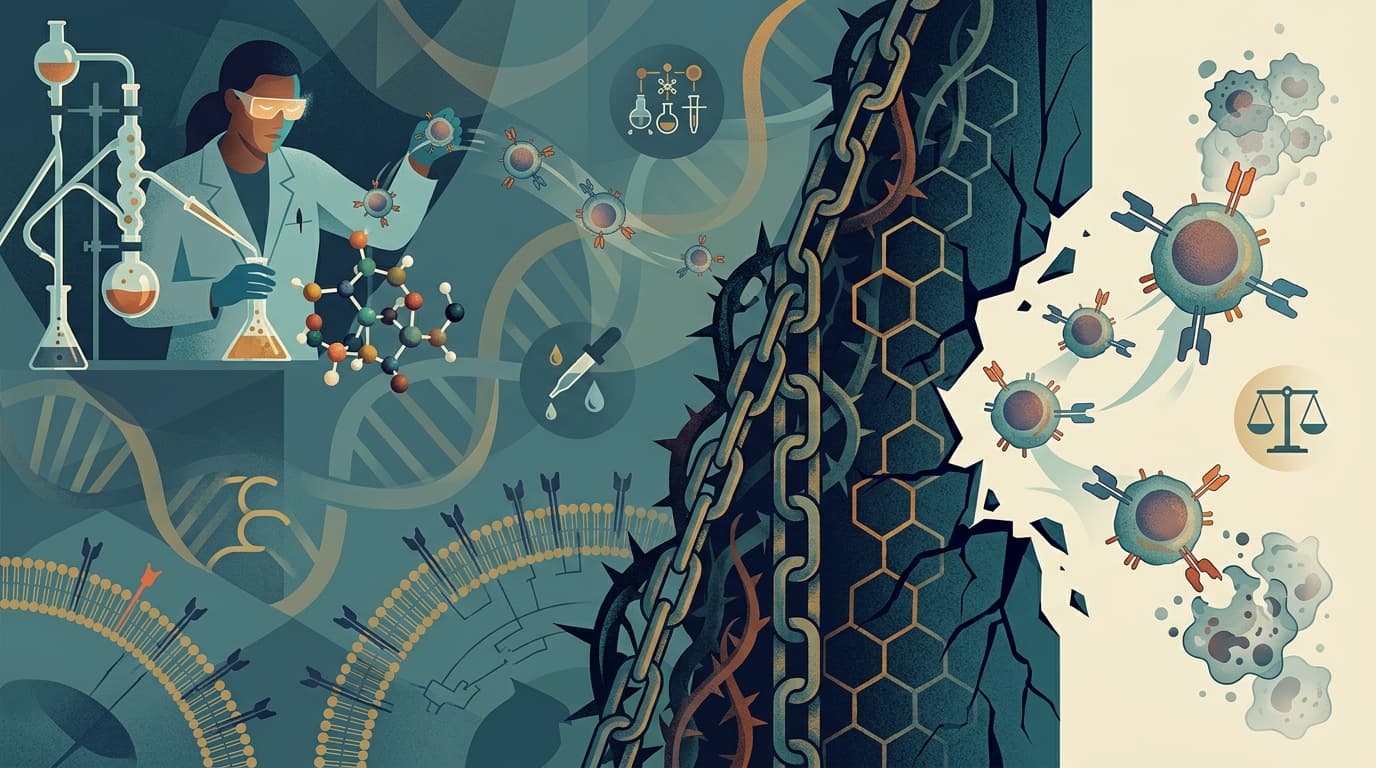
For over a decade, CAR-T therapy had a frustrating reputation. It could work miracles against blood cancers, sending patients into deep remission. But solid tumors? The ones that account for roughly 90% of all human cancers? Those were a brick wall. Hundreds of trials, billions of dollars, and the scoreboard stayed at zero approvals.
That wall just cracked.
The Approval That Changed the Scoreboard
China's National Medical Products Administration (NMPA) has conditionally approved satricabtagene autoleucel (satri-cel for short), an autologous CAR-T therapy made by Shanghai-based CARsgen Therapeutics. The indication: advanced stomach cancer that has resisted at least two prior rounds of treatment. It's the first CAR-T cell therapy ever approved for a solid tumor, anywhere in the world.
The approval was announced on June 22, 2026, and patients were being treated at major Chinese hospitals within days. The price tag: roughly $138,000 per dose.
To understand why this matters, you need to appreciate just how badly the field has been stuck.
Why Solid Tumors Were CAR-T's Kryptonite
CAR-T therapy works by taking a patient's own immune cells, engineering them to recognize a specific target on cancer cells, and infusing them back in. Think of it like giving your immune system a GPS lock on cancer.
In blood cancers like leukemia and lymphoma, this approach is devastatingly effective. The cancer cells float around in blood and bone marrow, easily accessible. They tend to wear a uniform "jersey" (a consistent surface protein like CD19), making them easy to spot.
Solid tumors play a completely different sport. They're physical masses, barricaded behind walls of fibrous tissue and surrounded by abnormal blood vessels. Getting CAR-T cells into the tumor is like trying to deliver a pizza to a bunker with no address. And once inside, the tumor's microenvironment is a hostile wasteland: low oxygen, scarce nutrients, and a roster of suppressive immune cells that actively shut down the CAR-T invaders.
Get tomorrow's biotech intelligence before your competitors.
Join thousands of biotech professionals who start their day with our free, daily briefing.
To make things worse, solid tumors are masters of disguise. Their cells don't all wear the same jersey. Some express the target protein; some don't. Under pressure from CAR-T, the cancer can simply stop displaying the target altogether. Imagine trying to catch a thief who keeps changing outfits.
For years, this combination of physical barriers, immune suppression, and antigen trickery kept every solid-tumor CAR-T trial from crossing the finish line.
What CARsgen Actually Showed
Satri-cel targets a protein called Claudin18.2 (CLDN18.2), which is found on stomach cancer cells but has relatively limited presence in normal tissue. That's the sweet spot: enough expression on cancer to be useful, not so much on healthy organs that the therapy wreaks havoc everywhere.
The pivotal trial, a phase 2 randomized study published in The Lancet, enrolled patients with CLDN18.2-positive, HER2-negative advanced stomach cancer who had already failed multiple treatments. These were patients running out of options.
Satri-cel roughly doubled progression-free survival compared to standard care: 3.25 months versus 1.77 months. The hazard ratio was 0.37, with a p-value under 0.0001. In plain English, patients on satri-cel were significantly less likely to see their cancer worsen during the study period.
Now, let's be honest: those numbers aren't going to wow anyone used to the dramatic remissions CAR-T produces in blood cancers. A few extra months of disease control sounds modest. But context is everything. These patients had exhausted their options. In earlier-stage trials, CARsgen saw response rates of 57% in measurable stomach cancer cases, and the company reported a manageable safety profile across studies.
Nearly all patients (95%) experienced cytokine release syndrome (CRS), the inflammatory reaction that's a known side effect of CAR-T. But critically, most cases were low-grade. No neurotoxicity was reported in the large phase 1 trial, a reassuring signal for a therapy class that sometimes causes serious brain-related side effects.
A First Step, Not a Finish Line
Experts are framing this with careful optimism. Carl June, one of the founders of the entire CAR-T field, called the approval "great news" and noted it would help maintain momentum for the broader cell therapy space. Prof. Lin Shen, who led the pivotal trial at Peking University Cancer Hospital, described satri-cel as a "novel and effective therapeutic weapon" for patients with extremely limited options.
Analysts at BioCentury offered a more measured take, arguing that satri-cel "ushers CAR-T into solid tumors, but not on the modality's usual terms." In blood cancers, CAR-T is synonymous with deep, lasting remissions. In solid tumors, the bar (for now) is clinically meaningful disease control. It's a different playbook.
CARsgen's stock jumped about 7% on the news, reflecting investor enthusiasm. But the company remains unprofitable, and the real test is ahead: can it manufacture a complex, personalized therapy at scale? CARsgen expects around 200 orders in the second half of 2026, which will be the first real-world stress test.
The Bigger Picture: China Leads, the World Watches
Stomach cancer is a massive problem globally, and it's especially devastating in China, which accounts for roughly 37% of all new cases worldwide. Many patients are diagnosed late, and even with modern chemotherapy and immunotherapy, median survival for metastatic disease hovers around 12 to 18 months.
Satri-cel's approval also validates Claudin18.2 as a therapeutic target, joining Astellas' antibody zolbetuximab (approved in 2024 for the same target). A growing cluster of antibodies, antibody-drug conjugates, and now CAR-T therapies are converging on this protein, creating real competition in a space that barely existed five years ago.
Perhaps the most provocative implication is geographic. China now holds a regulatory precedent that doesn't exist in the U.S. or Europe. Carl June himself has expressed frustration with the pace of U.S. cell therapy regulation. For biotech companies developing next-generation cell therapies, the message is clear: China might be the fastest route to a first approval, with Western markets following later.
Satri-cel isn't a cure. It doesn't produce the jaw-dropping responses we've come to expect from CAR-T in leukemia. But it proves something the field has been trying to prove for over a decade: CAR-T can work in solid tumors. The first foothold has been established. Now the race is on to make it bigger, better, and more durable.
The brick wall didn't fall. But there's a door in it now.
Clinical & Regulatory5 min read
CRISPR Just Got Cleared for Toddlers. Yes, Toddlers.
The FDA just approved a CRISPR gene therapy for kids as young as two, a world first. Casgevy's expansion into toddlers could prevent the silent organ damage that sickle cell disease inflicts from infancy, but delivering a treatment this complex to tiny patients is a whole different challenge.