
Kyverna Therapeutics just started a rolling FDA submission for what could become the first CAR-T therapy approved for an autoimmune disease, not cancer. The target: stiff-person syndrome, a rare condition with zero approved treatments and trial results that stunned even the optimists.
Imagine spending decades perfecting a weapon to fight cancer, then realizing it might also cure something completely different. That's the story unfolding right now at Kyverna Therapeutics, and it could reshape how we think about an entire class of medicine.
On May 12, Kyverna announced it had started a rolling submission to the FDA for miv-cel, a CAR-T cell therapy designed to treat stiff-person syndrome (SPS). If approved, it would be the first CAR-T therapy ever greenlit for an autoimmune disease, not cancer. That's a big deal, and we need to talk about why.
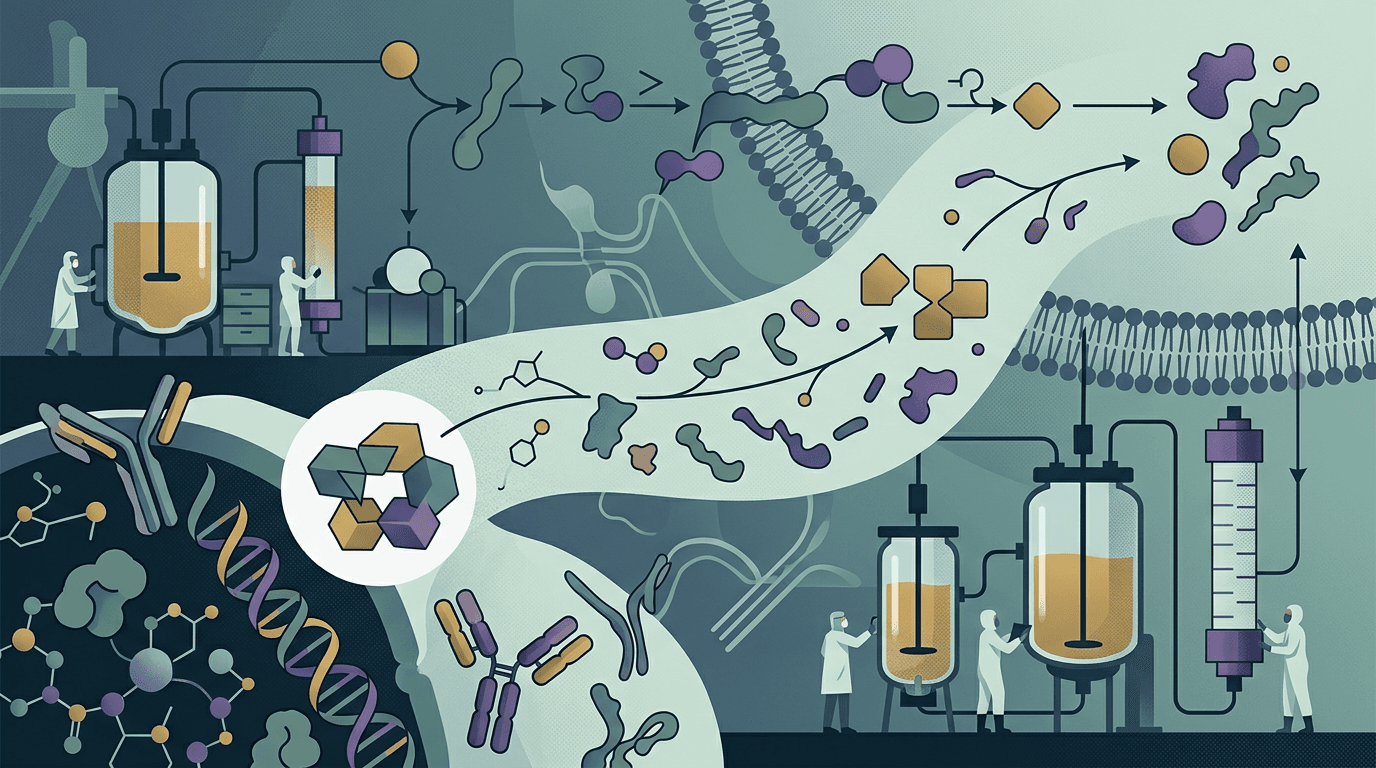
CAR-T therapy works like this: doctors extract a patient's immune cells, genetically reprogram them to hunt specific targets, then infuse them back into the body. Since 2017, the FDA has approved several CAR-T products for blood cancers like lymphoma and leukemia. They're expensive, complex, and sometimes life-saving.
But cancer isn't the only disease where the immune system goes haywire. In autoimmune conditions, the body's defenses attack healthy tissue instead of invaders. Researchers started wondering: could CAR-T be retrained to wipe out the rogue immune cells causing autoimmune diseases too?
Kyverna bet the answer was yes. Their target, miv-cel (full name: mivocabtagene autoleucel), is a CD19-targeting CAR-T. Translation: it hunts down B cells, a type of immune cell that, in autoimmune diseases, produces the antibodies attacking your own body. Think of it as a precision strike against the soldiers who switched sides.
Stiff-person syndrome sounds like something a comedian made up. It's not. SPS is a rare neurological condition where the body produces antibodies (often against an enzyme called GAD65) that cause progressive muscle stiffness and painful spasms. Over time, patients lose mobility. Many end up in wheelchairs. Some become housebound.
Traditional estimates put SPS prevalence at about 1 in a million people, but a 2023 study from a single U.S. center found rates closer to 2.4 per 100,000, suggesting the disease is massively underdiagnosed. In the U.S. alone, that could mean thousands of patients rather than hundreds.

MBX Biosciences just posted Phase 1 data for an obesity shot you'd only take once a month, with almost no nausea. In a market where most patients quit their weekly GLP-1s within a year, the adherence angle alone could be worth billions.


Join thousands of biotech professionals who start their day with our free, daily briefing.

And here's the kicker: there are zero FDA-approved treatments for SPS. Patients cobble together symptom management with benzodiazepines, muscle relaxants, and IV immunoglobulin infusions. These don't fix the underlying problem. They just turn down the volume on a disease that keeps getting louder.
Kyverna's Phase 2 KYSA-8 trial enrolled 26 patients with severe SPS who hadn't responded to existing therapies. A small trial, sure, but for a disease this rare, 26 patients is a meaningful number. The results, released in December 2025 and presented at the American Academy of Neurology meeting in April 2026, were striking.
The primary measure was the Timed 25-Foot Walk test at 16 weeks. Patients showed a median 46% improvement from baseline (p=0.0002 for the stats crowd). That's not a marginal bump; that's the difference between shuffling and walking. Among the 12 patients who needed walking aids at the start, 67% ditched them entirely.
The secondary endpoints told a similar story. Disability scores, stiffness measures, and hypersensitivity ratings all improved with high statistical significance (p<0.0001 across the board). Perhaps most remarkable: every single patient stopped their chronic immunotherapy medications by week 16 and stayed off them. One dose of miv-cel, and they were done.
On the safety side, the profile was clean by CAR-T standards. No high-grade cytokine release syndrome (the dangerous inflammatory reaction that can accompany CAR-T). No serious neurotoxicity. Four patients developed low white blood cell counts, which is expected and resolved. For a therapy class that oncologists sometimes describe as "controlled dynamite," this was remarkably calm.
Here's where the regulatory chess gets interesting. A rolling BLA (Biologics License Application) means Kyverna can submit sections of its approval package as they're completed, rather than waiting to send everything at once. The FDA agreed to this approach after a pre-BLA meeting where the agency confirmed that the single-arm Phase 2 data from KYSA-8 would be sufficient as the pivotal dataset. No Phase 3 required.
That's unusual. For most drugs, regulators want large, randomized, placebo-controlled trials. But when a disease has no approved treatments, affects a tiny population, and the trial data is this convincing, the calculus changes. The FDA also requested additional natural history data (basically, documentation of how SPS progresses without treatment) to provide context for interpreting the results. Think of it as asking for the "before" picture to make the "after" more meaningful.
Kyverna holds RMAT (Regenerative Medicine Advanced Therapy) designation for miv-cel in SPS, which comes with perks like priority review.
Analysts are bullish, to put it mildly. The consensus rating across firms sits at Buy or Strong Buy, with price targets ranging from $20 to $33 against a recent trading price in the $8 to $10 range. Morgan Stanley raised its target to $33 in April 2026, calling the pipeline outlook "very positive." That implies the market thinks the current stock price captures only a fraction of miv-cel's potential.
Kyverna is already preparing for a commercial launch in 2027 and recently appointed a Chief Commercial Officer, Nadia Dac, to lead the effort. The company says its cash runway extends to 2028, giving it breathing room through the approval process.
Forget SPS for a moment. The real story is what happens next. If miv-cel gets approved, it cracks open the door for CAR-T therapy in dozens of autoimmune conditions: lupus, rheumatoid arthritis, multiple sclerosis, myasthenia gravis. Kyverna already has a Phase 3 trial enrolling patients with generalized myasthenia gravis, and competitors like Cabaletta Bio and academic centers at places like UPenn are running their own autoimmune CAR-T programs.
The autoimmune disease market dwarfs oncology in patient numbers. Many Americans cycle through expensive, lifelong treatments that manage symptoms without addressing root causes. A one-time therapy that resets the immune system? That's not an incremental improvement; it's a paradigm shift.
The FDA has recommended long-term follow-up for autoimmune CAR-T therapies, mirroring its approach in oncology. That's a reminder that the long-term safety picture is still developing. We're early. But the trajectory is clear.
A therapy built to fight cancer just filed for approval to treat an autoimmune disease. If that doesn't make you rethink what cell therapy can do, nothing will.
Pfizer just won EU approval to treat the hardest cases in hemophilia: patients whose immune systems attack their own medication. The Phase 3 data showed a 93% drop in bleeding, and the competitive implications are fascinating.