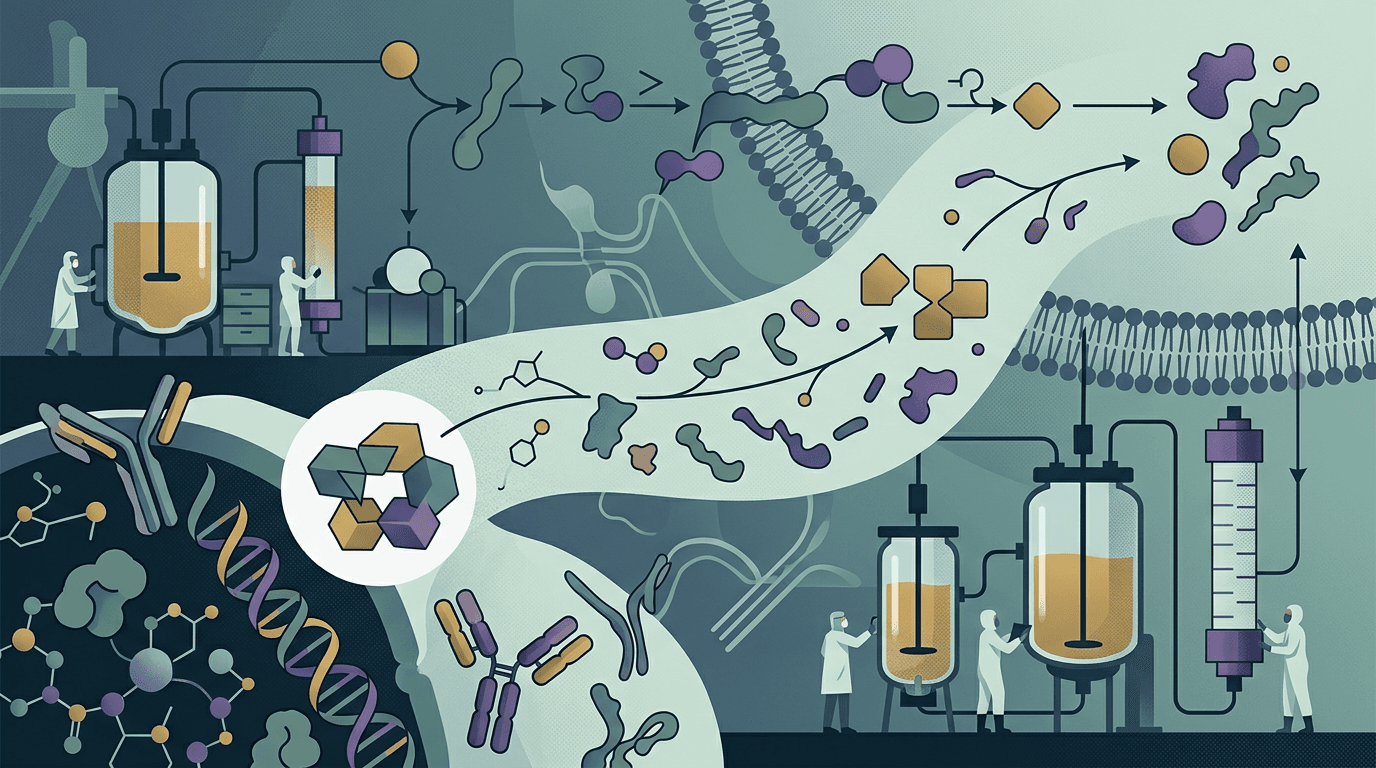

Pfizer just won EU approval to treat the hardest cases in hemophilia: patients whose immune systems attack their own medication. The Phase 3 data showed a 93% drop in bleeding, and the competitive implications are fascinating.
Imagine your blood won't clot. Now imagine the medicine designed to fix that problem triggers your immune system to attack it. That's life for hemophilia patients with inhibitors: antibodies that neutralize the very clotting factors meant to save them.
These patients represent the toughest cases in all of hemophilia care. About 30% of people with severe hemophilia A develop inhibitors, turning routine treatment into a high-wire act. For decades, their options boiled down to "bypassing agents" (intravenous drugs that work around the problem without solving it) and hope. The European Commission just handed them something better.
Pfizer's HYMPAVZI (marstacimab) received EU approval in May 2026 for routine prophylaxis of bleeding episodes in hemophilia A and B patients with inhibitors, aged 12 and older, weighing at least 35 kg. This follows a positive opinion from the CHMP (the EU's drug advisory committee) back on March 26, 2026.
This isn't HYMPAVZI's first rodeo. The drug was already approved in the EU for severe hemophilia patients without inhibitors. It also got FDA approval in the U.S. back in October 2024 for that same non-inhibitor population. But the inhibitor expansion is the bigger deal, because these patients have far fewer options and far worse outcomes.
Think of it like a restaurant expanding its menu to serve people with severe food allergies. The kitchen was already open; now it can actually feed the customers who need it most.
The approval rests on the Phase 3 BASIS trial, which enrolled 48 patients with hemophilia A or B who had developed inhibitors. The design was straightforward: patients spent six months managing bleeds on-demand with IV bypassing agents (the old standard), then switched to once-weekly subcutaneous HYMPAVZI for twelve months.
The results weren't subtle. Patients on HYMPAVZI experienced an annualized bleeding rate of 1.39, compared to 19.78 on their previous on-demand treatment. That's a 93% reduction. To put that in human terms: a patient who was bleeding roughly 20 times per year dropped to barely more than once.

MBX Biosciences just posted Phase 1 data for an obesity shot you'd only take once a month, with almost no nausea. In a market where most patients quit their weekly GLP-1s within a year, the adherence angle alone could be worth billions.

Join thousands of biotech professionals who start their day with our free, daily briefing.

Just as importantly, the safety profile was clean. No deaths. No blood clots. No consumptive coagulopathy (a dangerous condition where the clotting system goes haywire). For a drug that messes with the body's clotting balance, that's a critical box to check.
Most hemophilia treatments try to replace the missing clotting factor or mimic what it does. HYMPAVZI takes a completely different approach. It blocks a protein called TFPI (tissue factor pathway inhibitor), which normally acts as a brake on clotting.
If your clotting system is a car that can't accelerate because the engine is broken, traditional treatments try to fix the engine. HYMPAVZI releases the parking brake instead. By blocking TFPI, it lets whatever clotting ability remains work more effectively. This sidesteps the inhibitor problem entirely, because the drug never touches Factor VIII or Factor IX.
The delivery is also a selling point: a once-weekly subcutaneous injection via a pre-filled auto-injector pen. No IV infusions. No lab monitoring required. For patients used to managing complex IV regimens multiple times per week, that's a meaningful quality-of-life upgrade.
HYMPAVZI isn't walking into an empty market. Roche's Hemlibra (emicizumab) has dominated the hemophilia-with-inhibitors space since its approval, offering subcutaneous prophylaxis that mimics Factor VIII. Sanofi's Qfitlia (fitusiran) targets a different pathway (reducing antithrombin) and offers bimonthly dosing. Novo Nordisk's Alhemo (concizumab) hits TFPI just like HYMPAVZI does, making it a direct mechanistic competitor.
So where does HYMPAVZI fit? The 93% bleed reduction is impressive, but context matters. Fitusiran showed a 73% reduction in its inhibitor trials. Hemlibra's data varies by study, but it fundamentally reshaped the market when it arrived. The head-to-head comparisons don't exist yet, and trial designs differ enough that cross-trial comparisons are unreliable.
What Pfizer does have: a clean safety profile, weekly convenience, and the auto-injector format. In a disease where adherence directly determines whether someone bleeds into their joints, ease of use isn't a luxury feature. It's a clinical advantage.
This approval strengthens a rare hematology franchise that Pfizer has been quietly building. The company also won EU approval for Beqvez, a gene therapy for hemophilia B, in 2024. Together, these products give Pfizer a presence across the hemophilia spectrum: gene therapy for the cure-seekers, HYMPAVZI for the prophylaxis crowd.
The strategic logic is sound. Gene therapies promise one-and-done treatment but remain expensive, limited to patients without inhibitors, and plagued by supply challenges. A weekly subcutaneous injection that works regardless of inhibitor status fills a different (and more reliable) commercial niche.
Pfizer will likely pursue a U.S. label expansion for HYMPAVZI's inhibitor indication, armed with the BASIS data that convinced European regulators. Priority review designation has already been granted by the FDA for broader use, though the specific inhibitor filing timeline hasn't been confirmed.
For the roughly 30% of severe hemophilia A patients whose immune systems turned against their treatment, this approval means one more option in a toolkit that used to be painfully thin. It's not a cure. It's not even necessarily the best drug in the class (we won't know that without head-to-head data). But it's a once-weekly shot that cut bleeding by 93% with no clots.
In a disease defined by what goes wrong, that's a lot of things going right.
Alphabet's AI drug discovery spinout just raised $2.1 billion in a single round, making it the second-largest private biotech fundraise ever. No drugs in human trials yet, but three of the world's biggest pharma companies are already paying for what the AI can do.