
Alphabet's AI drug discovery spinout just raised $2.1 billion in a single round, making it the second-largest private biotech fundraise ever. No drugs in human trials yet, but three of the world's biggest pharma companies are already paying for what the AI can do.
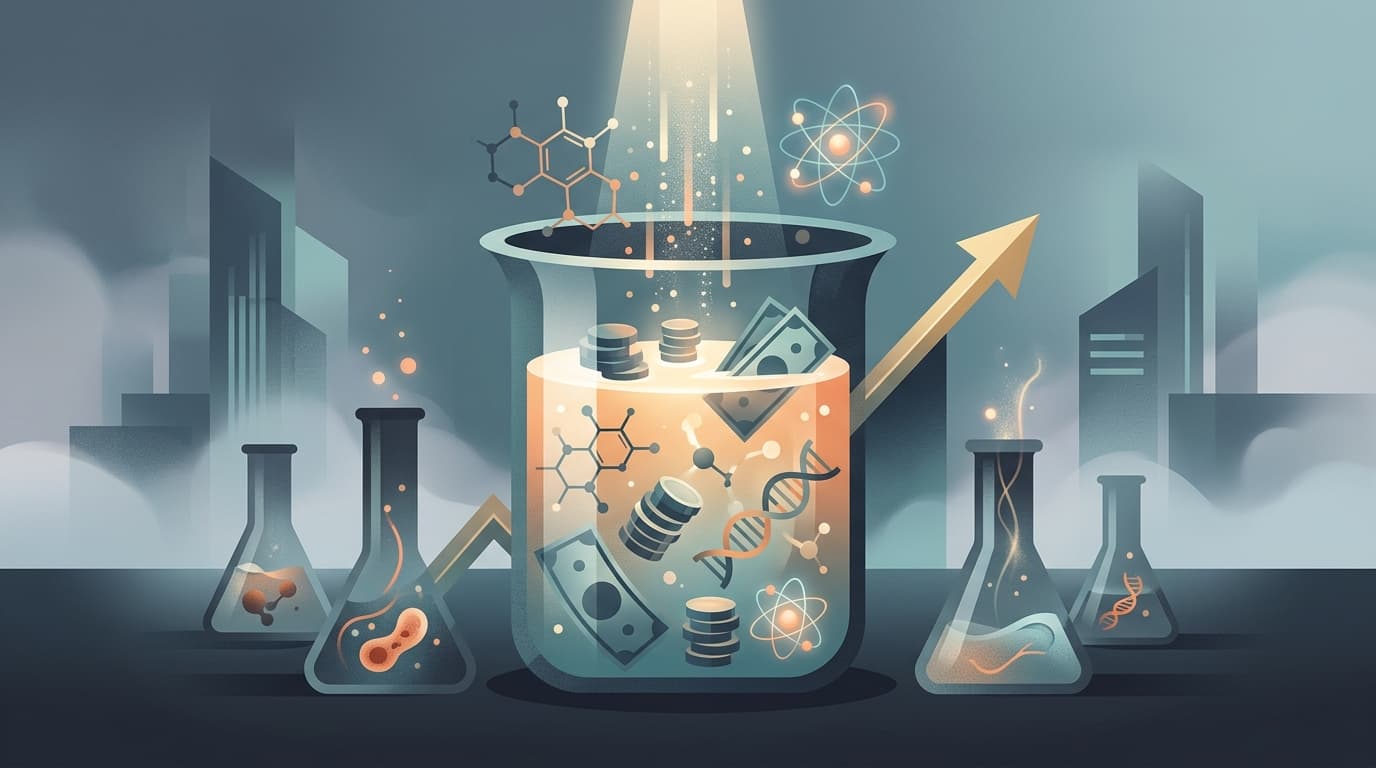
Only one private biotech company has ever raised more money in a single round. That company was Altos Labs, the Jeff Bezos-backed longevity startup that launched with $3 billion in 2022. Now Isomorphic Labs, Alphabet's AI drug discovery spinout, has claimed the number two spot with a $2.1 billion Series B announced on May 12.
To put that in perspective: the average biotech Series B raises somewhere between $50 million and $100 million. Isomorphic raised roughly 20 to 40 times that amount. It's like showing up to a potluck with an entire catering truck.
Thrive Capital led the round for the second time, having also led Isomorphic's $600 million first external funding round in early 2025. That kind of repeat commitment from a lead investor is the venture equivalent of proposing on the second date: confident, aggressive, and very expensive.
But the investor list tells a bigger story than just Thrive doubling down. New backers include MGX (Abu Dhabi's sovereign tech fund), Temasek (Singapore's state investor), the UK Sovereign AI Fund, and CapitalG (Alphabet's growth fund). Combined with existing backers Alphabet and GV, the cap table now spans four continents. Total external funding sits at roughly $2.7 billion.
When sovereign wealth funds from the Middle East, Southeast Asia, and Europe all independently decide to back the same company, that's not FOMO. That's a coordinated global bet.
Founded in 2021 as a spinout from Google DeepMind, Isomorphic Labs builds on the Nobel Prize-winning AlphaFold technology. AlphaFold predicted how proteins fold into 3D shapes, solving a problem that had stumped biologists for 50 years. Isomorphic takes that foundation and points it at drug design.
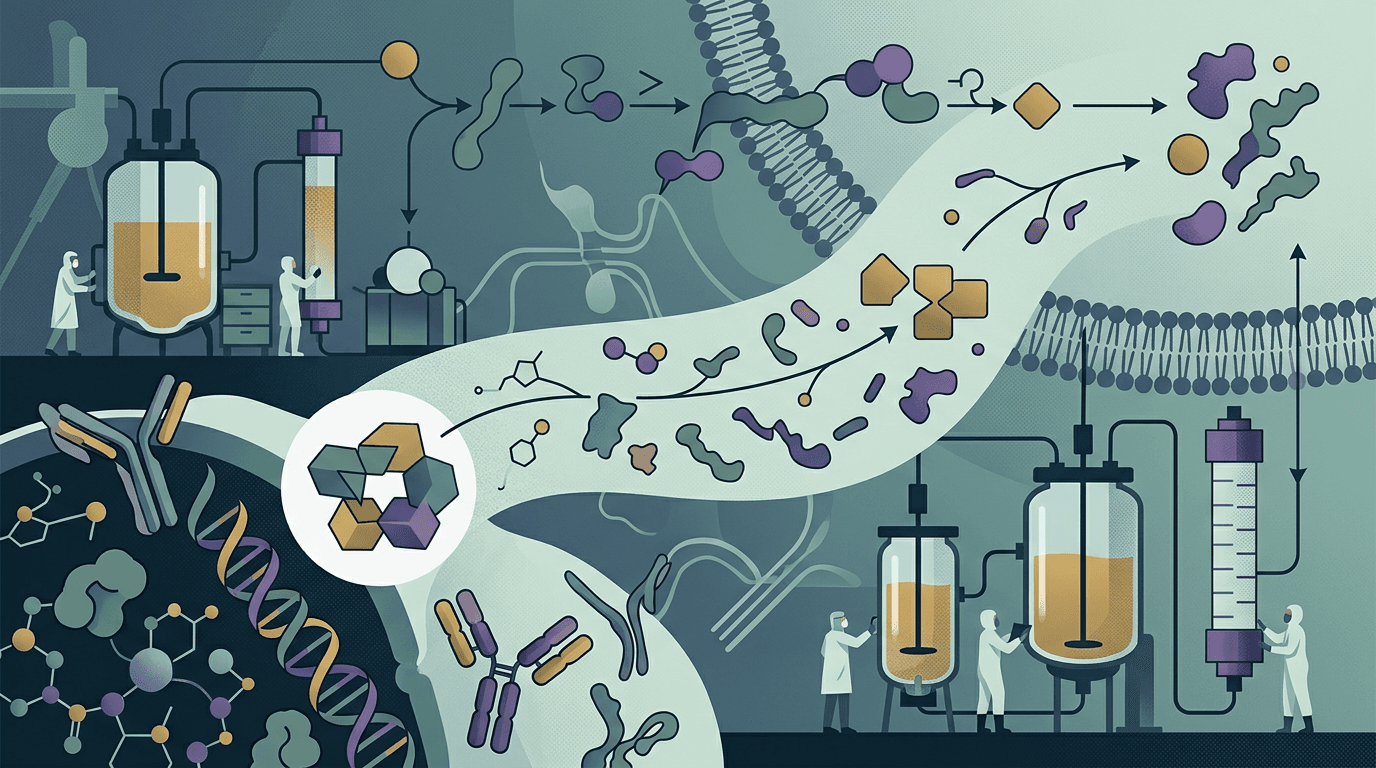
Think of it this way: if AlphaFold gave scientists a detailed map of the lock (the protein target), Isomorphic is trying to design the perfect key (the drug) using AI alone. Their proprietary system, called the , launched in February 2026 and reportedly doubles AlphaFold 3's performance on key benchmarks. It can predict how tightly a small molecule will bind to a protein, identify new binding pockets that no one knew existed, and do it faster and cheaper than traditional physics-based methods.

MBX Biosciences just posted Phase 1 data for an obesity shot you'd only take once a month, with almost no nausea. In a market where most patients quit their weekly GLP-1s within a year, the adherence angle alone could be worth billions.


Join thousands of biotech professionals who start their day with our free, daily briefing.
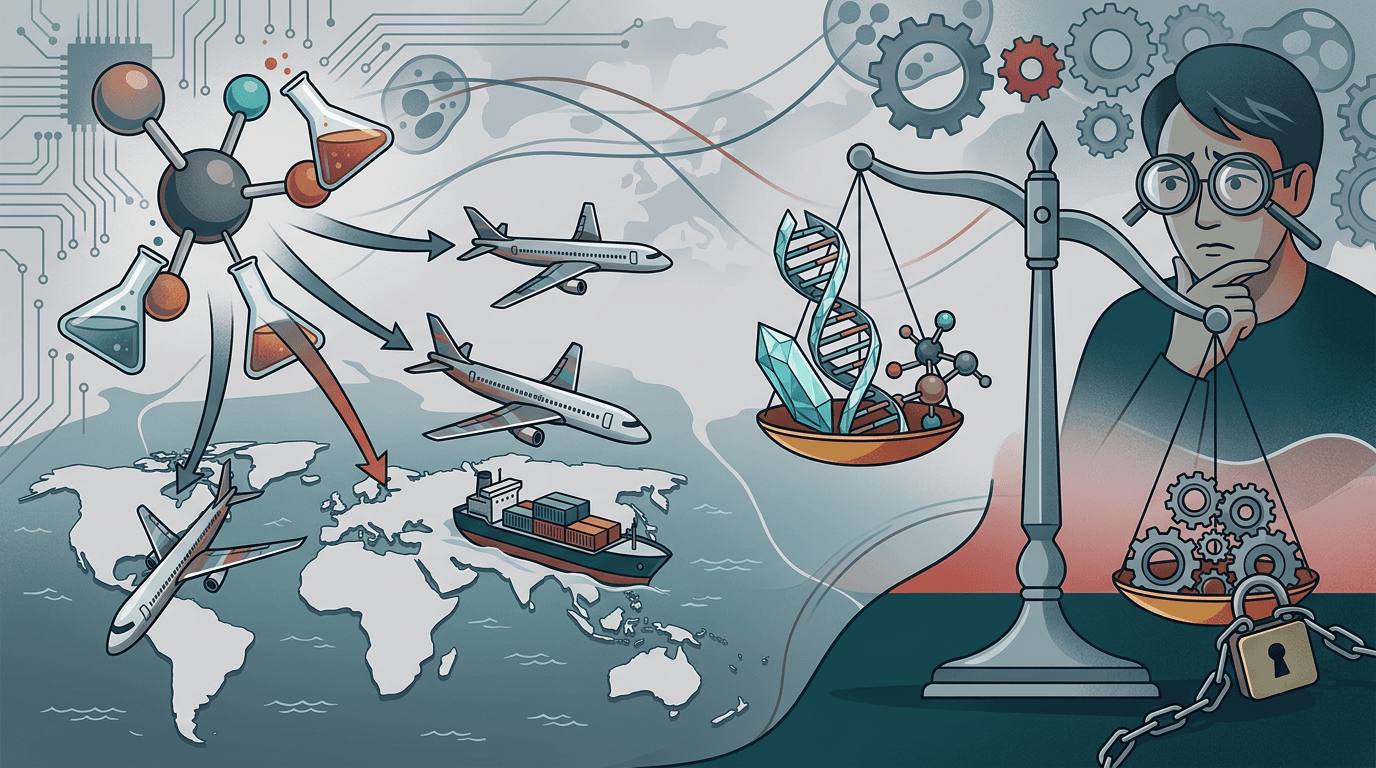
The company claims IsoDDE can find these binding sites from nothing more than an amino acid sequence. No crystal structure needed. No months of lab work to figure out what the target looks like. Just the genetic code and a lot of math.
This is where skeptics sharpen their pencils. Isomorphic has no drugs in human trials yet. Zero clinical data. The pipeline sits in preclinical stages across oncology, immunology, and cardiovascular disease, with the company targeting first-in-human trials by end of 2026.
But the pharma partnerships suggest the science isn't just theoretical. Eli Lilly signed a deal in January 2024 worth up to $1.7 billion in milestones (plus royalties), with $45 million upfront. Novartis inked a similar agreement worth up to $1.2 billion, covering three undisclosed targets. Johnson & Johnson joined later with a cross-modality collaboration spanning small molecules, biologics, peptides, and molecular glues.
Three of the world's largest drug companies paying real money for AI-designed molecules: that's validation you can't fake with a press release.
Demis Hassabis, the company's founder and CEO (who also runs DeepMind and won the 2024 Nobel Prize in Chemistry for AlphaFold), didn't mince words. "This funding round is a massive vote of confidence," he said. "Now that we have shown our approach is fundamentally sound, our focus is on scaling our technology to its full potential, driving us forward in our mission to solve all disease."
"Solve all disease" is either the most ambitious mission statement in biotech or the most delusional. Probably both. But with $2.7 billion in the bank, a Nobel laureate at the helm, and partnerships with Lilly, Novartis, and J&J already generating revenue, Hassabis has more credibility than most people making that claim.
The round lands at an interesting moment. AI drug discovery has been promising "better, faster, cheaper" for years, and some cracks have appeared. The merged Recursion-Exscientia entity is still searching for breakout clinical wins. Insilico Medicine's lead candidate showed encouraging Phase 2a results, but "encouraging" is a long way from "approved."
Isomorphic's massive war chest lets it play a different game entirely. While competitors raise $100 million here and $150 million there, Isomorphic can afford to run dozens of programs simultaneously, hire aggressively across London, Cambridge (MA), and Lausanne, and absorb failures without existential risk.
As FierceBiotech put it: "If any proof was needed that big money is still available for AI drug development, look no further."
All of this only matters if AI-designed drugs actually work in humans. Proteins folding on a computer screen is elegant. Patients getting better is something else entirely. The gap between computational prediction and clinical reality has humbled smarter companies than this one.
But if Isomorphic's first clinical candidates succeed (expected to enter trials by late 2026), the implications are staggering. A validated AI drug design engine could compress years of discovery into months, dramatically reduce the cost of bringing a drug to market, and open up targets that traditional chemistry couldn't crack.
For now, $2.1 billion buys Isomorphic something invaluable: time to prove the thesis before anyone else does. The clock is ticking, the money is in the bank, and the entire industry is watching.
Pfizer just won EU approval to treat the hardest cases in hemophilia: patients whose immune systems attack their own medication. The Phase 3 data showed a 93% drop in bleeding, and the competitive implications are fascinating.