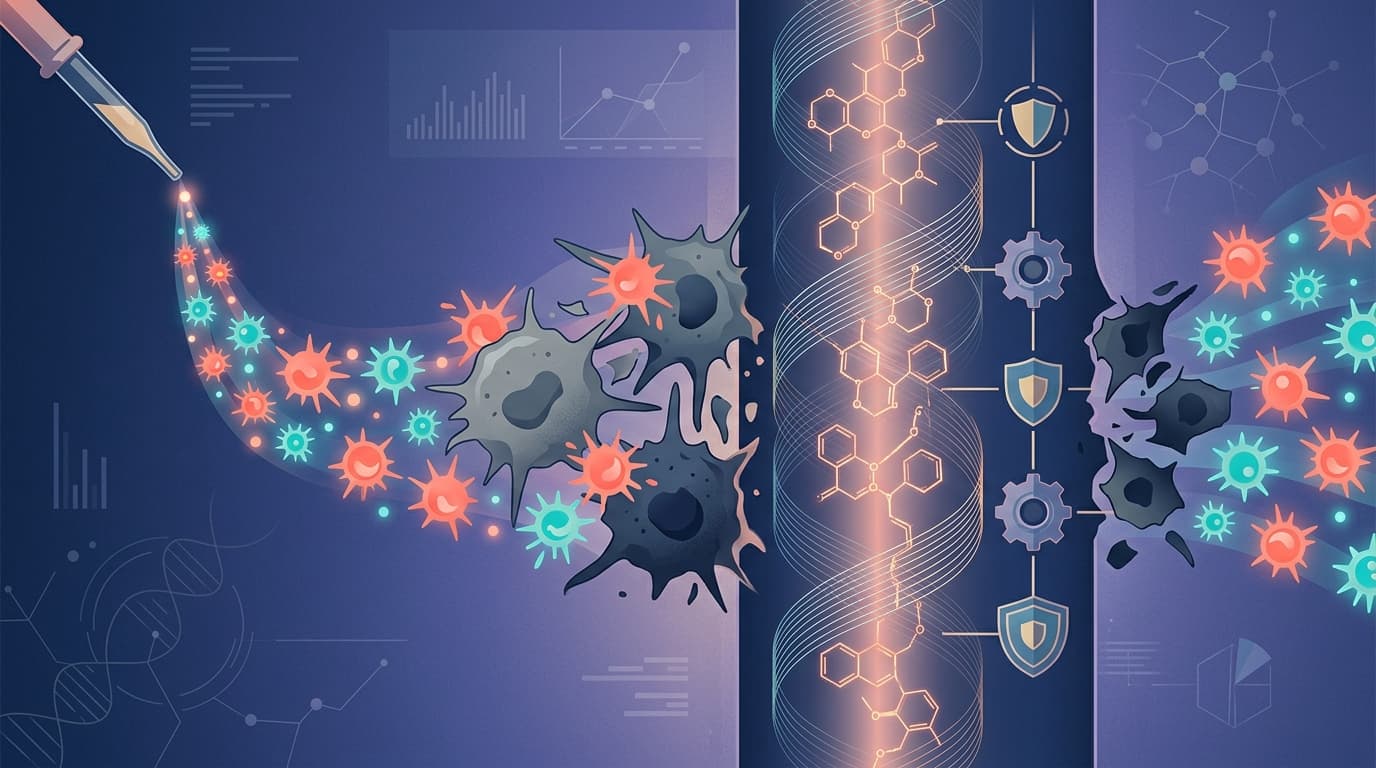

T-cell engagers were built to kill tumors. Cullinan Therapeutics just showed they can safely wipe out rogue immune cells in lupus and RA patients too, and the entire pharma industry is watching. The next six months could reshape autoimmune treatment forever.
T-cell engagers were built to kill cancer. Now they're coming for autoimmune disease, and Cullinan Therapeutics just dropped the most convincing evidence yet that the crossover might actually work.
At EULAR 2026 (the big European rheumatology conference), Cullinan presented first-in-human data for CLN-978 in patients with lupus and rheumatoid arthritis. The results won't win any Nobel Prizes on their own. But they answer a question the entire field has been holding its breath over: can you safely redirect a patient's own immune system to wipe out the cells causing autoimmune disease?
The early answer is yes.
To understand why this matters, you need a quick primer on how T-cell engagers (TCEs) work. Think of them as molecular matchmakers. One arm grabs a T cell (your immune system's assassin). The other arm grabs a target cell you want dead. The TCE physically drags them together, and the T cell does what it does best.
In cancer, the target is a tumor cell. But what if you pointed that same assassin at B cells, the immune cells that go rogue in diseases like lupus and RA? Instead of attacking a tumor, you'd be cleaning house on the cells producing harmful autoantibodies.
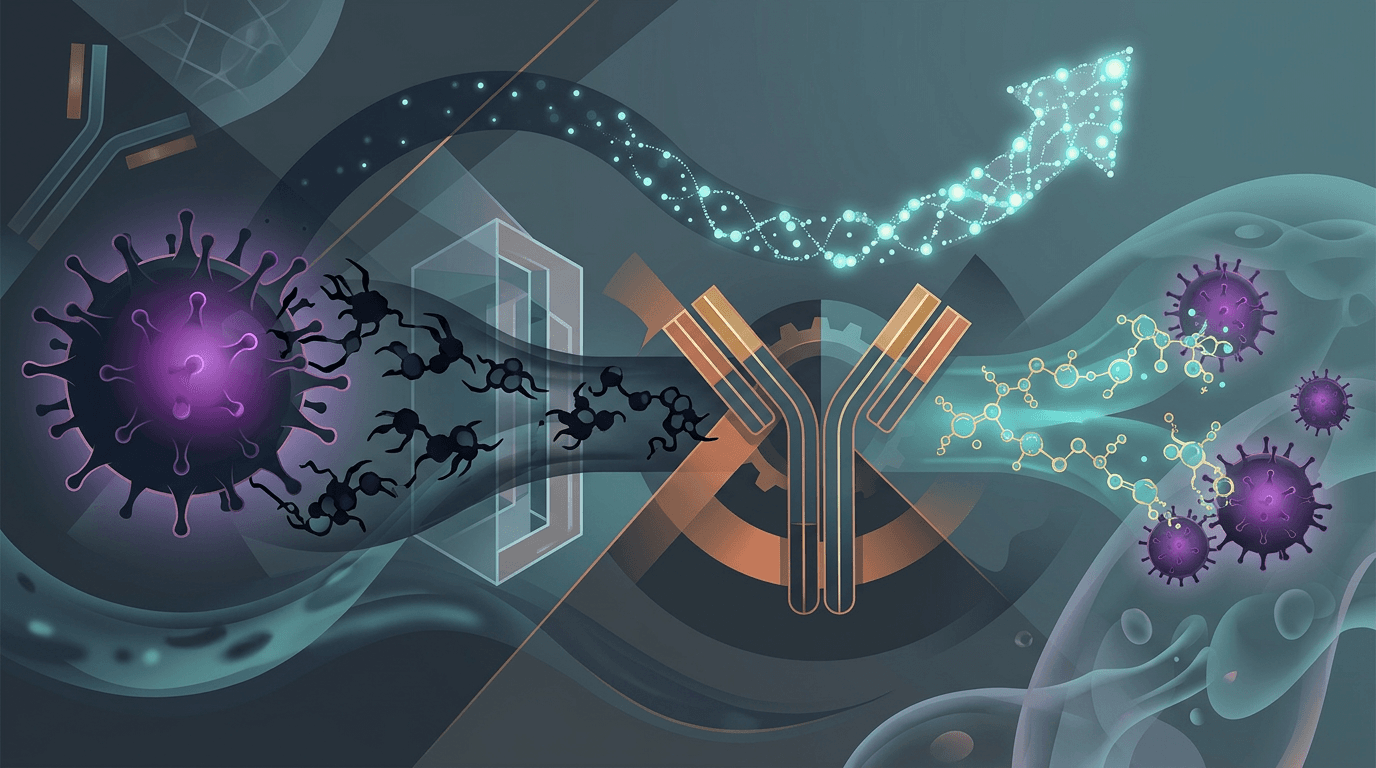
That's exactly what CLN-978 does. It's a trispecific T-cell-engaging fusion protein: it binds CD19 (a marker on B cells), CD3 (on T cells), and human serum albumin (for extended half-life). Bring the T cell and B cell together, and the T cell eliminates the B cell. Simple in concept; fiendishly hard to get right in patients who are already immunologically fragile.
Cullinan's OUTRACE trials enrolled 29 patients across lupus (SLE) and difficult-to-treat RA. This was Phase 1, single-dose escalation territory, so nobody expected miracle cures. The goals were more fundamental: Is it safe? Does it deplete B cells? Is there any hint it helps?
On safety, the results were clean. No dose-limiting toxicities at the initial target dose levels. For a drug class notorious for cytokine release syndrome (basically an immune overreaction that can land you in the ICU), that's a meaningful bar to clear.

Moderna and Merck's personalized mRNA cancer vaccine just posted three-year data in melanoma that are turning heads across oncology. The benefit isn't fading; it's getting stronger, and the phase 3 is fully enrolled.


Join thousands of biotech professionals who start their day with our free, daily briefing.
On B-cell depletion, CLN-978 delivered deep, dose-dependent clearance in both peripheral blood and tissue. That second part is critical. Lots of drugs can knock down B cells floating in your bloodstream. Getting into tissue, where the real autoimmune mischief happens, is much harder.
And on efficacy? Early signals of clinical benefit in both refractory lupus and difficult-to-treat RA patients. Not home runs, but remember: these patients had already failed other treatments.
Cullinan's data don't exist in a vacuum. They land at a moment when over 40% of pharma's multispecific antibody deals (from mid-2024 to mid-2025) targeted autoimmune and inflammatory diseases. AbbVie alone has committed billions to TCE platforms. GSK acquired a CD19-directed engager with lupus ambitions. Candid Therapeutics is building trispecific constructs that hit CD19, CD20, and CD3 simultaneously.
The entire industry is betting that TCEs can cross from oncology into autoimmunity. Cullinan just showed the first real human evidence supporting that bet.
Compare this to the other buzzy approach: CAR-T therapy. CAR-T rewrites a patient's own T cells in a lab, then infuses them back. It's produced jaw-dropping remissions in severe lupus, with some patients going completely off medication. But CAR-T requires specialized manufacturing, lymphodepleting chemotherapy, and inpatient care at select centers. It's like flying first class on a private jet; incredible experience, terrible scalability.
TCEs, by contrast, are off-the-shelf molecules. CLN-978 is given as a subcutaneous injection. No cell manufacturing. No chemo prep. If it works, you could treat patients at any rheumatology clinic in the country. That's the difference between a boutique solution and a blockbuster market.
Wall Street noticed. After a brief post-EULAR pullback, Clear Street called the dip "unwarranted" and reiterated its position. BTIG maintained a Buy with a $38 price target. Wedbush bumped theirs to $37.
The optimism isn't just about CLN-978. Cullinan also has velinotamig, a BCMA×CD3 engager that targets plasma cells (the B cells' downstream cousins that actually pump out autoantibodies). Think of it as a one-two punch: CLN-978 takes out the factory workers, velinotamig shuts down the factory itself. Data from velinotamig's autoimmune trial in China are expected by late 2026.
Meanwhile, Cullinan sits on roughly $393 million in cash, enough runway into 2029. That's a luxury most biotechs would kill for, especially heading into a year packed with catalysts.
Let's pump the brakes slightly. Single-dose Phase 1 data in 30-something patients is proof of mechanism, not proof of cure. The questions that actually matter are still unanswered: How long does the B-cell depletion last? What happens when you give repeat doses? Can patients stay in remission?
Cullinan has a plan to answer all of those. Multi-dose RA data should arrive in Q3 2026. Sjögren's disease data are expected in Q4. By year's end, we'll have a much clearer picture of whether TCEs can deliver durable benefit in autoimmune disease, or whether they're a one-trick pony that wears off too fast.
Industry commentators have framed Cullinan's 2026 data cascade as "not an ordinary clinical readout, but a major directional test" for the entire TCE-autoimmune thesis. Billions of dollars in pharma deal-making are riding on the answer.
Autoimmune disease affects tens of millions of people worldwide. Current treatments manage symptoms; they rarely reset the underlying disease. CAR-T has shown that deep B-cell depletion can get closer to true remission, but it's too complex to scale. TCEs could be the version that actually reaches most patients.
Cullinan just proved the concept can work in humans. Now comes the hard part: proving it works well enough, long enough, and safely enough to change how we treat autoimmune disease forever. The next six months will tell us whether this is a genuine inflection point or just another promising start that fizzles.
Either way, cancer's favorite weapon just got a very interesting second career.
A Chinese pharma company just got FDA approval for a novel anesthetic that could chip away at propofol's 35-year reign. It's the first China-originated IV anesthetic to crack the U.S. market, and the implications go way beyond the operating room.