Boehringer Just Paid Big for a Target Nobody's Heard Of
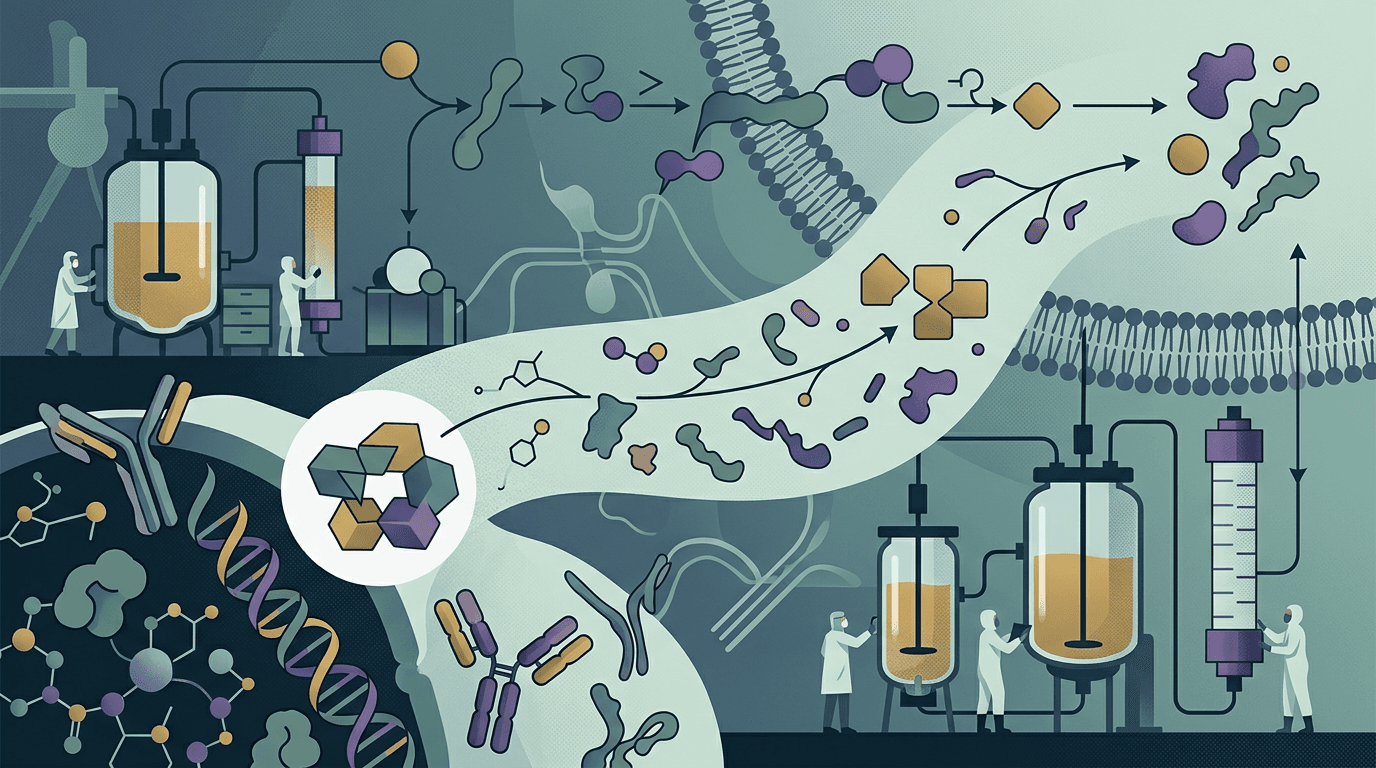
Boehringer Ingelheim just dropped up to €407 million on a preclinical antibody from a startup most people have never heard of. The bet: that killing rogue immune cells, not just blocking their signals, is the future of autoimmune medicine.
The Autoimmune Playbook Is Getting a Rewrite
For the past two decades, treating autoimmune diseases has basically worked the same way: block the inflammatory signal. TNF inhibitors were the first blockbusters. Then came drugs targeting IL-17 and IL-23, which worked better and cleaner. JAK inhibitors offered a pill instead of an injection, until safety scares scared everyone off.
The pattern is always the same: find an inflammatory molecule, build a drug to neutralize it, repeat. It's like treating a house fire by catching the sparks instead of cutting off the gas line.
Boehringer Ingelheim just signaled it wants to cut off the gas line. And it's willing to pay up to €407.5 million (about $478 million) to do it.
A Tiny Biotech With a Big Idea
The company on the other end of this deal is Immunitas Therapeutics, a Waltham, Massachusetts startup most people outside biotech circles have never heard of. Founded in 2019 by scientists from Dana-Farber, MIT, Mass General, and the Broad Institute, Immunitas has raised roughly $97 million across two venture rounds. Its backers include Leaps by Bayer, Novartis Venture Fund, and a half-dozen other institutional investors.
What makes Immunitas different isn't the size of its checkbook. It's the thesis. Instead of blocking inflammatory signals after they've been released, Immunitas wants to kill the cells that produce them in the first place.
Think of it this way: most autoimmune drugs are like noise-canceling headphones. They muffle the symptoms. Immunitas is trying to unplug the speaker.
The Science: Hunting Rogue T Cells
The company's platform uses single-cell genomics (essentially reading the genetic identity of individual immune cells) to figure out which specific cells are causing trouble. Their flagship target is a protein called CD161, a marker found on a subset of T cells that show up at sites of inflammation.
These aren't just any T cells. They're the ones pumping out a cocktail of inflammatory molecules: IL-17A, TNF-alpha, interferon-gamma, and others. In diseases like Crohn's, they pile up in the gut lining like uninvited guests who won't leave.
Get tomorrow's biotech intelligence before your competitors.
Join thousands of biotech professionals who start their day with our free, daily briefing.
The asset Boehringer licensed is a preclinical antibody called IMT-380, a fully human antibody designed to selectively destroy these CD161-positive pathogenic T cells. Last July, at the FASEB Autoimmunity Conference, Immunitas showed that IMT-380 could deplete these rogue cells in tissue samples from Crohn's patients and reduce inflammation in animal models of skin disease.
It's early data. Very early. But the concept is compelling: rather than blocking one cytokine at a time (which is why some patients cycle through three or four drugs), you eliminate the cellular factory producing all of them.
What Boehringer Is Actually Paying
Let's talk money. The deal gives Boehringer worldwide rights to develop, manufacture, and sell IMT-380 for chronic inflammatory and autoimmune diseases. In return, Immunitas gets an undisclosed upfront payment, milestone payments totaling up to €407.5 million tied to development, regulatory, and commercial targets, plus tiered royalties on future sales.
The upfront wasn't disclosed, which usually means it's modest. That's typical for preclinical assets; the real money flows when (and if) the drug hits clinical milestones. For context, AbbVie recently structured a similar deal with OSE Immunotherapeutics: $48 million upfront with up to $665 million in milestones for a preclinical anti-inflammatory antibody.
These "biobucks" deals are essentially big pharma placing a bet. Most of the headline number never gets paid. But the willingness to put €407 million on the table tells you Boehringer sees something special in the mechanism.
Why Boehringer, and Why Now?
This isn't Boehringer acting on impulse. It's the third inflammation deal the company has announced this year alone. In February 2026, it signed a deal worth over $500 million with Sitryx for oral small-molecule drugs targeting autoimmune conditions. It's also pursuing a bispecific antibody for IBD through a deal with Simcere.
Scott DeWire, who works on business development at Boehringer, posted on LinkedIn that he was "proud of this recent flurry" of immunology deals. And the flurry extends back to January 2024, when Boehringer announced five partnerships in a single day across oncology and fibro-inflammatory disease, working with companies like Kyowa Kirin, Enara Bio, and 3T Biosciences.
The pattern is clear: Boehringer is building an immunology pipeline almost entirely through external deals, snapping up preclinical assets and betting its internal R&D machine can push them through the clinic. It's a strategy that only works if you have deep pockets and patience. As a family-owned company (no public shareholders demanding quarterly results), Boehringer has both.
The Bigger Picture: Autoimmune 3.0
Boehringer isn't the only one making this pivot. The entire autoimmune space is entering what you might call its third act.
Act One was TNF blockers (Humira, Remicade), which proved you could tame the immune system with biologics. Act Two brought more precise cytokine targeting: IL-17 inhibitors, IL-23 blockers, and TYK2 drugs like BMS's Sotyktu, which hit its Phase 3 targets in psoriatic arthritis earlier this year with 54% of patients showing meaningful improvement versus 34% on placebo.
Act Three is about going upstream, past the cytokines, to the cells themselves. That's where CD161 targeting, B-cell depletion strategies, and other cell-specific approaches come in. The logic is straightforward: if 30 to 40% of patients don't respond to existing therapies (a stubborn reality across autoimmune diseases), maybe the problem isn't which signal you're blocking. Maybe you're targeting the wrong level entirely.
What Could Go Wrong
Plenty. IMT-380 is preclinical, meaning it hasn't been tested in a single human patient yet. The jump from depleting cells in a dish to doing it safely inside a person is enormous. Selectively killing immune cells always raises the specter of infections or unintended immune suppression; just ask the JAK inhibitor crowd.
There's also the question of durability. If you wipe out CD161+ T cells, do they come back? Do other immune cells compensate and restart the inflammation? These are questions only clinical trials can answer, and those are likely years away.
And then there's competition. Abcuro tried a somewhat similar approach, targeting a protein called KLRG1 on pathogenic T cells. It didn't work out. Being first-in-class sounds glamorous until you realize it also means there's no roadmap.
The Bottom Line
Boehringer just made a big, early bet that the future of autoimmune treatment isn't about blocking signals; it's about eliminating the source. If IMT-380 works, it could offer the kind of deep, durable disease control that current drugs can't deliver for millions of patients who cycle through one biologic after another.
If it doesn't? Well, that's why most of the €407 million is in milestones, not upfront cash. Boehringer isn't betting the farm. But it is planting a flag in what could be the most important shift in autoimmune medicine in a generation.
For Immunitas, a six-year-old startup with fewer than 100 employees, it's validation that their science caught the attention of one of the world's largest private pharma companies. That's not nothing. That might be everything.
Clinical & Regulatory
4 min read
Pfizer Just Crashed the Hardest Party in Hemophilia
Pfizer just won EU approval to treat the hardest cases in hemophilia: patients whose immune systems attack their own medication. The Phase 3 data showed a 93% drop in bleeding, and the competitive implications are fascinating.