
Insilico Medicine just dosed the first human with an AI-designed brain-penetrant drug targeting Parkinson's-related inflammation. It's one of the toughest design challenges in pharma, and a robot chemist pulled it off in record time.
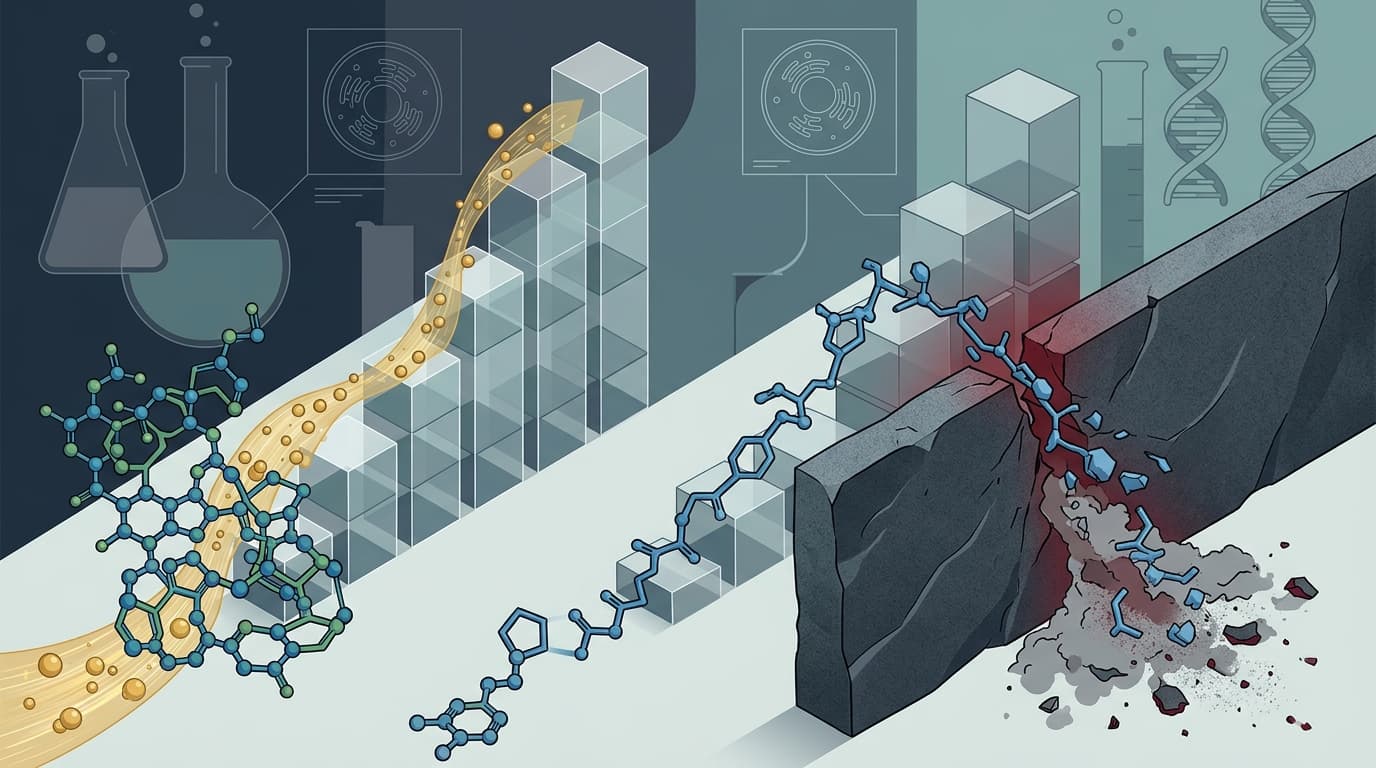
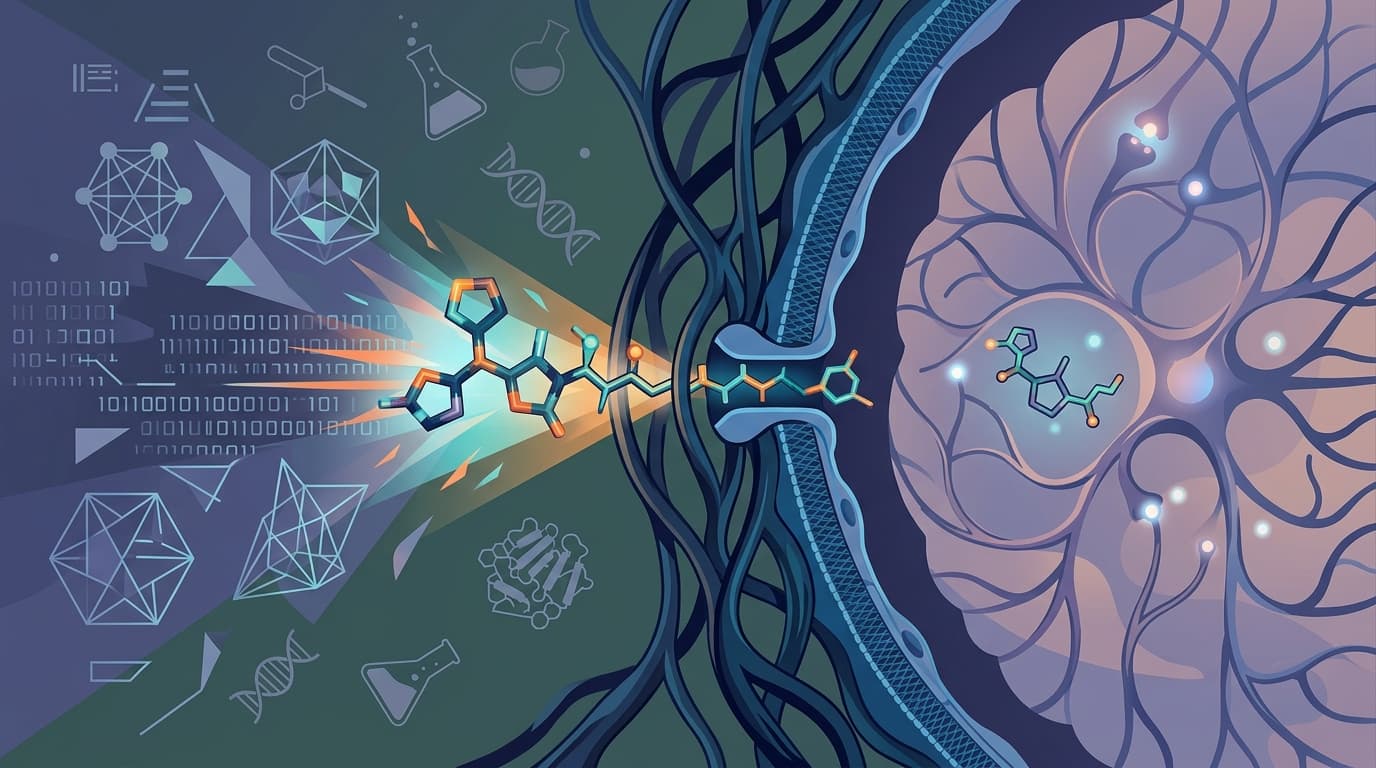
Most drugs never make it to the brain. The blood-brain barrier (a tightly sealed wall of cells protecting your gray matter) rejects roughly 98% of small molecules that try to cross it. Designing a pill that slips through that barrier, quiets inflammation, and doesn't wreck your liver along the way is one of the hardest challenges in drug development.
Now imagine asking an AI to design that pill from scratch.
That's exactly what Insilico Medicine did. On June 17, 2026, their AI-designed molecule ISM8969 was dosed in its first human volunteer: an orally available, brain-penetrant drug built to shut down a specific inflammatory switch implicated in Parkinson's disease. The molecule was conceived, optimized, and delivered to the clinic by generative AI. And it represents one of the clearest real-world tests yet of whether robot chemists can actually produce drugs that work in the messiest organ we have.
The drug targets something called the NLRP3 inflammasome, which is essentially your immune system's fire alarm for the brain. When it goes off inappropriately (or won't stop ringing), it triggers a cascade of inflammatory molecules, particularly IL-1β, that damage neurons over time.
In Parkinson's disease, misfolded clumps of a protein called alpha-synuclein pull the NLRP3 alarm repeatedly. Microglia (the brain's resident immune cells) respond by flooding the area with inflammatory signals. The result is a vicious cycle: more inflammation, more neuron death, more alarm signals. Think of it like a smoke detector that triggers the sprinklers, which short-circuit the wiring, which starts another fire.
ISM8969 is designed to silence that alarm. In preclinical mouse models, the drug showed dose-dependent improvement in motor function; at 20 mg/kg, mice on rotarod tests and grip-strength assays performed close to healthy controls. The drug also crossed the blood-brain barrier and demonstrated anti-inflammatory effects across multiple disease models.
The Phase I study is a trial running in Australia. It's designed to test safety and tolerability first, not cure anyone. The study plans to enroll plus at cardiovascular risk, using both single ascending dose and multiple ascending dose cohorts.

HHS says biotech companies have been submitting mountains of manufacturing data that FDA never actually required for Phase 1 trials. Operation TrialBlazer aims to cut 6–12 months off first-in-human timelines, and the implications for cash-strapped startups are massive.


Join thousands of biotech professionals who start their day with our free, daily briefing.

One design choice stands out: the trial will collect cerebrospinal fluid (CSF) samples to directly measure whether ISM8969 reaches the brain at therapeutic levels. That's the real proof-of-concept here. Lots of drugs look good in mice. Far fewer actually penetrate the human CNS at concentrations that matter.
Insilico is co-developing ISM8969 with Hygtia Therapeutics.
Insilico's Chemistry42 platform uses more than 40 generative chemistry engines to design molecules with specific properties: potency, selectivity, the ability to be absorbed orally, low toxicity. The company claims an average of about 13 months from project start to preclinical candidate, synthesizing only 60 to 200 compounds per program (far fewer than the thousands a traditional pharma team might churn through).
The numbers back up the pace. By late 2025, Insilico reported 28 preclinical candidates nominated since 2021 and 10 programs in clinical trials. Their flagship molecule, a lung fibrosis drug called ISM001-055, went from target discovery to Phase I in under 30 months and has since posted positive Phase IIa data published in Nature Medicine.
ISM8969 is significant because CNS drugs are notoriously hard. Getting a molecule across the blood-brain barrier while maintaining oral bioavailability, safety margins, and target engagement is the pharmaceutical equivalent of threading a needle while riding a unicycle. If the Phase I data confirm brain penetration in humans, it validates that generative AI can handle even the most constrained design problems in drug development.
ISM8969 isn't the only NLRP3 inhibitor chasing Parkinson's. The landscape has exploded: over 25 NLRP3 candidates are now in clinical trials globally, and no selective NLRP3 inhibitor has been approved for any indication. In the brain-penetrant, neuro-focused subcategory, Insilico faces several competitors.
VTX-3232 from Ventyx Biosciences (acquired by Eli Lilly) has completed a Phase 2a open-label study for Parkinson's and neuroinflammation. NT-0150 from NodThera is in Phase 1 with explicit PD positioning. HL-400 uses a molecular glue approach and has shown efficacy in alpha-synuclein mouse models. AC Immune's ACI-19764 entered Phase 1 in 2026 targeting Alzheimer's, Parkinson's, and ALS.
The race is real, and nobody has crossed the finish line. There's no approved therapy that slows Parkinson's progression; everything on the market just manages symptoms. That unmet need (affecting millions of patients worldwide, with no disease-modifying option) is what makes this space so attractive, and so competitive.
ISM8969 reaching first-in-human dosing doesn't prove it works. Phase I trials test safety, not efficacy. The drug could fail spectacularly in later trials, as most drugs do.
But the milestone matters for a different reason. It's a concrete demonstration that generative AI can design a molecule sophisticated enough to cross the blood-brain barrier, hit a specific inflammatory target, show efficacy in animal models, pass IND-enabling studies, and earn regulatory clearance to enter humans. That's not a press release about "AI potential." That's a needle in someone's arm.
The next few months will tell us whether ISM8969 actually reaches the brain in humans at meaningful concentrations. If those CSF samples come back positive, Insilico won't just have validated a drug candidate. They'll have validated a new way of inventing medicine for the hardest organ to treat.
Exelixis' next-generation drug zanzalintinib missed a key survival endpoint in colorectal cancer, sending shares down 10-12%. With Cabometyx still driving 90% of revenue, the pressure to prove the successor can carry the franchise just got a lot more intense.