AbbVie's $745M Bet That Pain Relief Doesn't Need Opioids
AbbVie just licensed two early-stage, non-opioid pain drugs from a Chinese pharma company most people have never heard of, in a deal worth up to $745 million. It's a small upfront bet with massive implications for AbbVie's post-Humira future and the booming China-to-West licensing pipeline.
Imagine a painkiller that blocks pain signals with the precision of a sniper rifle instead of carpet-bombing your brain like an opioid. That's what AbbVie just spent up to $745 million to chase.
On April 10, the pharma giant signed an exclusive licensing deal with Haisco Pharmaceutical, a mid-sized Chinese drugmaker most Americans have never heard of. The prize: two early-stage pain drug candidates that target a specific sodium channel in pain-sensing nerves. The price tag reflects a classic biopharma gamble, with a modest $30 million upfront and the remaining $715 million tied to milestones that only pay out if the science actually works.
But this deal isn't just about two molecules. It's a signal flare for where AbbVie is headed, and a fresh data point in the exploding trend of Western pharma shopping for drugs in China.
The Drugs: Tiny Molecules, Big Ambitions
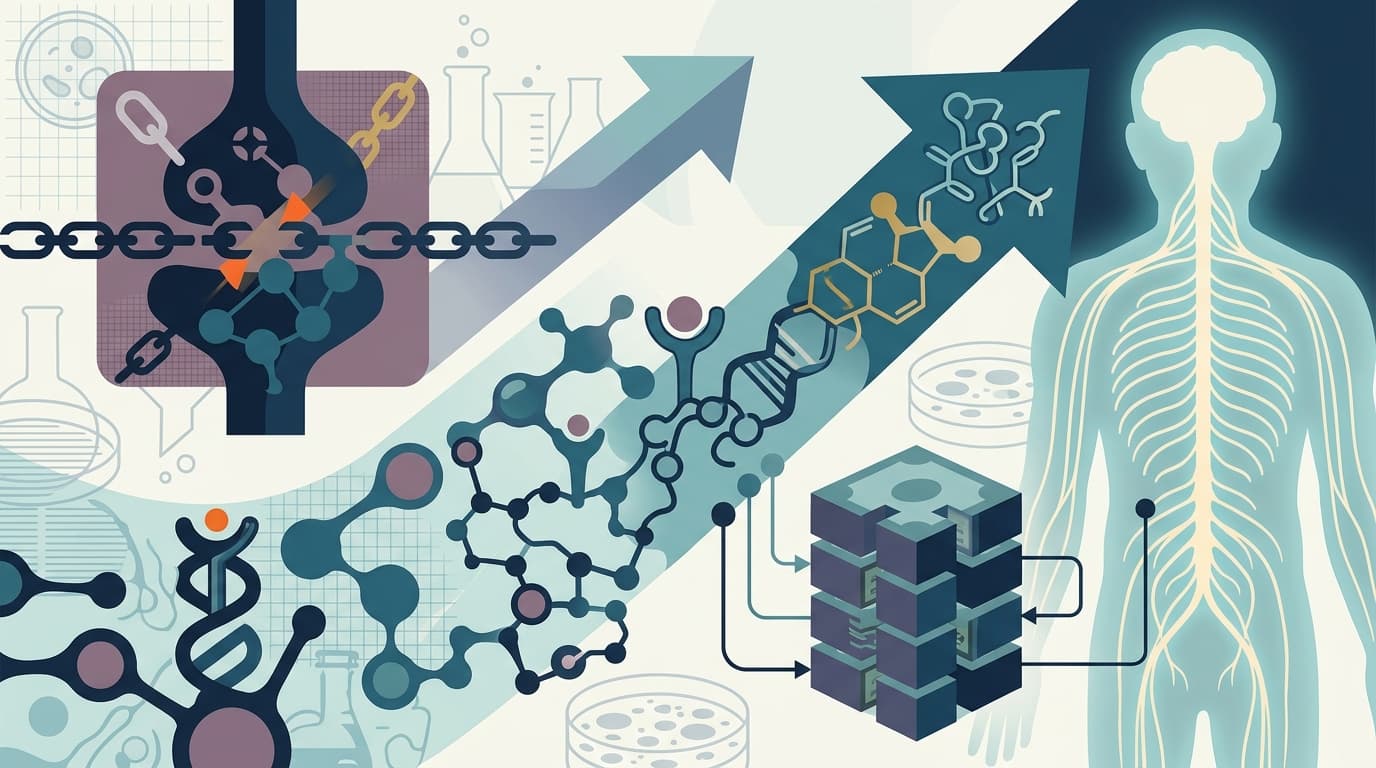
Both candidates belong to a drug class called NaV1.8 inhibitors. Think of NaV1.8 as a doorbell on pain-sensing nerve cells. When it rings, your brain hears "ouch." These drugs are designed to disconnect that doorbell, blocking pain signals before they ever reach headquarters.
The key selling point? They do this without touching the opioid system at all. No euphoria, no addiction risk, no respiratory depression. It's targeted pain relief rather than the pharmacological sledgehammer that fueled a national crisis.
The two assets are HSK55718, an intravenous formulation currently in Phase 1 trials in China for post-surgical abdominal pain, and HSK51155, an oral version still in the preclinical stage. One is for hospitals; the other could eventually be a take-home pill. Together, they give AbbVie a portfolio approach to acute pain.
If this sounds familiar, there's a reason. Vertex Pharmaceuticals already got its own NaV1.8 inhibitor, Journavx (suzetrigine), approved in early 2025. AbbVie clearly wants a piece of this emerging category, even if it means starting from behind.
Get tomorrow's biotech intelligence before your competitors.
Join thousands of biotech professionals who start their day with our free, daily briefing.
The deal structure tells you a lot about the risk profile here. AbbVie is paying just $30 million upfront, which is pocket change for a company that will generate over $31 billion from Skyrizi and Rinvoq alone by 2027. The remaining $715 million in development, regulatory, and commercial milestones only kicks in if the drugs clear specific hurdles. Haisco also gets tiered royalties up to the mid-single-digit percentage range on future sales.
In exchange, AbbVie gets exclusive rights to develop, manufacture, and sell both drugs globally, except in mainland China, Hong Kong, and Macau (where Haisco keeps control). AbbVie also funds R&D through clinical proof-of-concept, meaning it's bankrolling the early experiments to see if these drugs actually work in humans outside China.
For Haisco, this is validation. The Shenzhen-listed company, founded in 2000, has built a respectable portfolio of 46 marketed products and nine "Category 1" new drugs in development. Its breakout hit, Ciprofol Injection (an innovative anesthetic), proved the company could do original drug development, not just generics. This AbbVie deal follows a $955 million lung disease licensing agreement Haisco signed in January 2026, making it a suddenly prolific out-licensor.
Haisco CEO Dr. Pangke Yan described the partnership as "highly aligned with our international development strategy," pointing to AbbVie's neuroscience expertise as a reason to trust them with these assets.
Why AbbVie Needs a Pain Strategy (Like, Yesterday)
Let's zoom out. AbbVie built its empire on Humira, the anti-inflammatory juggernaut that was once the best-selling drug in history. But biosimilar competition arrived in 2023, and the company has been in diversification mode ever since.
The shopping spree has been aggressive: ImmunoGen for oncology in early 2024, Cerevel Therapeutics for neuroscience later that year, Aliada Therapeutics for Alzheimer's in December 2024, and Gilgamesh Pharmaceuticals for depression in 2025 (worth up to $1.2 billion). Pain, though, remained a gap. The company had Botox for migraine prevention, sure, but nothing in the acute pain space where opioid alternatives could reshape the market.
This Haisco deal fills that hole. AbbVie has publicly stated its goal of building a full pain pipeline by 2026, including migraine and non-opioid innovations. With these NaV1.8 inhibitors, the company now has candidates that could compete in post-surgical pain, one of the largest acute pain markets in medicine.
China's Pharma Aisle Is Wide Open
The AbbVie/Haisco deal is part of a much bigger story. Chinese biopharma out-licensing to Western companies hit a staggering $135.7 billion across 157 deals in 2025, representing explosive growth over prior years.
And 2026 is running even hotter. By mid-February, 38 deals had already reached $49 billion in total value, with the average deal size jumping 76% compared to 2025. The marquee transactions are massive: CSPC Pharmaceuticals signed an $18.5 billion deal with AstraZeneca, Innovent Biologics inked an $8.85 billion agreement with Eli Lilly, and AbbVie itself closed a $5.6 billion deal with RemeGen earlier this year.
What's driving this? Patent cliffs, mostly. Global pharma faces roughly $200 billion in revenue at risk from expiring patents between 2026 and 2030. Companies need new drugs, fast. Chinese biotechs have them, increasingly at premium prices. The days of China being the "bargain basement" of drug licensing are fading; upfront payments in early 2026 averaged 22% higher than the full-year 2025 figure.
The standard deal structure has become a well-worn template: the Chinese company keeps rights in Greater China (handling local regulatory and reimbursement), while the Western partner takes the rest of the world and funds global clinical trials. Everybody gets what they're good at.
The Bottom Line
AbbVie's $745 million bet on Haisco's pain assets is a low-risk, high-optionality play. The $30 million upfront is a rounding error on AbbVie's balance sheet. If the drugs fail, they walk away having lost the equivalent of what they earn in a few hours. If they work, AbbVie gets a non-opioid pain franchise that could compete with Vertex in one of pharma's most socially significant therapeutic areas.
The bigger picture matters more than the deal itself. Western pharma's hunger for Chinese innovation is no longer a trend; it's the new normal. And AbbVie, with its post-Humira identity crisis, is betting that the next chapter of its story won't just be written in immunology. It'll be written in pain.
Funding & Financings4 min read
The Protein Company That Tripled Revenue Wants a Billion-Dollar Valuation
A protein detection company you've probably never heard of just tripled its revenue and is asking Wall Street for a billion-dollar valuation. Alamar Biosciences is betting that proteins, not just DNA, hold the key to finding diseases early.