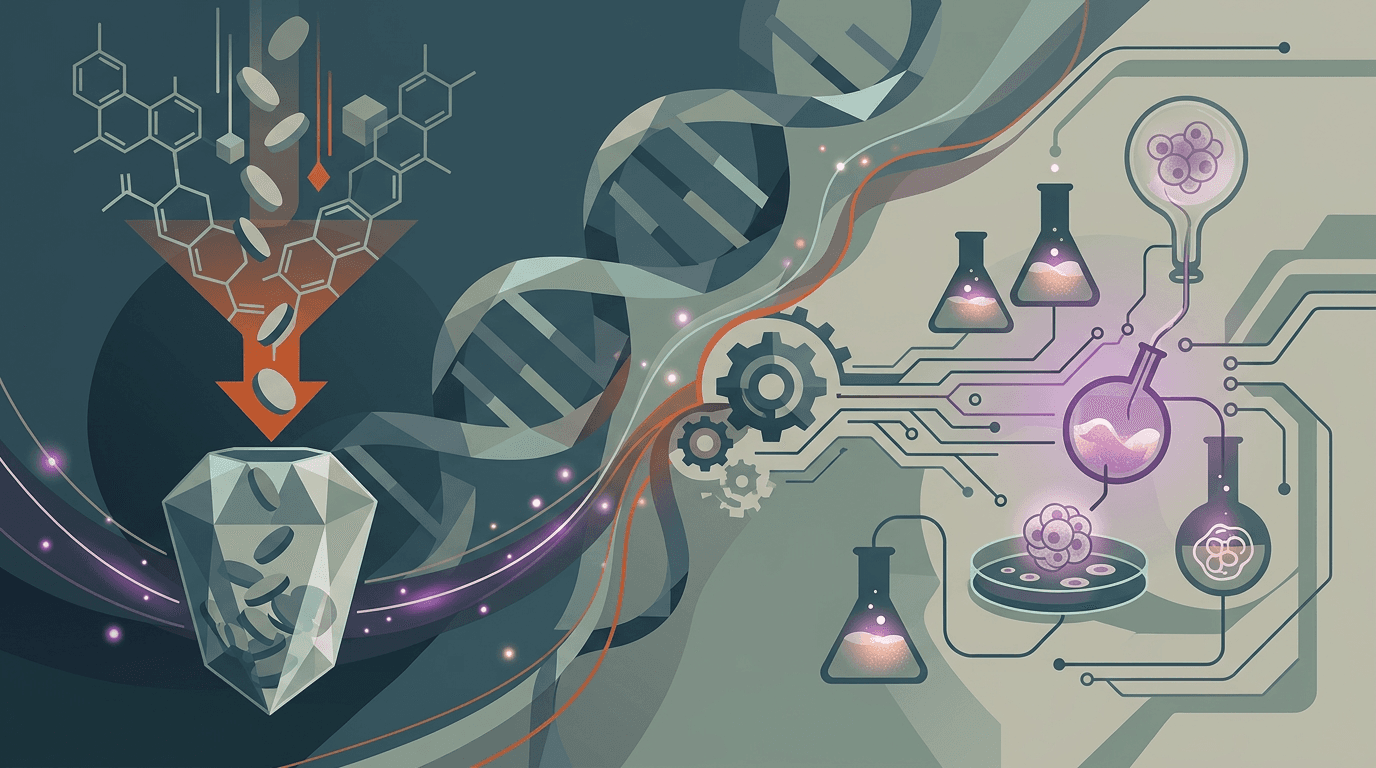

Sidewinder Therapeutics just raised $137 million without a single drug in human testing. Its secret weapon: bispecific ADCs that target cancer cells with two signals instead of one, like a bouncer checking two forms of ID. The investor list is stacked, but the real test is still years away.
Sidewinder Therapeutics has been around for barely three years. It has zero drugs in human trials. It hasn't filed a single application with the FDA. And yet, investors just handed it $137 million in a funding round that was oversubscribed.
That's not a typo. A pre-clinical biotech company in San Diego pulled in nine figures from some of the biggest names in healthcare investing. The round brings Sidewinder's total haul to $162 million since its founding in 2023. For a company most people have never heard of, that's a staggering amount of confidence.
So what does Sidewinder have that's worth all that money? The answer involves a clever twist on one of oncology's hottest drug types.
To understand Sidewinder, you need to understand antibody-drug conjugates, or ADCs. Think of them as guided missiles for cancer. A traditional chemotherapy drug is like carpet-bombing a city to hit one building: it kills cancer cells, sure, but it also destroys a lot of healthy tissue along the way. An ADC, by contrast, attaches a toxic payload to an antibody that's designed to seek out a specific marker on tumor cells. The antibody finds the target, locks on, gets pulled inside the cancer cell, and releases its poison.
It's an elegant concept. The problem? Most ADCs are guided by a single marker. And that marker often shows up on healthy cells too, which means the guided missile sometimes hits the wrong building. This leads to side effects that limit how much drug you can give, which limits how well it works.
Sidewinder thinks it has a better approach.
Instead of homing in on one target, Sidewinder's ADCs are bispecific, meaning they recognize two markers at the same time. Specifically, they look for pairs of receptors that appear together on tumor cells but rarely show up as a duo on healthy tissue.
Imagine you're looking for someone in a crowd. Searching for "person wearing a red hat" might match dozens of people. But "person wearing a red hat a green scarf" narrows it down dramatically. That's the logic behind Sidewinder's platform: by requiring two signals instead of one, the drug becomes far more selective about which cells it attacks.

Eli Lilly just paid up to $300 million for a three-year-old startup that hasn't tested a single drug in humans. CrossBridge Bio's dual-payload ADC technology is so hot that Lilly couldn't wait for clinical data, and the deal reveals just how frenzied the ADC arms race has become.


Join thousands of biotech professionals who start their day with our free, daily briefing.

This dual-targeting also helps the drug get pulled inside cancer cells more efficiently, which means more payload delivered where it matters. The company has partnered with Lonza's Synaffix subsidiary for site-specific conjugation technology (a fancy way of saying they attach the toxic cargo to the antibody at precise, consistent locations). That consistency matters because it makes the drug more predictable and potentially safer.
The $137 million Series B was co-led by Frazier Life Sciences and Novartis Venture Fund. OrbiMed, which was Sidewinder's sole backer in its earlier Series A round, came back for more. New investors joining the party include Life Sciences at Goldman Sachs Alternatives, DCVC Bio, Samsara BioCapital, Longwood Fund, Astellas Venture Management, and Alexandria Venture Investments.
That investor list reads like a who's-who of smart healthcare money. When Novartis's venture arm and Goldman Sachs both write checks for a pre-clinical company, it signals something beyond routine optimism. These are groups that do serious diligence and have deep oncology expertise. Four new board members came aboard with the round, including representatives from Frazier, Novartis Venture Fund, Goldman Sachs Alternatives, and DCVC Bio.
CEO and co-founder Eric Murphy, Ph.D. will steer the funds toward getting Sidewinder's lead program, called SWT012, into IND-enabling studies (the preclinical work needed before you can test a drug in humans). The target: file with the FDA by the end of 2026 and start clinical trials in 2027. SWT012 is aimed at bladder cancer, a notoriously tough cancer with limited treatment options.
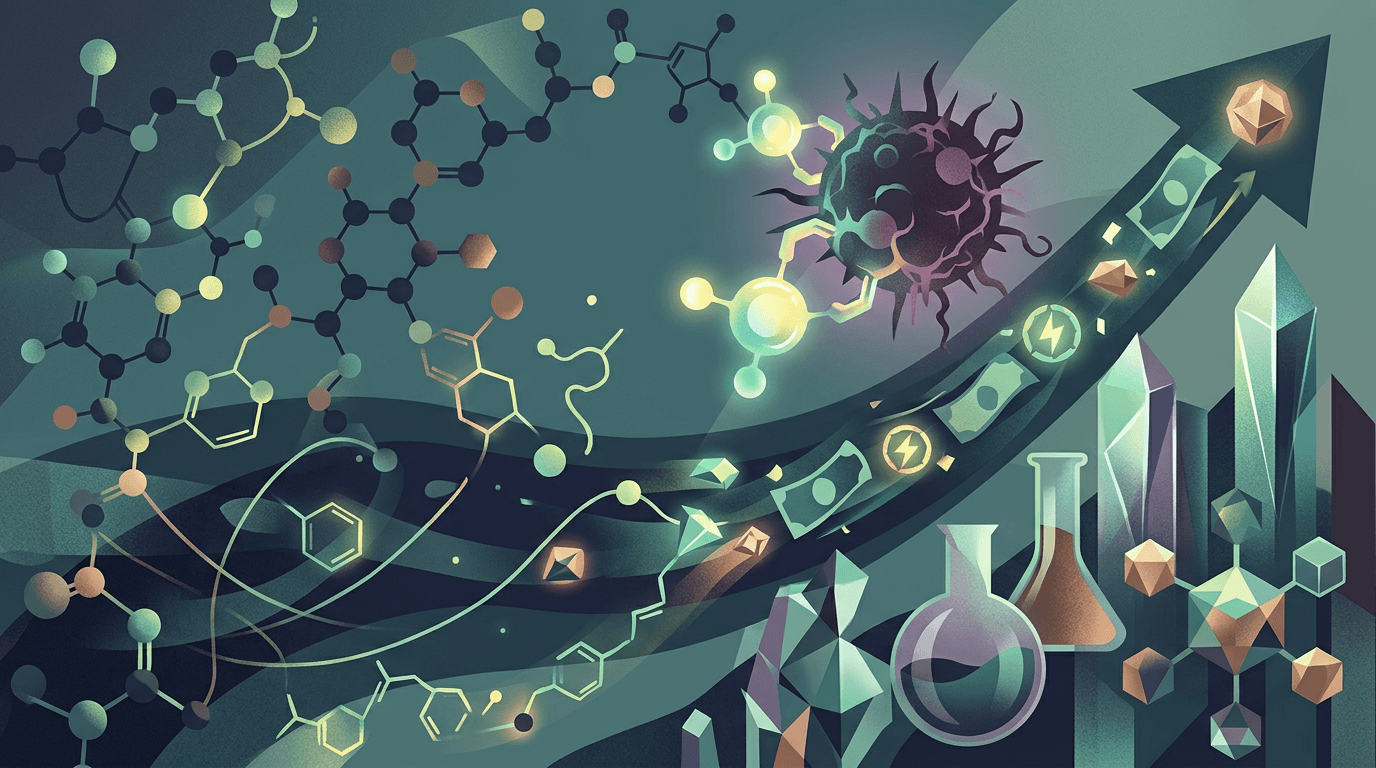
Sidewinder's raise didn't happen in a vacuum. The ADC space has been on fire. The global next-generation drug conjugates market is projected to grow from $4.2 billion in 2025 to roughly $15.5 billion by 2035. That kind of growth trajectory keeps investors circling.
Big pharma has been gobbling up ADC assets through acquisitions and licensing deals. The competitive landscape is expanding beyond classic targets like HER2 into newer ones like TROP2, c-Met, and Claudin18.2. China-originated ADC innovation has been going global through cross-border partnerships, adding both competition and validation to the space.
Omar Khalil, a managing director at Santé Ventures, has pointed to a broader shift in venture capital appetite. Investors are increasingly willing to back "best-in-class" programs with novel biology, partly because validated targets are getting crowded. When everyone's chasing the same tumor marker, being different isn't just nice; it's a survival strategy. And Sidewinder's bispecific approach is, by definition, different.
Let's not get carried away. Sidewinder has zero clinical data in humans. Preclinical results (the company says they show superior specificity over traditional monospecific ADCs) are promising, but the graveyard of biotech is filled with drugs that looked great in mice and failed in people.
Bispecific antibodies are more complex to manufacture than their single-target cousins. Scaling production while maintaining the precision that makes the platform work will be a genuine challenge. And the ADC field is increasingly crowded.
There's also the timeline question. An IND filing by late 2026 and trials in 2027 means meaningful clinical data is probably two to three years away. A lot can change in that window: competitors could leapfrog ahead, the funding environment could shift, or the biology could simply not translate from lab to clinic.
Sidewinder's $137 million raise is a bet on a simple idea: that smarter targeting will make ADCs safer and more effective. The science is compelling, the investors are credible, and the market opportunity is enormous. But this is still a very early-stage company making very early-stage promises.
The real test comes when SWT012 enters the clinic. Until then, Sidewinder has a lot of money, a clever platform, and exactly zero proof that it works in patients. In biotech, that's both the exciting part and the terrifying part.
Novartis killed two late-stage trials for its next-gen blood thinner after it couldn't outperform Eliquis, the $14.4 billion anticoagulant behemoth. The $925 million bet on abelacimab just got a lot narrower, and the implications ripple across the entire Factor XIa race.