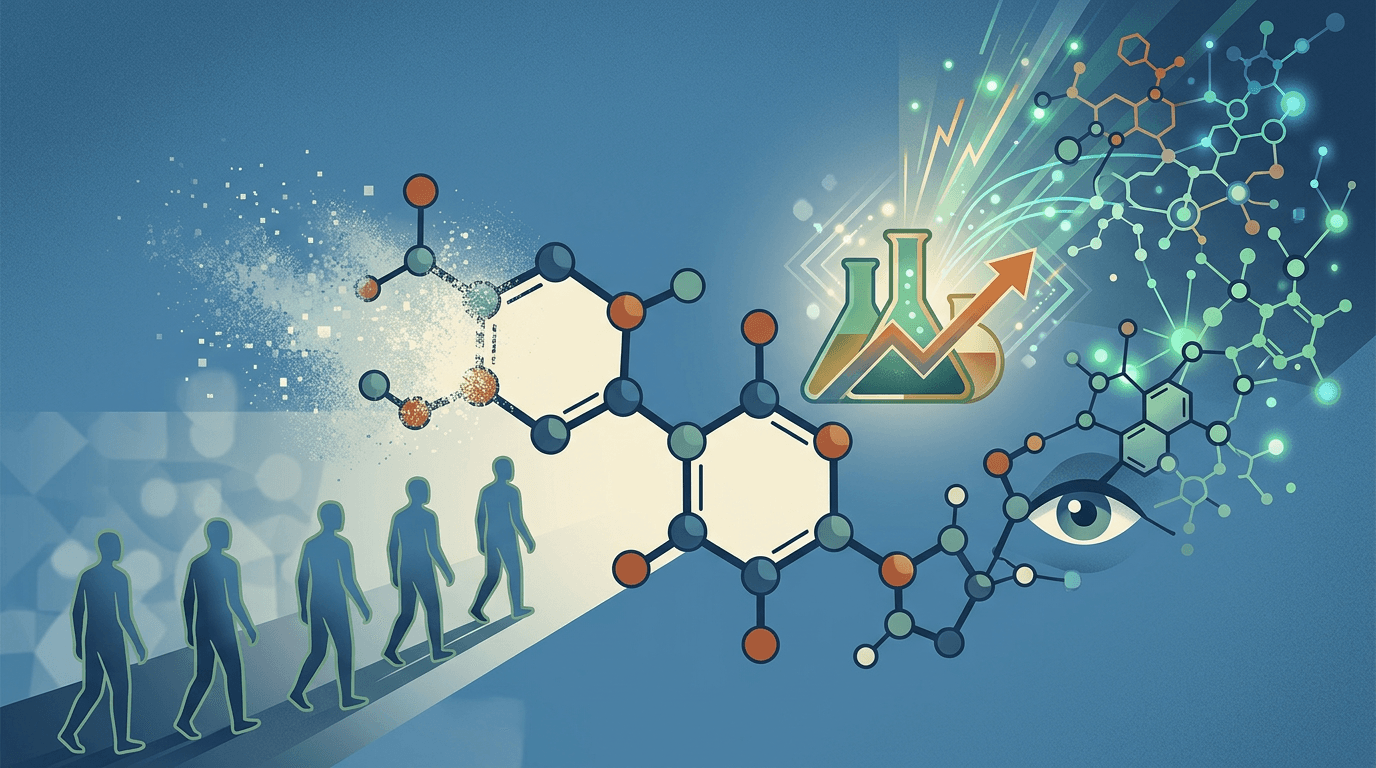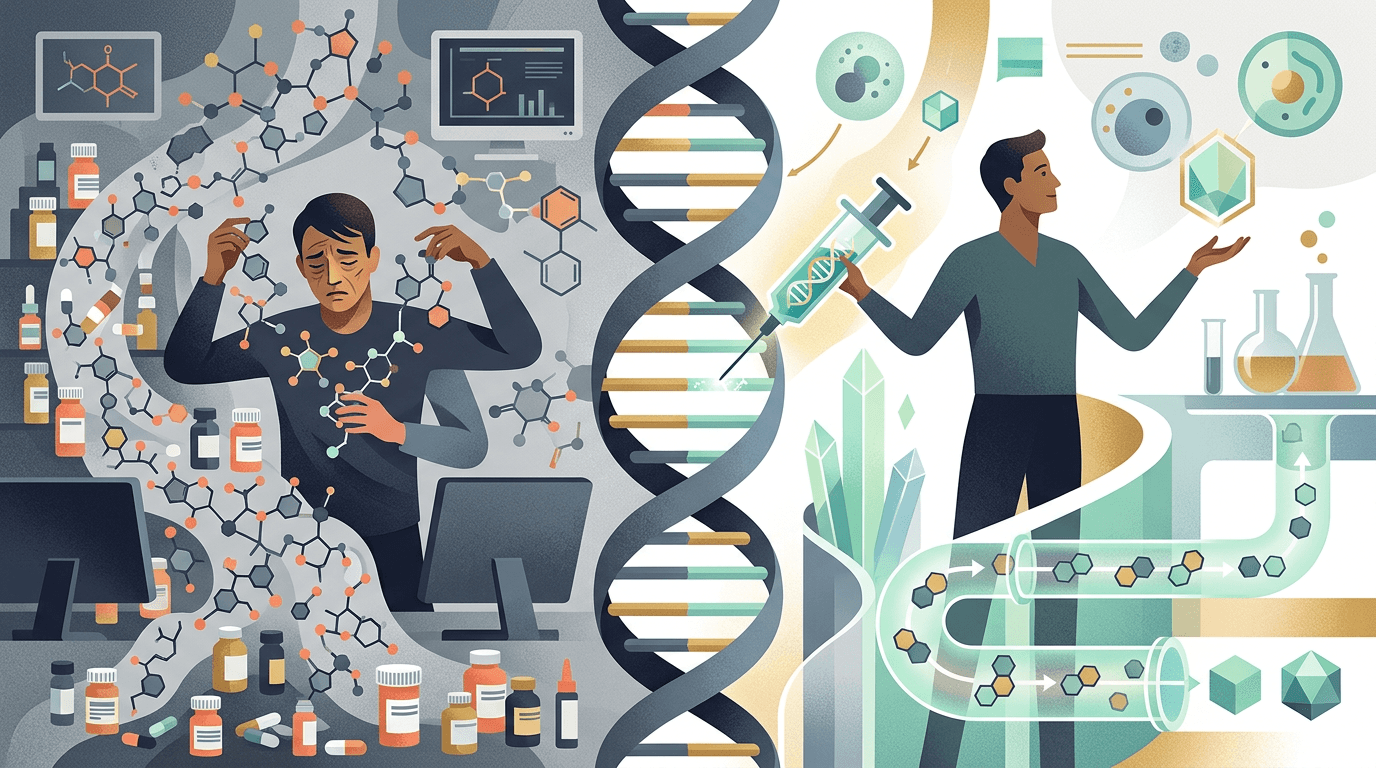

Ultragenyx's gene therapy DTX301 hit its Phase 3 primary endpoint in urea cycle disorder, cutting ammonia levels while patients ate more protein and took fewer drugs. One infusion could reshape how families manage a disease where every meal is a risk calculation.
Imagine spending your entire life on a dietary tightrope. Every meal is a math problem. Too much protein and your body can't clear the ammonia it produces, which means brain damage, hospitalization, or worse. That's daily reality for people born with urea cycle disorders, a group of rare genetic conditions where the liver can't properly convert toxic ammonia into harmless urea.
Ultragenyx just posted Phase 3 data suggesting a single IV infusion might change that equation entirely.
The company's gene therapy candidate, DTX301 (also called avalotcagene ontaparvovec), hit its first major milestone in the Phase 3 Enh3ance trial. Patients with ornithine transcarbamylase (OTC) deficiency, the most common type of urea cycle disorder, saw an 18% reduction in 24-hour plasma ammonia levels compared to placebo at week 36. The result was statistically significant, with a p-value of 0.018.
Now, 18% might not sound like a blockbuster number at first glance. But context matters enormously here. These patients were already on the best available treatment: ammonia-scavenging drugs and strict protein-restricted diets. DTX301 lowered ammonia levels on top of that standard care. And patients didn't just maintain their existing regimen; they actually reduced their ammonia scavenger medications while eating 13% more protein. Less medicine, more food, lower ammonia. That's the trifecta.
The trial enrolled 37 patients across 10 countries, randomized in a double-blind design: 18 received DTX301 and 19 got placebo. It's a small trial by oncology standards, but for a disease that strikes roughly 1 in 35,000 births, this is about as robust as it gets.
What's particularly striking is how quickly the therapy kicked in. Ammonia reductions showed up by week 6. Of the nine treated patients who started with abnormally high ammonia, eight reached normal levels and stayed there. Think of it like fixing a clogged drain: once the functional gene starts working in liver cells, the ammonia has somewhere to go again.

Join thousands of biotech professionals who start their day with our free, daily briefing.

Patient-reported outcomes told a compelling story too. When asked specifically about OTC symptoms and daily life impact, 64% of treated patients reported moderate or major improvement, versus just 19% on placebo.
OTC deficiency is like having a broken exhaust system. Your body produces ammonia as a natural byproduct of protein metabolism, and the urea cycle is supposed to convert it into urea for safe disposal through urine. When the OTC enzyme doesn't work properly, ammonia accumulates in the blood. High ammonia is neurotoxic; it can cause confusion, seizures, brain swelling, coma, and death.
The current standard of care is managing the problem without fixing it. Patients take ammonia-scavenging drugs (medications that give ammonia an alternative exit route) and severely restrict protein intake. Some undergo liver transplants, which can be curative but come with all the usual baggage: donor shortages, major surgery, and lifelong immunosuppression.
For families dealing with OTC deficiency, every fever, every stomach bug, every skipped meal carries the threat of a hyperammonemic crisis. Only one patient on DTX301 had a crisis, and nobody in the treatment group died.
DTX301 uses an AAV8 viral vector (essentially a hollowed-out virus reprogrammed to deliver a working copy of the OTC gene to liver cells). AAV-based gene therapies have a well-known side effect profile, and DTX301 followed the script. The most common adverse events were mild-to-moderate liver enzyme elevations, managed with steroids.
One patient in the treatment group developed a serious case of acute hepatitis that resolved with steroid treatment. Importantly, there were no cases of thrombotic microangiopathy (a dangerous blood clotting issue), no nerve toxicity, no malignancies, and no complex immune reactions. For a gene therapy field that's been burned by safety surprises, this is a reassuring profile.
This OTC data lands at a pivotal moment for Ultragenyx's gene therapy ambitions. The company has two other gene therapy programs approaching major regulatory decisions in 2026: DTX401 for glycogen storage disease type Ia (PDUFA date: August 23, 2026) and UX111 for Sanfilippo syndrome A (PDUFA expected Q3 2026). Both are make-or-break catalysts.
If DTX401 and UX111 cross the finish line, Ultragenyx would go from a company talking about its gene therapy platform to one with multiple approved products. The OTC data, while earlier in its regulatory timeline (a second co-primary endpoint on treatment burden reduction won't read out until H1 2027), adds a third pillar of clinical validation.
No gene therapy has been approved by the FDA for a rare metabolic liver disease yet. The competitive landscape is essentially empty, which is both an opportunity and a reflection of how hard this space is. Ultragenyx is racing to fill that void with a pipeline built on its AAV platform, acquired through the Dimension Therapeutics deal.
The Enh3ance trial isn't finished. The second co-primary endpoint will measure complete responder rate: how many patients can reduce or stop their ammonia scavengers and loosen dietary restrictions entirely. Placebo patients will cross over to receive DTX301, and that data is expected in the first half of 2027.
That second readout is arguably the more important one. Proving you can lower ammonia by 18% is meaningful. Proving you can free patients from the daily grind of scavenger drugs and protein counting? That's transformative.
For the roughly 1 in 35,000 children born with a urea cycle disorder (OTC deficiency accounts for roughly half of cases), the promise of a single infusion replacing a lifetime of dietary surveillance and emergency room visits isn't just a clinical milestone. It's the difference between surviving a disease and actually living with freedom from it.
Vistagen lost a Phase 3 trial, watched its stock drop 80%, and just cut 20% of its team. Now it's staking everything on one final trial of its anxiety nasal spray, with results due in months and cash running dangerously low.