
The U.S. biotech industry turns 50 this year, tracing back to a bar conversation that launched Genentech. But while the birthday cake is out, China is running more clinical trials, moving faster through approvals, and closing in on American dominance. The next half-century looks nothing like the first.
It started with two guys and a couple of beers.
In 1975, a 28-year-old venture capitalist named Robert Swanson cold-called a University of California biochemist named Herbert Boyer to talk about a wild idea: turning gene-splicing technology into a business. Boyer gave him ten minutes. They ended up at a bar, talking for hours. By April 7, 1976, they'd each kicked in $500, secured $200,000 in seed funding from Kleiner Perkins, and incorporated a little company called Genentech.
That bar conversation created an entire industry. And this year, the U.S. biotech sector turns 50.
Genentech's early years read like a startup fairy tale, except the product wasn't software. It was life itself.
Within a year of founding, the team produced somatostatin, the first human protein ever made in bacteria. By 1978, they'd figured out how to make synthetic human insulin, which Eli Lilly eventually brought to market as Humulin: the first recombinant DNA drug ever sold. Then came the IPO in 1980. Genentech had zero products on the market and still hit a $550 million market cap on day one. Shares launched at $35 and rocketed to $88 in under an hour.
That IPO didn't just make Boyer and Swanson rich. It proved that Wall Street would bet big on biology, and the floodgates opened. Companies like Amgen and Biogen followed. Genentech plowed roughly half its revenue back into R&D (triple the pharma industry average). Roche eventually acquired the company outright in 2009 for $46.8 billion, a price tag that would have seemed absurd during that first beer.
So what has biotech actually accomplished in 50 years? John Crowley, the President and CEO of BIO (the Biotechnology Innovation Organization, essentially the industry's biggest trade group), has framed it in terms of tens of millions of lives saved.
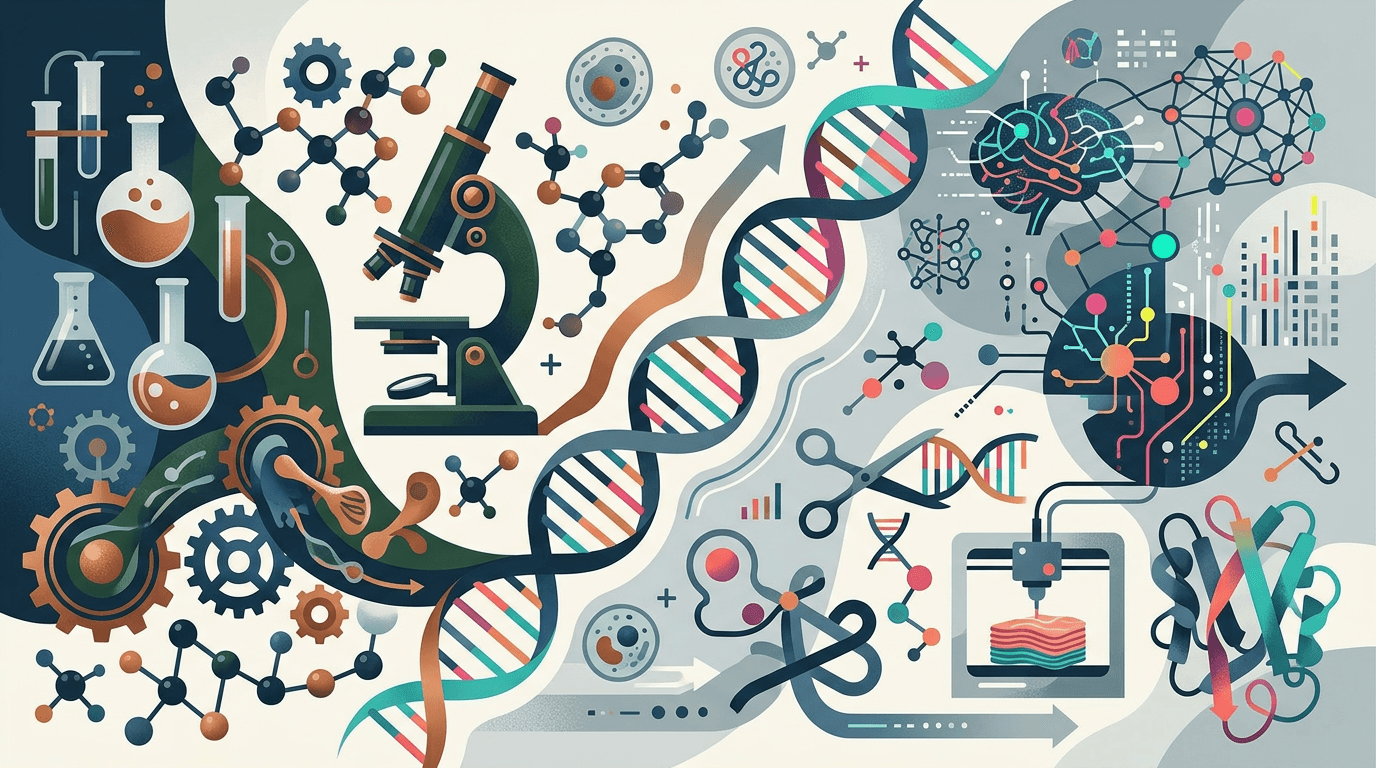
That's not hyperbole when you look at the timeline. Monoclonal antibodies, first developed in the mid-1970s, became the backbone of targeted cancer therapy. Chiron Corporation created the world's first for hepatitis B in 1986, fundamentally changing how we prevent infectious disease. CAR-T cell therapies, which reprogram a patient's own immune cells to hunt tumors, have become a real treatment option for certain cancers. And CRISPR gene-editing tools, which let scientists make precise changes to DNA like a biological find-and-replace function, moved from lab curiosity to clinical reality.

Join thousands of biotech professionals who start their day with our free, daily briefing.
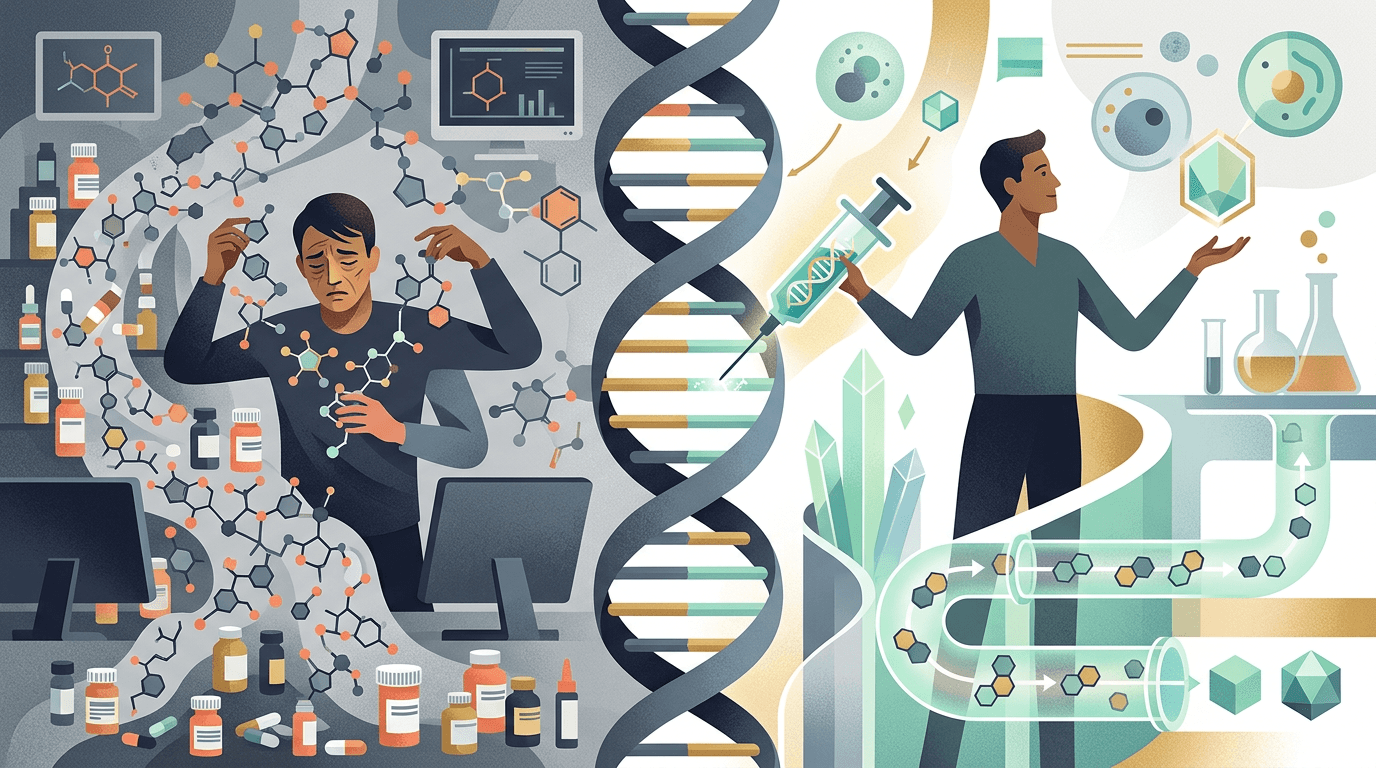
Crowley himself embodies the industry's promise. When two of his children were diagnosed with Pompe disease, a rare and often fatal neuromuscular disorder, he left his corporate job to co-found Novazyme Pharmaceuticals. That company's work eventually led to Lumizyme, an approved therapy that treated both of his kids. His daughter Megan later graduated college. (His story was dramatic enough to inspire the film Extraordinary Measures.)
As Crowley has put it: "The mission of BIO is the mission of our members: cure patients, protect our climate, and nourish humanity."
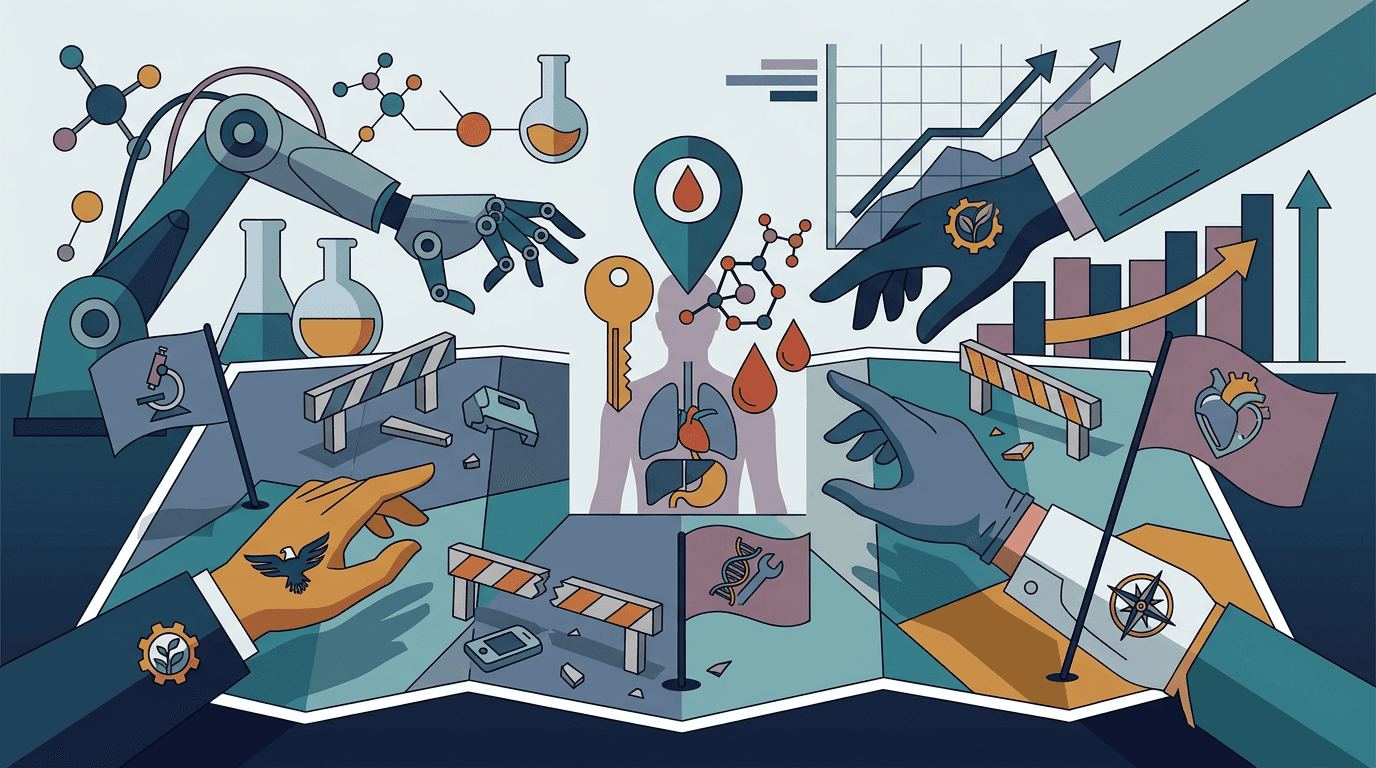
If biotech's first 50 years were about building the industry, the next chapter is about defending it. And the biggest competitive threat isn't another startup in a San Francisco garage. It's an entire nation.
China now runs more clinical trials than the United States. By 2025, Chinese firms were conducting roughly 7,100 to 7,700 trials compared to America's 6,200 to 6,300. China's share of global innovative drug candidates hit 30%, creeping up on the U.S. at 36%. And Chinese companies originated half of all global license-out deal value.
The speed difference is staggering. In the U.S., the approval process drags on. That means a Chinese biotech can get a drug into Phase I trials in nine months while American companies are still filling out paperwork.
Meanwhile, the U.S. has a supply chain problem that should keep executives up at night. America holds just 3% of new active pharmaceutical ingredient filings (compared to China's 45%). Think of it like building a house where your competitor sells you the lumber, the nails, and the concrete. If they decide to stop selling, you're standing in a field.
The policy response arrived in December 2025 with the BIOSECURE Act, signed into law as part of the FY2026 National Defense Authorization Act. The legislation restricts federal agencies from doing business with designated "biotechnology companies of concern," primarily Chinese firms with ties to the military or intelligence services.
The full list of restricted companies is due by December 2026, with enforcement phasing in over the following years through updated federal procurement rules. There's a five-year safe harbor for existing contracts, giving companies time to untangle their supply chains. But the message is clear: Washington wants to decouple American biotech from Chinese dependencies.
The National Security Commission on Emerging Biotechnology warned in late 2025 that the U.S. has a three-year window (roughly through 2028) to act decisively or risk losing its biotech edge permanently. The math isn't encouraging.
Fifty years ago, the entire biotech industry was two guys, a bar, and a thousand dollars between them. Today it encompasses thousands of companies, millions of jobs, and therapies that routinely do what would have seemed like science fiction in 1976: editing genes, programming immune cells, vaccinating the world against a novel pandemic in record time.
But birthday parties are also a good time for honest reflection. The U.S. built this industry from scratch, and it still leads. That lead, however, is narrower than it's been at any point in the last five decades. China is running more trials, closing more deals, and moving faster through regulatory gates.
The next 50 years of biotech won't just be about scientific breakthroughs. They'll be about whether the country that invented this industry can keep up with the one that studied every page of its playbook. Genentech started with a cold call and a couple of beers. Defending American biotech's future will take considerably more.
Vistagen lost a Phase 3 trial, watched its stock drop 80%, and just cut 20% of its team. Now it's staking everything on one final trial of its anxiety nasal spray, with results due in months and cash running dangerously low.