UCB Just Dropped $1.15 Billion on a Brain Cell Transplant for Epilepsy
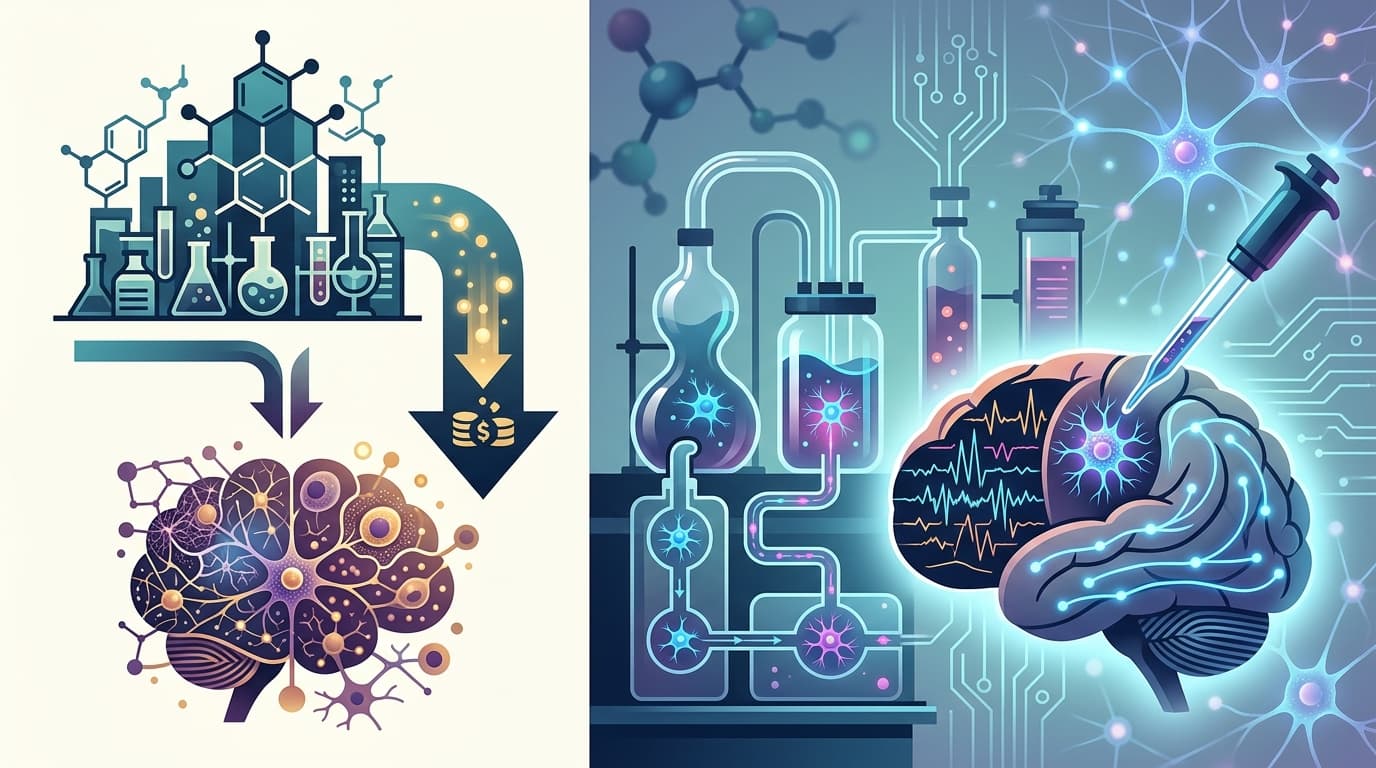
UCB is paying up to $1.15 billion for Neurona Therapeutics and its experimental brain cell transplant for drug-resistant epilepsy. The early data is striking, but turning a neurosurgical procedure into a commercial blockbuster is a whole different kind of challenge.
A Billion-Dollar Bet on Replacing Brain Cells
Imagine you could fix a broken circuit in someone's brain the same way an electrician replaces a faulty wire. Not by cutting the wire out. Not by adding more insulation. Just by installing a new, working piece that integrates seamlessly into the system.
That's essentially what Neurona Therapeutics claims its lead therapy can do. And UCB, the Belgian pharma giant with three decades in epilepsy, just agreed to pay up to $1.15 billion to find out if it's right.
The deal, announced on April 17, gives UCB full ownership of NRTX-1001, a one-time cell therapy for patients whose seizures refuse to respond to drugs. It's the kind of acquisition that either looks visionary in five years or becomes a cautionary tale in a business school textbook. There's very little middle ground.
What Exactly Is NRTX-1001?
Most epilepsy drugs work like a volume knob: they try to turn down the electrical chaos in the brain. For roughly two-thirds of patients, that's enough. But about one in three people with focal epilepsy never get adequate relief, no matter how many medications they try. These patients live with persistent, disabling seizures that erode their cognition, their independence, and their quality of life.
NRTX-1001 takes a completely different approach. Instead of suppressing abnormal signals, it transplants lab-grown inhibitory brain cells (called GABAergic interneurons) directly into the seizure-prone region. Think of it like planting new trees in a deforested hillside to prevent mudslides. The transplanted cells are designed to take root, integrate into existing neural circuits, and restore the brain's natural ability to keep electrical activity in check.
The therapy targets mesial temporal lobe epilepsy, the most common form of focal epilepsy in adults and one of the hardest to treat with drugs alone. Crucially, it's tissue-sparing: unlike surgical options that destroy brain tissue (laser ablation, resection), NRTX-1001 adds healthy cells without removing anything. That distinction matters enormously for cognition.
Get tomorrow's biotech intelligence before your competitors.
Join thousands of biotech professionals who start their day with our free, daily briefing.
The Data That Opened UCB's Checkbook
Early-stage results have been genuinely striking, even by the generous standards of Phase 1/2 data. In the low-dose group of patients with drug-resistant epilepsy, the median reduction in disabling seizures hit 92% during the primary efficacy period of months 7–12. Six out of seven patients in that group qualified as responders, meaning they experienced at least a 50% drop in seizure frequency.
The high-dose group showed a 78% median reduction at the four-to-six-month interim endpoint, with 89% of patients responding. However, the primary endpoint at months 7–12 showed a 58% median reduction. And across both groups, no serious adverse events were attributed to the therapy itself.
Perhaps most remarkable: some patients actually showed improved cognitive function after treatment. In a disease where both the seizures and the surgical alternatives can erode mental sharpness over time, that's a meaningful signal. One early participant achieved seizure-free status for over a year following a single implantation.
Now, the caveats. These are small patient numbers (single digits per cohort), and the Phase 1/2 design doesn't include a control group. The therapy earned FDA Regenerative Medicine Advanced Therapy (RMAT) designation in June 2024 and EMA PRIME status in October 2025, both of which speed up the regulatory path. But the real test is the Phase 3 EPIC trial, a randomized, sham-controlled, double-blind study planned to begin dosing in the first half of 2026.
Follow the Money
UCB structured the deal to hedge its bets. The upfront payment is $650 million in cash, with up to $500 million more tied to milestones, including up to $300 million in commercial targets. The transaction should close by the end of Q2 2026, pending antitrust clearance.
That structure tells you something. UCB believes enough in the science to write a $650 million check today, but it's keeping nearly half the total value contingent on the therapy actually working in a pivotal trial and then selling. The company confirmed its 2026 financial guidance won't change, projecting revenue growth in the high single-digit to low double-digit range.
For context, UCB sold its mature China neurology portfolio (including legacy epilepsy brands Keppra and Vimpat) for $680 million back in November 2024. So in a sense, it's recycling capital from yesterday's epilepsy drugs into what it hopes will be tomorrow's.
Why UCB and Why Now?
UCB has been quietly assembling an epilepsy empire for years. It picked up Engage Therapeutics in 2020 for a rescue therapy device. It acquired Zogenix to add Fintepla for Dravet syndrome. This isn't a company dabbling in neurology on a whim; it's a company that has decided epilepsy is its identity.
But every one of those prior acquisitions involved conventional approaches: pills, devices, small molecules. NRTX-1001 represents a philosophical leap into regenerative medicine, into the idea that you can actually repair the nervous system rather than just manage its symptoms. CEO Jean-Christophe Tellier framed it as extending UCB's legacy into next-generation therapies.
The competitive landscape adds urgency. Xenon Pharmaceuticals is developing azetukalner, an oral drug that some analysts consider a more commercially attractive option because community neurologists prefer prescribing pills over coordinating brain surgery. Wall Street has apparently flagged Xenon as a top takeover target. If UCB wants to own drug-resistant epilepsy, it needs something that pills can't replicate: a potential cure.
The Hard Part Nobody Talks About
Commercializing a cell therapy that requires a minimally invasive brain procedure is a fundamentally different challenge than selling tablets. You need specialized surgical centers, trained neurosurgeons, and patients willing to undergo a procedure rather than try yet another medication. The market is real (globally, epilepsy affects roughly 50 million people, with 30-40% developing drug resistance), but reaching those patients is a logistical puzzle.
There's also the competitive question from gene therapy. Capsida Biotherapeutics is developing CAP-002, a gene therapy for epilepsy delivered through a simple IV infusion. If that works, the convenience advantage could be significant.
But "if" is doing a lot of heavy lifting in that sentence. NRTX-1001 is further along clinically, has regulatory fast-track designations on two continents, and now has one of epilepsy's most established companies bankrolling its development.
The Bottom Line
This deal is UCB betting that the future of epilepsy treatment isn't about better drugs. It's about fixing the underlying circuitry. The early data is compelling enough to justify the price, but Phase 3 results will determine whether this was a masterstroke or a $650 million down payment on a lesson about the gap between promising science and clinical reality.
For the roughly 20 million people worldwide living with drug-resistant epilepsy, the stakes are simpler: Can transplanted brain cells do what decades of drugs could not? UCB just put over a billion dollars on "yes."
Clinical & Regulatory
4 min read
Merck's Secret Weapon for Life After Keytruda
Keytruda's patent cliff is approaching fast, and Merck just unveiled early data on a two-in-one cancer antibody that could help fill a $29.5 billion hole. The response rates are competitive, but the race is crowded and the clock is ticking.