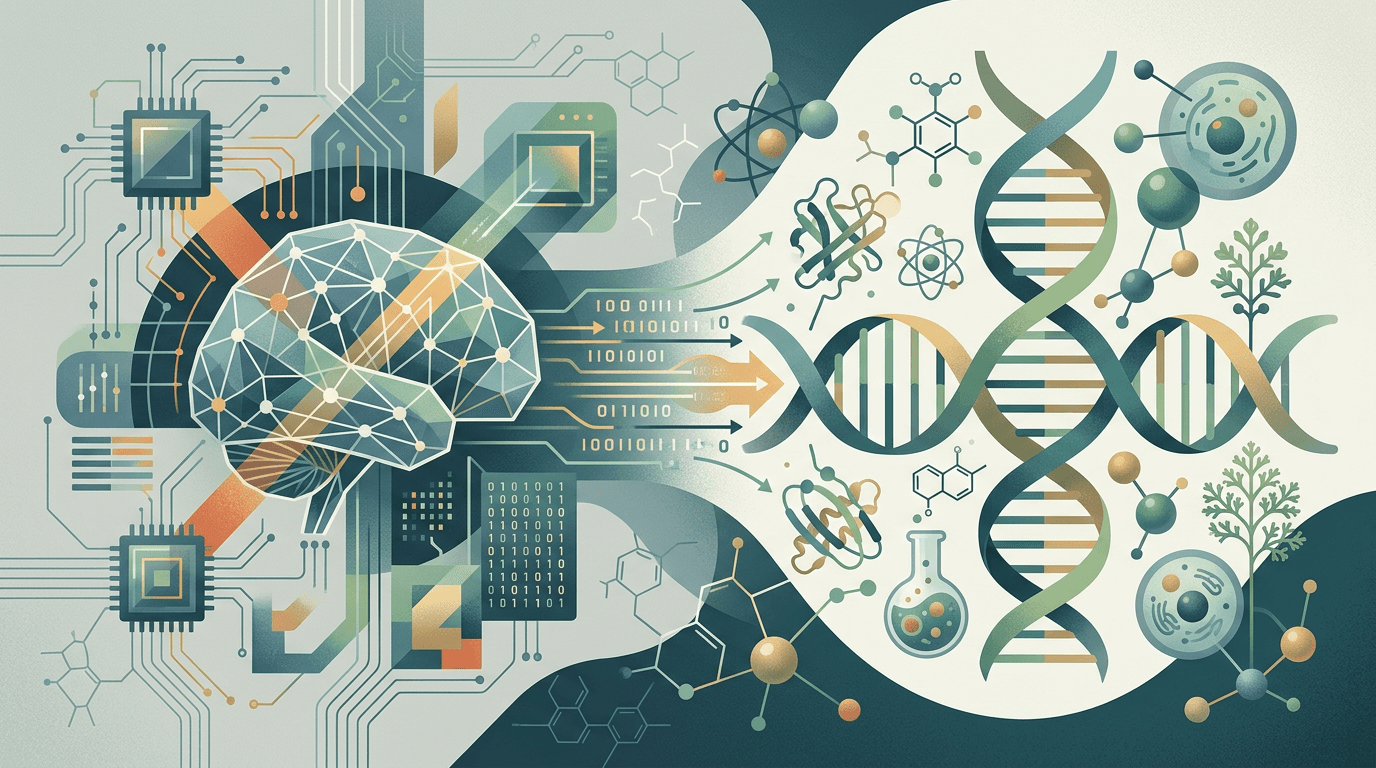
OpenAI Just Built an AI That Speaks Fluent Biology
OpenAI just dropped GPT-Rosalind, a purpose-built AI for drug discovery that already outperforms 95% of human experts on certain biology tasks. Amgen, Moderna, and Novo Nordisk are already on board, but can a language model actually make drugs get to patients faster?
It takes about 10 to 15 years to bring a new drug from a lab bench to a pharmacy shelf. That's longer than most marriages last. OpenAI thinks it can help shrink that timeline, and it just made its biggest bet yet on how.
On April 17, 2026, the company launched GPT-Rosalind, a purpose-built AI model designed specifically for drug discovery and life sciences research. Named after Rosalind Franklin (the crystallographer whose X-ray work was critical to discovering DNA's structure), it's OpenAI's first domain-specific model for biology. And some of the biggest names in pharma are already using it.
Not Your Average Chatbot
Let's be clear about what GPT-Rosalind is not. It's not ChatGPT with a lab coat on. This is a specialized reasoning model, fine-tuned for biochemistry, genomics, and protein engineering. Think of it like the difference between a Swiss Army knife and a scalpel: GPT-5.4 can do a little of everything, but Rosalind is built to cut with precision in one domain.
What can it actually do? A lot, it turns out. The model synthesizes evidence from scientific literature, databases, and experimental data. It generates hypotheses. It plans experiments, analyzes results, and queries specialized biological databases. OpenAI also built a Life Sciences research plugin for Codex (its coding platform) that connects to over 50 scientific tools and data sources, covering everything from functional genomics to protein structures to clinical evidence.
In plain English: instead of a scientist spending weeks reading papers and cross-referencing databases to find a promising drug target, Rosalind can surface hidden connections in complex datasets and suggest where to look next. It's like having a research assistant who has read every biology paper ever published and never needs coffee.
The Numbers Are Legitimately Impressive
OpenAI didn't just launch this thing and ask people to trust them. They brought receipts.
On BixBench, a bioinformatics benchmark that tests computational biology tasks, Rosalind scored a 0.751 pass rate. It outperformed GPT-5.4 on six out of eleven tasks in a separate benchmark called LABBench2, with particularly strong results in , which tests the ability to design molecular cloning protocols. (Cloning protocols are basically the recipe cards of molecular biology; getting them right is tedious, detail-oriented work that eats up researcher time.)
Get tomorrow's biotech intelligence before your competitors.
Join thousands of biotech professionals who start their day with our free, daily briefing.
CloningQA
Perhaps the most striking result came from third-party testing. Dyno Therapeutics tested Rosalind on unpublished RNA sequences, and the model ranked above the 95th percentile of human experts in predicting what those sequences do. In generating new sequences, it hit the 84th percentile. That's not "helpful AI assistant" territory. That's "better than almost every human in the room" territory.
The Guest List Reads Like a Pharma All-Star Team
Access to GPT-Rosalind isn't open to everyone. You can't just sign up for ChatGPT Plus and start designing proteins over lunch. The model is available only through OpenAI's trusted-access program, restricted to vetted U.S. enterprise customers with legitimate biology research use cases.
But look at who made the cut: Amgen, Moderna, Thermo Fisher Scientific, and the Allen Institute are all early adopters. Sean Bruich, Amgen's SVP of AI and data, noted that the company is applying Rosalind's advanced capabilities to accelerate medicine delivery. Moderna's CEO Stéphane Bancel highlighted its role in synthesizing data for experimental workflows to speed R&D.
OpenAI also announced a partnership with Novo Nordisk (yes, the Ozempic people) to analyze complex datasets and identify drug candidates. When you see pharma giants on the partner list, you know the technology is being taken seriously.
Why the Gatekeeping Actually Makes Sense
The restricted access might seem annoying, but there's a real reason for it. A model that's great at understanding biology is also, by definition, a model that could theoretically be misused (think: pathogen design). OpenAI's trusted-access program requires safety and compliance checks, enterprise-grade security, and a commitment that customer data won't be used for training.
During the research preview phase, usage doesn't even consume API credits. OpenAI is essentially giving its best pharma partners free access to kick the tires. It's a classic "get them hooked now, charge later" strategy, though pricing details haven't been disclosed yet. The whole operation is funded in part by OpenAI's recent $122 billion fundraising round, so they can afford to be patient.
The Competition Is Already Crowded
OpenAI isn't entering an empty room. The AI-driven drug discovery market hit an estimated $2.58 billion in 2025 and is growing at 25 to 30 percent annually. The field is packed with serious players who've been at this longer.
Google DeepMind's AlphaFold essentially solved the protein structure prediction problem, and its technology now powers workflows across the industry. Isomorphic Labs, DeepMind's drug discovery spinoff, is building end-to-end discovery platforms using physics-based simulations. Insilico Medicine has pushed AI-discovered drug candidates into actual clinical trials, proving that generative AI can produce real medicines, not just interesting research papers.
These competitors have something GPT-Rosalind currently lacks: validated clinical pipelines. DeepMind and Isomorphic hold a technology edge through proprietary data and models. Insilico has clinical proof that its approach works in humans. OpenAI has none of that yet. What it does have is the most widely adopted AI platform on the planet, deep relationships with enterprise customers, and a model that already outperforms human experts on certain biology tasks.
The market is also consolidating around a key principle: the winners will be platforms that integrate deeply into existing workflows, not standalone tools. OpenAI's Codex plugin, connecting to 50-plus scientific data sources, suggests they understand this. They're not asking scientists to change how they work; they're embedding intelligence into the tools scientists already use.
The Bigger Picture: Why This Matters Beyond Pharma
Rewind a couple of years. In 2023, researchers used ChatGPT to guide a drug discovery platform that identified 15 promising leads for anti-cocaine addiction treatment. By 2024, domain-specific models were extracting data from clinical papers with over 99% accuracy. In 2025, collaborations like SandboxAQ and UCSF compressed neurodegenerative disease research timelines from years to months, profiling thousands of molecules for Alzheimer's and Parkinson's.
GPT-Rosalind represents the next step in this progression: a major consumer AI company going all-in on biology with a purpose-built model. It's the difference between AI being a side project for pharma companies and AI being a core part of their research infrastructure.
OpenAI is positioning Rosalind as the first in a Life Sciences model series, with plans to expand its biochemical reasoning capabilities over time. They've been careful to frame this as augmentation, not replacement. Scientists still run the show; Rosalind just helps them move faster.
The $64 Billion Question
Can a language model, no matter how sophisticated, actually speed up drug development in a meaningful way? The benchmarks are promising, and the partners are impressive. But drug discovery isn't just about identifying targets and generating hypotheses. It's about navigating regulatory hurdles, running years-long clinical trials, and dealing with the messy, unpredictable reality of human biology.
OpenAI's bet is that the early-stage bottlenecks (finding the right target, understanding the biology, designing the right molecules) are where the most time gets wasted, and where AI can have the most impact. If Rosalind can shave even a year or two off the front end of drug development, the downstream effects on cost and patient access would be enormous.
For now, the model is a research preview with a handful of elite partners. No public pricing. No broad availability. No drugs in the clinic. But OpenAI just put the entire drug discovery AI ecosystem on notice: the biggest name in artificial intelligence wants to be the biggest name in biology, too.
And they named their shot after the woman who helped discover the structure of life itself. You have to respect the ambition.
4 min read
Roivant's CEO Says We're All Worried About the Wrong Thing
Roivant's CEO called the biotech industry's China obsession a "red herring" on a major podcast, right as Chinese companies account for a third of new U.S. drug pipeline compounds. With the BIOSECURE Act now law and $53 billion in cross-border deals on the books, is he brave or blind?