UCB Just Bet $2 Billion on a Cancer Drug That Might Cure Autoimmune Disease
UCB just dropped $2 billion on Candid Therapeutics, a two-year-old startup repurposing cancer drugs for autoimmune disease. It's the biggest bet yet in the autoimmune T-cell engager gold rush, and the pivotal data haven't even arrived.
Imagine you're at a restaurant, and you notice the chef is using a blowtorch meant for crème brûlée to sear a steak. Weird, right? But also kind of brilliant if it works.
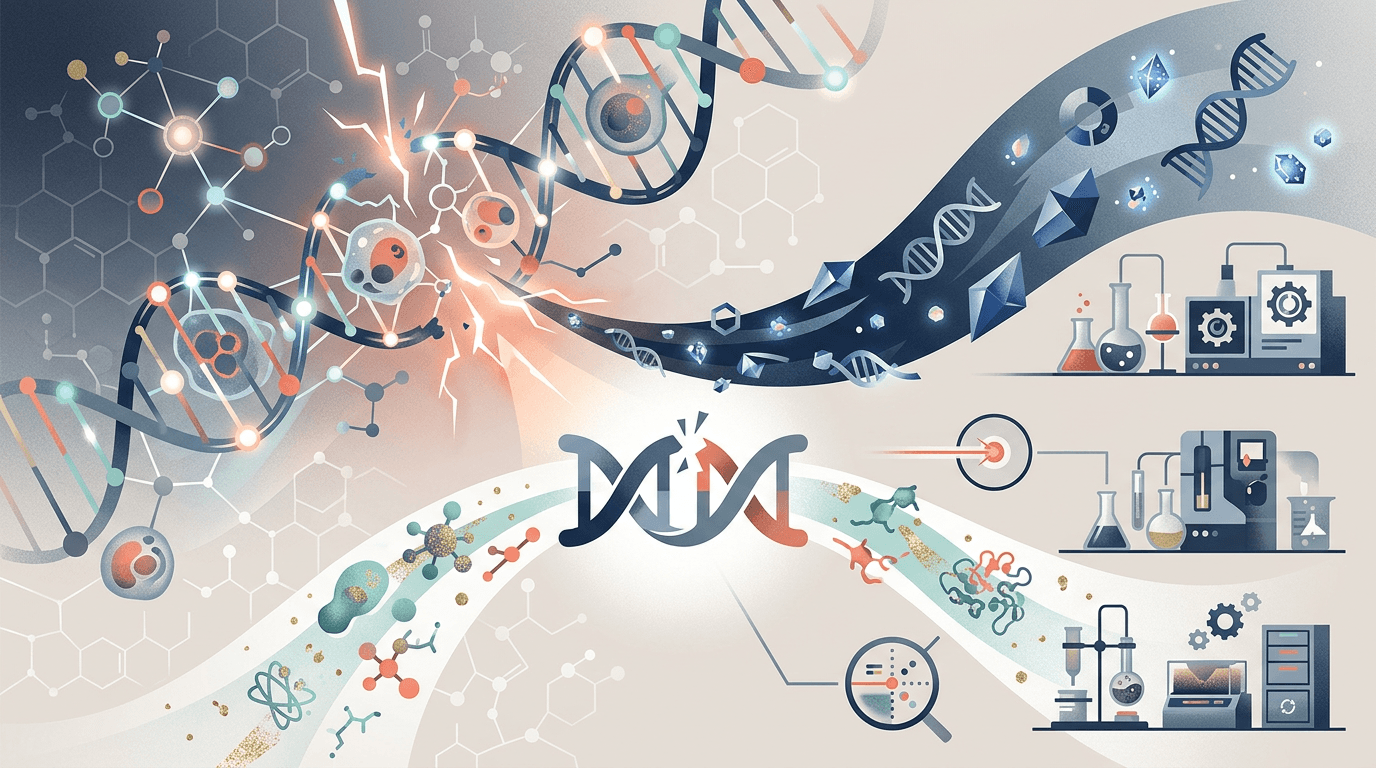
That's essentially what Candid Therapeutics has been doing with a class of drugs called T-cell engagers (TCEs). These are antibodies originally designed to kill cancer cells by redirecting your own immune cells to attack tumors. Candid looked at them and thought: what if we used these to wipe out the rogue immune cells causing autoimmune diseases instead?
UCB just paid $2 billion in cash upfront to find out if they're right. The total deal could reach $2.2 billion with milestone payments. And for a company that was only founded in 2024, that's one hell of a payday.
A Company That Barely Exists (On Paper)
Candid Therapeutics isn't your typical acquisition target. The company was formed through a three-way merger of Vignette Bio and TRC 2004, incubated by Two River and Third Rock Ventures, and publicly launched in September 2024 with over $370 million in initial funding. By March 2026, it had raised another $505 million in a private financing round.
That's more than $875 million in venture capital for a company less than two years old. The investor list reads like a who's-who of healthcare venture capital: Venrock Healthcare Capital Partners, RA Capital Management, Janus Henderson, T. Rowe Price, Viking Global, and about a dozen more blue-chip names.
Leading this sprint is Ken Song, the CEO who previously took RayzeBio from concept to a $4.1 billion sale to Bristol Myers Squibb. The man has a pattern: build fast, sell big. His chief medical officer, Tim Lu, came from DICE Therapeutics (acquired by Eli Lilly). This is a team that knows how to build companies specifically designed to get bought.
And now UCB has written the check.
The Science: Repurposing a Weapon
To understand why UCB is so excited, you need to understand what T-cell engagers actually do. Think of them as molecular matchmakers. They grab a T-cell (one of your body's natural killer cells) with one arm and grab a target cell with the other, then force an introduction that ends in the target cell's destruction.
Get tomorrow's biotech intelligence before your competitors.
Join thousands of biotech professionals who start their day with our free, daily briefing.
In oncology, the target is a cancer cell. In autoimmune disease, the target is a B-cell or plasma cell; the immune cells that produce the autoantibodies attacking your own body in diseases like lupus, myasthenia gravis, and rheumatoid arthritis.
Candid's lead drug, cizutamig, is a BCMA×CD3 T-cell engager. It grabs T-cells via CD3 and targets plasma cells via BCMA (a protein found on their surface). The goal is to deplete the specific immune cells causing the problem, essentially hitting "reset" on the part of the immune system that's gone haywire.
The early numbers are encouraging. Candid has treated 68 autoimmune patients across multiple diseases, including myasthenia gravis, lupus, rheumatoid arthritis, and interstitial lung disease. UCB's CEO Jean-Christophe Tellier has called cizutamig a "potential transformative asset" for autoimmune conditions, citing a favorable safety profile with mostly low-grade, manageable side effects and the potential for outpatient dosing.
That last part matters more than you might think.
Why "Outpatient" Is the Magic Word
The closest comparison to what Candid is doing is CAR-T cell therapy. CAR-T also redirects immune cells to destroy targets, and it's already being explored in autoimmune diseases. But CAR-T is a logistical nightmare: you extract a patient's cells, engineer them in a lab, and infuse them back days or weeks later. It requires hospitalization and specialized centers. It costs hundreds of thousands of dollars per treatment.
T-cell engagers, by contrast, are off-the-shelf drugs. You inject them. The patient could potentially go home the same day. If TCEs can deliver similar immune-resetting power without the complexity of CAR-T, they could treat orders of magnitude more patients at a fraction of the cost.
That's the bet UCB is making. Not just on one drug, but on a whole platform.
Four Programs, One Big Thesis
Candid isn't a one-trick pony. Beyond cizutamig, the pipeline includes three more TCE programs, each targeting different immune cell markers:
CND261 targets CD20 (the same protein that rituximab goes after) and is being evaluated in rheumatoid arthritis and lupus after completing Phase 1 in oncology.
CND319 is a CD19×CD20×CD3 trispecific T-cell engager. It's preclinical, with first-in-human studies planned for mid-2026.
CND460 targets both BCMA and CD19. Also preclinical, with human studies expected in the first half of 2027.
The strategy is deliberate. Different autoimmune diseases are driven by different immune cell populations. By having TCEs that target BCMA, CD20, CD19, and combinations thereof, UCB would own a toolkit for going after autoimmune disease from multiple angles. It's the difference between buying one wrench and buying the whole toolbox.
Global Phase 2 studies for cizutamig in myasthenia gravis and interstitial lung disease are expected to begin in 2026, which would be the first real proof-of-concept moments in controlled autoimmune trials.
UCB's Bigger Play
This deal doesn't exist in a vacuum. UCB has been quietly assembling a TCE franchise all year. Before the Candid deal, the Belgian pharma company secured a worldwide exclusive license for ATG-201, a CD19×CD3 T-cell engager from Antengene, in a deal worth up to $1.18 billion including milestones (with $80 million in upfront and near-term payments).
Combined with Candid's assets, UCB now has T-cell engagers targeting BCMA, CD19, CD20, and multiple dual-target combinations. That's not a company dipping its toe in the water. That's a cannonball.
UCB already has a strong immunology foundation to build on. Bimekizumab (a dual IL-17 inhibitor) is growing across psoriasis, psoriatic arthritis, and other inflammatory conditions. Rystiggo and Zilbrysq give the company a two-drug franchise in generalized myasthenia gravis. The company has been pruning non-core assets too, selling its Chinese neurology and allergy portfolio for $680 million in 2024 to sharpen its focus.
The Candid acquisition is the capstone of that strategy: a bet that the next generation of autoimmune treatment will look less like monthly injections and more like periodic immune resets.
The Skeptic's Case
Not everyone is popping champagne. The most common criticism is straightforward: UCB is paying $2 billion before pivotal autoimmune proof-of-concept data exist. Cizutamig has treated dozens of autoimmune patients, yes, but in early-stage studies. No randomized, controlled Phase 2 trial has read out yet.
Analysts at Lucid Diligence described this as a "high-conviction modality bet, not a single-asset de-risking event," noting that UCB is underwriting significant clinical and execution risk. The key question isn't whether cizutamig works in a handful of patients; it's whether the results hold up in larger, more rigorous studies, and whether the safety profile stays clean as you scale.
Cytokine release syndrome (CRS), the inflammatory reaction that can occur when T-cell engagers do their job too aggressively, is a known risk. So far Candid reports mostly low-grade CRS with no cases of ICANS (a neurological side effect), but skeptics rightly point out that the dataset is still small.
There's also the question of portfolio concentration. UCB is making multiple large bets on one emerging modality. If TCEs in autoimmune disease hit a safety wall or fail to show durable efficacy, UCB would be exposed across its entire next-generation pipeline.
The Autoimmune Gold Rush
UCB isn't the only one chasing this prize. Gilead acquired Ouro Medicines to get its own BCMAxCD3 T-cell engager for autoimmune disease. AbbVie paid up to $2.1 billion for Capstan Therapeutics and its RNA delivery platform aimed at immunology. Novartis spent roughly $2 billion on Excellergy to strengthen its allergy and immunology pipeline.
The pattern is clear: large pharma companies believe autoimmune disease is entering a new treatment era, and they're willing to pay billions before the data are fully baked. IQVIA data shows immunology represented 10% of 2025 M&A value among top therapy areas, and that share looks set to grow in 2026.
For UCB, the math is simple if ambitious. The company reported 2025 revenue of €7.74 billion, with adjusted EBITDA growing at high single-digit to low/mid-teens rates. Management says the Candid deal doesn't change 2026 financial guidance, suggesting they view the $2 billion upfront as manageable within their current financial framework.
The Bottom Line
UCB just made the most expensive bet of its corporate life on a two-year-old company with a repurposed cancer drug and a big idea. The thesis is compelling: T-cell engagers could offer the immune-resetting power of CAR-T therapy in a simple, off-the-shelf injection. If it works, UCB will have assembled the most comprehensive TCE franchise in autoimmune disease before most competitors even get to Phase 2.
If it doesn't, they'll have spent $2 billion on a very expensive science experiment.
The Phase 2 readouts in myasthenia gravis and interstitial lung disease, expected over the next 12 to 18 months, will tell us which version of this story we're living in. Until then, UCB is asking its shareholders to trust the chef with the blowtorch.
5 min read
Adaptive Biotech Is Breaking Up With Itself
Adaptive Biotechnologies is splitting its profitable cancer diagnostics business from its early-stage drug discovery platform into two separate companies. The move follows a growing industry trend of corporate breakups designed to let fundamentally different businesses attract the right investors.