

A stealthy oncology startup just burst onto the scene with $100 million and a platform that claims to solve one of cancer drug development's oldest problems. The investors backing Stipple Bio read like a who's who of biotech venture capital, but the company hasn't even named its target yet.
Most cancer drugs have a targeting problem. They find the right protein on a tumor cell, sure, but that same protein often lives on perfectly healthy cells too. It's like sending a heat-seeking missile into a building where both the bad guys and the hostages are giving off heat. You'll hit something, but the collateral damage is brutal.
Stipple Bio thinks it has a better missile. And investors just handed the company $100 million to prove it.
The oncology startup emerged from stealth mode on April 6, announcing a heavily oversubscribed Series A round that instantly makes it one of the best-funded new cancer biotechs of 2026. The financing was co-led by RA Capital, a16z Bio+Health, and Nextech Invest, with participation from GV (Google Ventures), Emerson Collective Investments, LoLa Capital Partners, and GordonMD Global Investments.
That's not a casual group of check-writers. RA Capital is one of biotech's sharpest crossover funds. Andreessen Horowitz's bio arm has been placing big bets on platform-driven companies for years. And Nextech Invest brings deep European healthcare expertise. When all three co-lead the same round, people notice.
Stipple was actually founded back in 2021 by two academic heavyweights: Dr. Aaron Ring, an associate professor in Fred Hutch's Translational Science and Therapeutics Division, and Dr. Aashish Manglik, an associate professor of pharmaceutical chemistry at UCSF. The company spent years building quietly before this splashy debut. Jeff Landau, formerly of CytomX Therapeutics, serves as CEO.
So what exactly is Stipple selling investors on? The core idea revolves around something called the Pointillist Platform, and it tackles one of oncology's most persistent headaches: on-target, off-tumor toxicity.
Quick translation. Imagine you're trying to deliver poison to a weed in your garden. The weed has a specific leaf shape you can identify, but some of your flowers have similar leaves. Traditional approaches might target anything with that leaf shape, killing flowers along the way. That's essentially what happens with many antibody-drug conjugates (ADCs), which are drugs that use an antibody to guide a toxic payload to cancer cells.

Boehringer Ingelheim just named ADCs and T-cell engagers as its top M&A targets, adding another deep-pocketed buyer to oncology's most competitive shopping aisle. With nearly EUR 6.4 billion in annual R&D spending, the privately held pharma giant is about to make the bidding wars even more intense.


Join thousands of biotech professionals who start their day with our free, daily briefing.
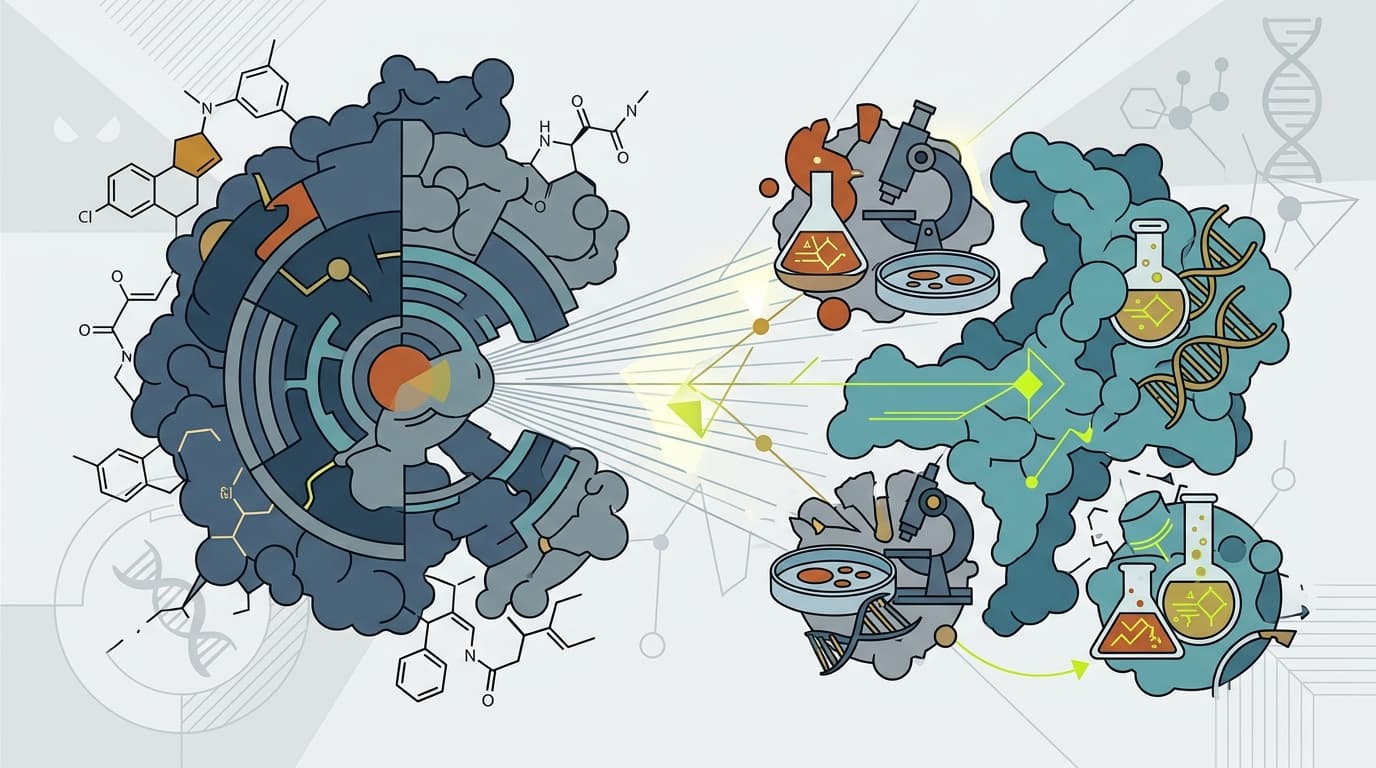
Stipple's platform maps epitopes (tiny, specific spots on proteins sitting on the surface of cells) that are unique to tumor cells. Not just the same protein found on healthy cells; the actual structural differences that distinguish cancer from normal tissue. Think of it as finding the one scratch on the weed's leaf that no flower has, then building a delivery system that only recognizes that scratch.
Their lead candidate, STP-100, is an ADC built using these tumor-specific binders. The company hasn't disclosed the exact cancer type it's going after, describing it only as a "high-need patient population." The target antigen is clinically validated (meaning other drugs have gone after it before), but previous attempts were limited by that familiar problem of hitting healthy cells too.
The $100 million will fuel STP-100 into early-stage clinical studies by early 2027, with enough runway to expand the pipeline through 2029. That timeline matters. It means Stipple isn't just a one-shot company banking everything on a single drug; the Pointillist platform is designed to generate multiple candidates across different tumor types.
The broader pipeline could eventually include cancer immunotherapies aimed at patients who don't respond to PD-1/L1 inhibitors (the checkpoint drugs that have become the backbone of modern oncology). That's a massive patient population still waiting for better options.
A diligence brief from LucidQuest expressed cautious optimism, praising the founders' credentials and the investor roster but raising a fair question: does this epitope-mapping approach create truly durable differentiation, or will it converge with standard ADC development over time? The next big catalyst, according to that analysis, is preclinical data disclosure (target, indication, and early results) expected within six to twelve months.
Stipple's launch lands in a crowded, well-funded arena. Oncology startups have been vacuuming up capital at an impressive pace. Eikon Therapeutics has raised approximately $1.1 billion in private funding, plus $381 million from an upsized IPO in February 2026. Treeline Biosciences pulled in $1.1 billion, including a $200 million extension last September. Crossbow Therapeutics closed a $77 million Series B in March for its T-cell engagers targeting solid tumors.
The competitive pattern is clear: investors want platform companies that can generate multiple shots on goal, not single-asset gambles. Stipple fits that mold.
Global biotech VC funding surged nearly 71% in Q3 2025, climbing to $3.1 billion from $1.8 billion the quarter before. Fewer but larger rounds have become the norm. Cancer drug revenues are projected to reach $335 billion by 2033, which explains why investors keep writing big checks despite the crowded field.
Stipple has a compelling pitch: better targeting means safer drugs, which means higher doses, which means (potentially) better outcomes for patients. The Pointillist platform is intellectually elegant, and the team's academic pedigree from Fred Hutch and UCSF lends real scientific credibility.
But credibility and clinical proof are very different things. STP-100 hasn't entered the clinic yet. The company hasn't even publicly named its target or indication. Right now, investors are buying the platform thesis, the team, and the promise of preclinical data that should arrive later this year.
That's not unusual for a Series A in oncology. It is, however, an unusually large bet at this stage. A $100 million oversubscribed round for a company with no disclosed target suggests either extraordinary conviction from the investor syndicate or extraordinary FOMO. Possibly both.
The next twelve months will tell us which one it was. If Stipple's preclinical data shows the Pointillist platform can genuinely distinguish tumor from healthy tissue at the epitope level, this could be one of the most important ADC companies to emerge in years. If the data disappoints, $100 million buys a lot of runway to pivot, but not a lot of patience from investors who expected precision.
For now, Stipple Bio is the newest, shiniest entry in oncology's most competitive race. The missile is built. The target is locked (even if they won't tell us which one). All that's left is to see if it actually hits.
UCSF scientists identified a single protein, FTL1, that drives brain aging in mice, and reducing it actually reversed cognitive decline. In a field obsessed with slowing aging, this is the first target that put the car in reverse.