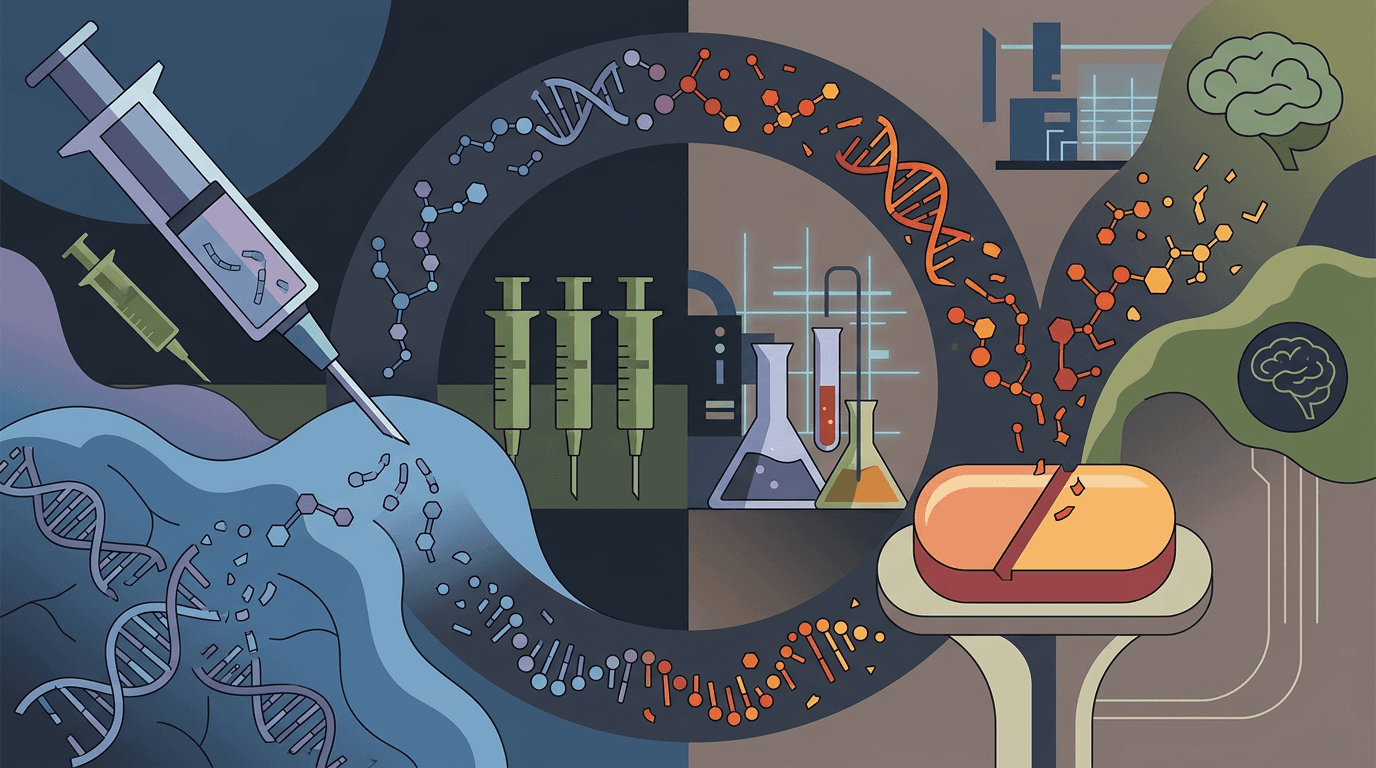

Sobi's gout therapy NASP nailed its clinical trials, but the FDA blocked approval over manufacturing deficiencies. It's the latest example of a striking trend: roughly 74% of FDA rejection letters now cite factory problems, not failed science.
Imagine training for a marathon for three years. You hit every split, crushed every qualifying time, crossed the finish line first. Then race officials disqualify you because your shoelaces weren't regulation length.
That's roughly what just happened to Sobi.
The Swedish rare-disease drugmaker just received an FDA Complete Response Letter (CRL) for NASP, its biologic therapy for uncontrolled gout. A CRL is the FDA's formal way of saying "not yet." But the reason wasn't that NASP failed to work. It wasn't a safety problem, either.
The FDA's concern was entirely about manufacturing: chemistry, manufacturing, and controls (CMC) deficiencies, plus problems at the contract facilities that actually make the drug. Sobi confirmed the FDA "identified no concerns regarding the clinical efficacy or safety of NASP that impact approvability."
So the science is fine. The factory is the problem.
Uncontrolled gout sounds like a minor inconvenience until you realize what it actually looks like. We're talking about patients whose uric acid levels refuse to drop below 6 mg/dL despite existing treatments. They get recurrent, agonizing flares. They develop tophi, which are chalky crystal deposits that can erode joints and even poke through skin. Many also have chronic kidney disease complicating their care.
The current go-to for severe refractory gout is pegloticase, the only FDA-approved therapy for the condition. But there's a catch: pegloticase triggers anti-drug antibodies in many patients, which neutralize the therapy over time. Think of it like your immune system learning to block the very drug trying to help you.
NASP takes a clever two-punch approach to solve this. First, patients receive nanoencapsulated sirolimus, an immune-modulating component designed to teach the body not to attack the drug. Then comes pegadricase, a pegylated enzyme that converts uric acid into allantoin (a much more soluble molecule your kidneys can easily flush out). Both are delivered as a monthly IV infusion.

The European Commission just approved the first oral GLP-1 weight-loss pill, making Novo Nordisk's Wegovy tablet available across the EU. It could unlock treatment for millions of patients who refused to pick up a needle.

Join thousands of biotech professionals who start their day with our free, daily briefing.
In its two Phase 3 trials, DISSOLVE I and II, roughly 51% of patients on the high dose maintained their uric acid below the critical 6 mg/dL threshold for at least 80% of month six. Both trials hit their primary endpoint. Among patients who completed all 6 doses, tophus resolution rates were 10 to 14 times higher than placebo. Flare frequency dropped over time while it actually increased in the placebo group.
The clinical story, in other words, is strong.
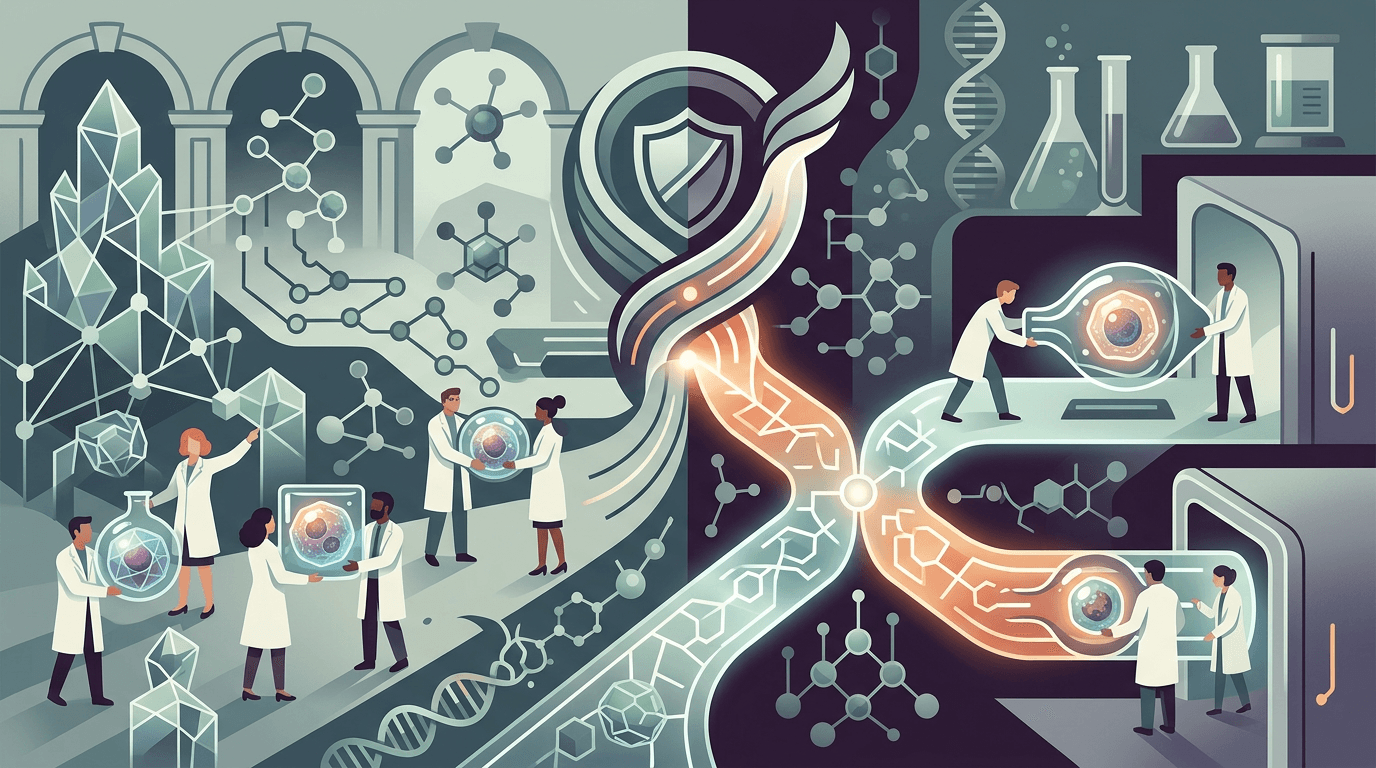
NASP's rejection fits a pattern that has quietly become the biggest bottleneck in drug development. It's not failing clinical trials that kills most drugs at the FDA finish line anymore. It's failing to prove you can make them reliably.
The numbers are striking. An analysis of more than 200 CRLs issued between 2020 and 2024 found that roughly 74% involved manufacturing or quality deficiencies. Facility inspections and CMC problems were cited more often than clinical safety and efficacy concerns combined. In the narrower window of January 2024 through January 2025, 56% of 89 CRLs flagged facility inspection failures specifically.
This isn't a fluke; it's the dominant trend in FDA rejections. And 2025 only intensified it. The agency issued 314 warning letters in fiscal year 2025, with over 120 going to drug manufacturing facilities for significant CGMP (current good manufacturing practice) violations. The CDER warning letter count jumped 59% compared to the prior year.
The most common violation? Failures of the quality control unit, the team responsible for ensuring every batch meets standards. Think of it as the FDA finding that the referee at your factory isn't actually watching the game.
Sobi is in good (or at least crowded) company. Several major drugs have hit the same wall in recent years:
The pattern is consistent: strong clinical data can't compensate for a manufacturing stumble. The FDA has made it clear that how you make a drug matters just as much as whether it works.
Sobi plans to request a meeting with the FDA to clarify exactly what needs fixing. From there, the company will work with its contract manufacturers to shore up quality systems, bolster documentation, and provide the additional CMC data the agency wants. Analysts estimate that remediation and resubmission could take 6 to 12 months, though the exact timeline depends on how deep the facility issues run.
The good news for Sobi's investors: the company isn't a one-trick pony. Its rare-disease portfolio spans haematology, immunology, and specialty care, with haematology products growing about 27% at constant exchange rates in Q2 2025. At its 2026 Capital Markets Day, Sobi set a target to roughly double revenue by 2030 across six major product launches.
Analysts have mostly treated the CRL as a timing setback, not a thesis killer. The stock still carries a "buy" recommendation from covering analysts, with a price target around SEK 475. The reasoning is straightforward: the clinical data are solid, the manufacturing issues look fixable, and the broader portfolio provides a cushion.
Sobi also has a second gout asset in development. It acquired Arthrosi Therapeutics in December 2025 for $950 million upfront (plus up to $550 million in milestones), gaining pozdeutinurad, a Phase 3 oral urate-lowering drug. Two differentiated late-stage gout programs give the company options even if NASP's delay stretches longer than expected.
For years, biotech companies treated manufacturing as the boring back-office stuff you figure out after the exciting clinical data roll in. The FDA has flipped that script. When three out of every four rejection letters cite manufacturing problems, CMC isn't a checkbox. It's the exam.
Sobi built a drug that works beautifully in patients. Now it needs to prove it can build the drug itself, consistently and at scale. In 2026, that's not a minor detail. It's the whole ballgame.
Sarepta's Duchenne gene therapy Elevidys just got the FDA's most severe safety warning after fatal liver failures, while the company slashes 36% of its workforce and pivots away from gene therapy entirely. It's a brutal week that raises big questions about the future of the entire field.