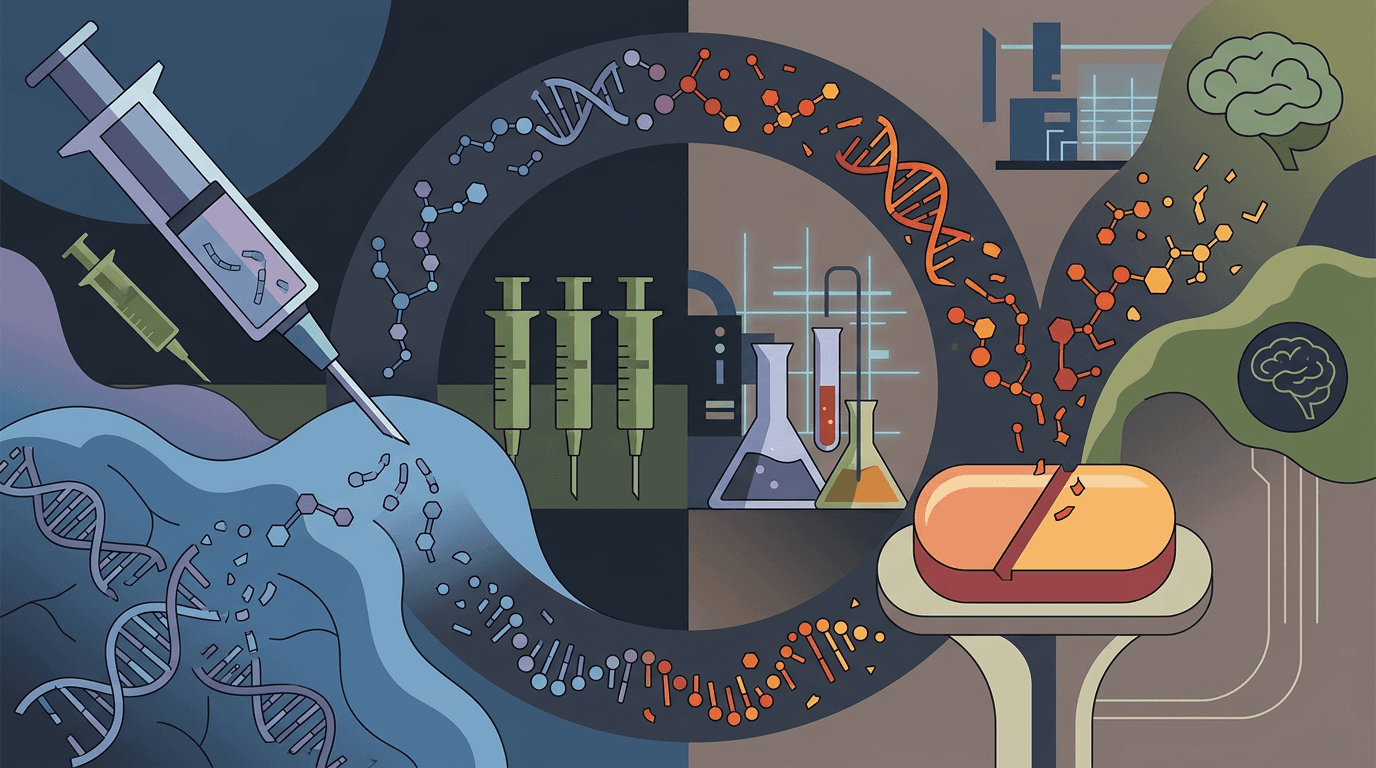

The FDA just approved the first-ever regulatory T-cell therapy, and it's not even close to a marginal improvement. Orca Bio's Tregzi doubled chronic GVHD-free survival in transplant patients, creating a whole new category of immunotherapy that has 29 other companies watching very carefully.
Imagine getting a bone marrow transplant that cures your blood cancer but leaves you fighting your own immune system for years afterward. That's the brutal reality of chronic graft-versus-host disease (cGVHD), a condition where donated immune cells turn on the recipient's body like a house guest who starts redecorating without asking. It hits 40% to 50% of transplant patients, and until now, the best medicine could offer was steroids, more steroids, and a prayer.
On June 30, the FDA changed the equation. It approved Tregzi, Orca Bio's precision-engineered cell therapy, making it the first regulatory T-cell (Treg) based immunotherapy ever to reach the market. It's not just a new drug. It's a new category of medicine.
Your immune system has its own internal police force: regulatory T cells, or Tregs. These are the cells that tell the rest of your immune army to stand down when there's no real threat. In transplant patients, that peacekeeping force often gets overwhelmed, leading to chronic GVHD, where donor cells attack healthy tissue in the skin, lungs, liver, and gut.
Tregzi takes a donor's blood and separates it into three precisely dosed components: stem cells to rebuild the blood system, purified Tregs to keep the peace, and conventional T cells to fight any remaining cancer. Think of it like a recipe. Standard transplants dump all the ingredients into a bowl at once. Orca Bio measures each one with a kitchen scale.
The result is a therapy designed to rebuild the immune system and prevent it from going rogue.
The approval rests on PRECISION-T, a Phase 3 trial of 187 adults with blood cancers (AML, ALL, MDS) who needed matched-donor transplants. One group got Tregzi; the other got a conventional transplant. The primary endpoint was chronic GVHD-free survival (cGFS), basically measuring how long patients stayed alive without developing moderate-to-severe chronic GVHD.
The gap was staggering. At one year, were alive and free of serious chronic GVHD. In the conventional transplant group? The hazard ratio came in at 0.26, which means Tregzi patients faced roughly a quarter of the risk. The p-value was less than 0.00001; in statistics terms, that's about as close to a sure thing as you'll ever see.

The European Commission just approved the first oral GLP-1 weight-loss pill, making Novo Nordisk's Wegovy tablet available across the EU. It could unlock treatment for millions of patients who refused to pick up a needle.

Join thousands of biotech professionals who start their day with our free, daily briefing.

The chronic GVHD numbers alone tell a compelling story. Only 13% of Tregzi patients developed moderate-to-severe chronic GVHD at 12 months, compared to 44% in the control arm. That's not an incremental improvement. That's cutting the problem by more than two-thirds.
Overall survival favored Tregzi too: 94% versus 83% at one year. And non-relapse mortality (deaths not caused by the cancer coming back) dropped from 13% to just 3%. The therapy didn't just prevent GVHD. It kept more people alive, period.
Orca Bio CEO Nate Fernhoff told Reuters the wholesale acquisition cost is $428,000. That's a big number, but context matters. Chronic GVHD is ruinously expensive to manage: years of immunosuppressive drugs, hospitalizations, specialty care, and lost quality of life. The median duration of systemic treatment for cGVHD runs two to three years. Some patients never stop.
Orca is framing Tregzi as a one-time intervention that prevents a cascade of downstream costs. Whether payers buy that argument will depend on real-world data and how aggressively the company negotiates. The company raised $250 million (Series E and Series F) ahead of the approval specifically to fund commercialization, and it expects to take first orders by the end of July.
For a company that's still private, never had an IPO, and was founded in 2016 out of Stanford, that's a remarkably fast journey from academic concept to commercial reality.
Tregzi's approval does something bigger than help transplant patients (though it certainly does that). It validates an entire therapeutic class. Before June 30, no one had proven that a Treg-based cell therapy could clear the FDA's bar. Now someone has, and that changes the risk calculus for every company working on Treg platforms.
And there are a lot of them. At least 50 companies are developing Treg cell therapies, with more than 55 pipeline assets and roughly 70 active clinical trials across autoimmune disease and transplant rejection. Sonoma Biotherapeutics is targeting rheumatoid arthritis. GentiBio is going after type 1 diabetes. Sangamo has CAR-Tregs in trials for kidney transplant rejection. Quell Therapeutics is working on liver transplant tolerance.
All of these programs just got a massive de-risking event. The FDA has now shown it's willing to approve a Treg-based therapy, and it even granted Tregzi both Orphan Drug and Regenerative Medicine Advanced Therapy (RMAT) designations along the way. That's a regulatory green light that the whole field can point to.
Approval is one thing; adoption is another. Tregzi requires tight coordination between transplant centers and Orca's manufacturing facility in Sacramento. Donor cells have to be collected, shipped, precisely separated, and delivered back on a strict timeline (Tregs and stem cells on day zero, conventional T cells on days two to three). Anyone who's dealt with CAR-T logistics knows how tricky that choreography can be.
Then there's the question of scope. Right now, Tregzi is approved only for matched-donor, myeloablative transplants in adults with blood cancers. That's a meaningful but relatively narrow population. Orca's second program, Orca-Q, is exploring mismatched (haploidentical) donors, which would dramatically expand the addressable market.
The safety profile looks manageable so far, with side effects (mucositis, infections, GI symptoms) largely consistent with what you'd expect from any myeloablative transplant. No new red flags emerged in the trial, which is exactly what you want to see with a first-in-class therapy.
For decades, regulatory T cells were the "one day" story of immunology: fascinating in the lab, tantalizing in theory, always a few years away from clinical reality. That era is over. Tregzi is real, it's approved, and it works. The question now isn't whether Treg therapy has a future. It's how big that future gets.
Sarepta's Duchenne gene therapy Elevidys just got the FDA's most severe safety warning after fatal liver failures, while the company slashes 36% of its workforce and pivots away from gene therapy entirely. It's a brutal week that raises big questions about the future of the entire field.