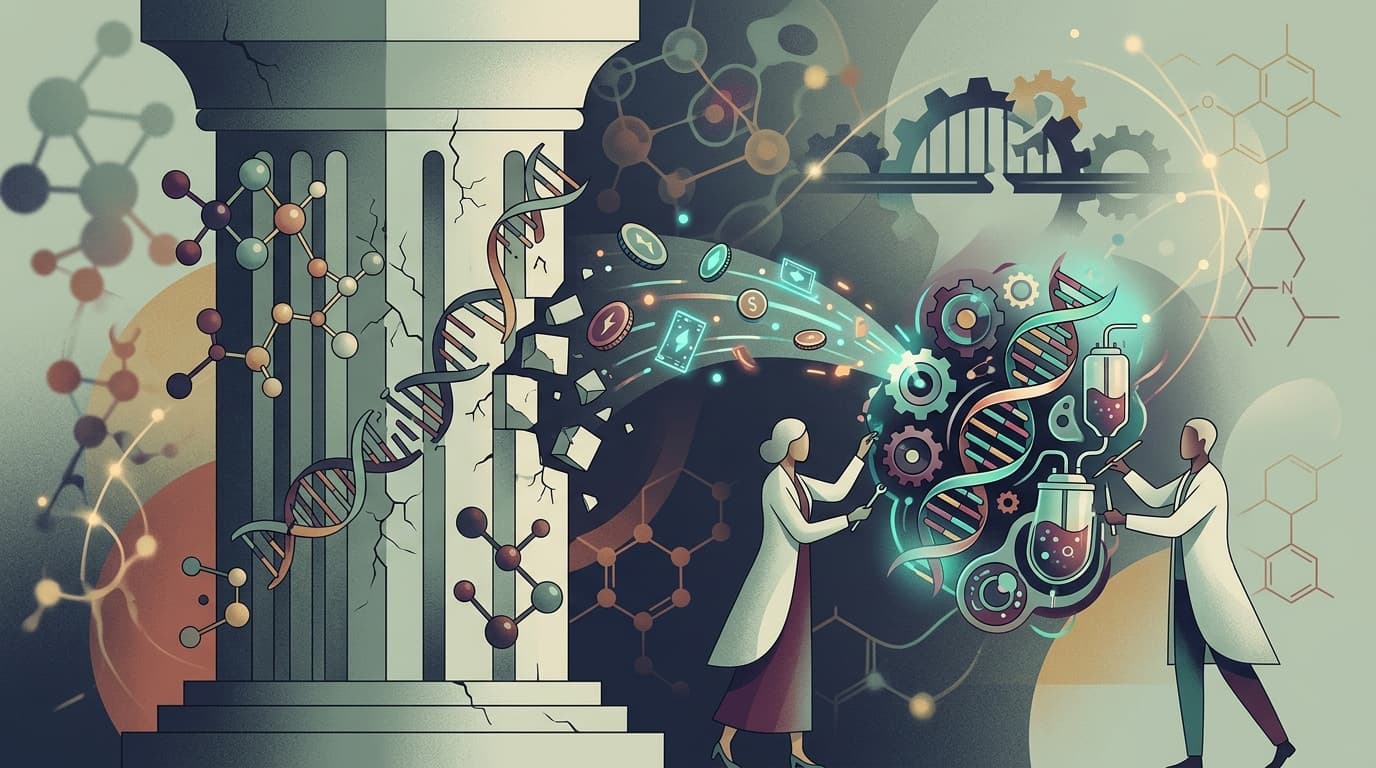

Sangamo Therapeutics, the company that performed the first-ever in vivo gene editing in a human, just filed for bankruptcy. Now Eli Lilly and Astellas are picking up its 30-year technology platform for the price of a single clinical trial.
In 1995, a former biotech CFO named Edward Lanphier scraped together $750,000 from family and friends to license a strange new technology: zinc finger nucleases, tiny molecular scissors that could cut DNA at precise locations. The company he built around that bet, Sangamo BioSciences, would go on to achieve a genuine scientific first. In 2017, it dosed the first patient ever to receive gene editing directly inside their body.
Last week, Sangamo Therapeutics filed for Chapter 11 bankruptcy. Its technology platforms, built over three decades, are being auctioned off to Eli Lilly and Astellas Pharma for a combined $100 million (at most). That's less than some Series B rounds.
This isn't just the death of a company. It's a case study in how Big Pharma shops the clearance rack.
Sangamo was editing genes 20 years before CRISPR became a household name. Its zinc finger nuclease (ZFN) platform worked by engineering tiny protein fingers that grab specific DNA sequences, then attaching a molecular blade to cut them. Think of it like a GPS-guided scalpel for your genome.
The technology attracted serious partners. Gilead paid $150 million upfront in 2018 for access to ZFNs in cancer cell therapy, with up to $3 billion in potential milestones. Pfizer signed on for hemophilia A gene therapy. Biogen came aboard for Alzheimer's. At one point, Sangamo was sitting on partnerships worth over $6.3 billion in milestone payments across four major pharma companies.
But milestone payments only arrive if milestones get hit. And one by one, the partners walked away.
The unraveling started in mid-2023, when Biogen and Novartis both terminated their collaboration agreements. Sangamo cut roughly 120 employees (27% of its U.S. workforce) and projected $31 million in annual savings. It wasn't enough.

Merck is dropping $6.7 billion on a CML drug still in early trials, and Wall Street can't decide if it's a heist or a gamble. With Keytruda's $25 billion patent cliff looming in 2028, the deal reveals just how aggressively Big Pharma's biggest player is scrambling to reinvent itself.


Join thousands of biotech professionals who start their day with our free, daily briefing.
A few months later came another 40% workforce reduction, about 162 positions, plus the closure of its Brisbane, California headquarters. Management said the cuts would stretch the cash runway to Q3 2024. The stock was already sliding toward penny territory, trading near $0.54 a share.
Then, at the end of 2024, Pfizer pulled the plug on the hemophilia A gene therapy partnership, vaporizing access to $220 million in potential milestones. Sangamo's stock dropped 56% in a single day, landing at $1.02.
By the time Q1 2025 earnings hit, shares cratered another 42% after hours to $0.43. The company's quarterly revenue had collapsed from $158 million (Q1 2023) to $6.4 million. That's not a typo.
The bankruptcy filing came with two pre-arranged "stalking horse" bids, essentially minimum-price offers that set the floor at auction. Other buyers can try to outbid them, but these deals frame the likely outcome.
Eli Lilly is paying $50 million in cash (plus assumption of certain liabilities) for the crown jewels of Sangamo's technology stack:
Astellas Pharma is paying $25 million upfront, with up to another $25 million in milestones, for isaralgagene civaparvovec (ST-920), a gene therapy for Fabry disease that was approaching an FDA submission before the bankruptcy filing.
Several programs weren't included in either deal: a hemophilia A gene therapy with FDA Fast Track designation, a chronic pain program, and cell therapy assets. Those are still looking for buyers at auction.
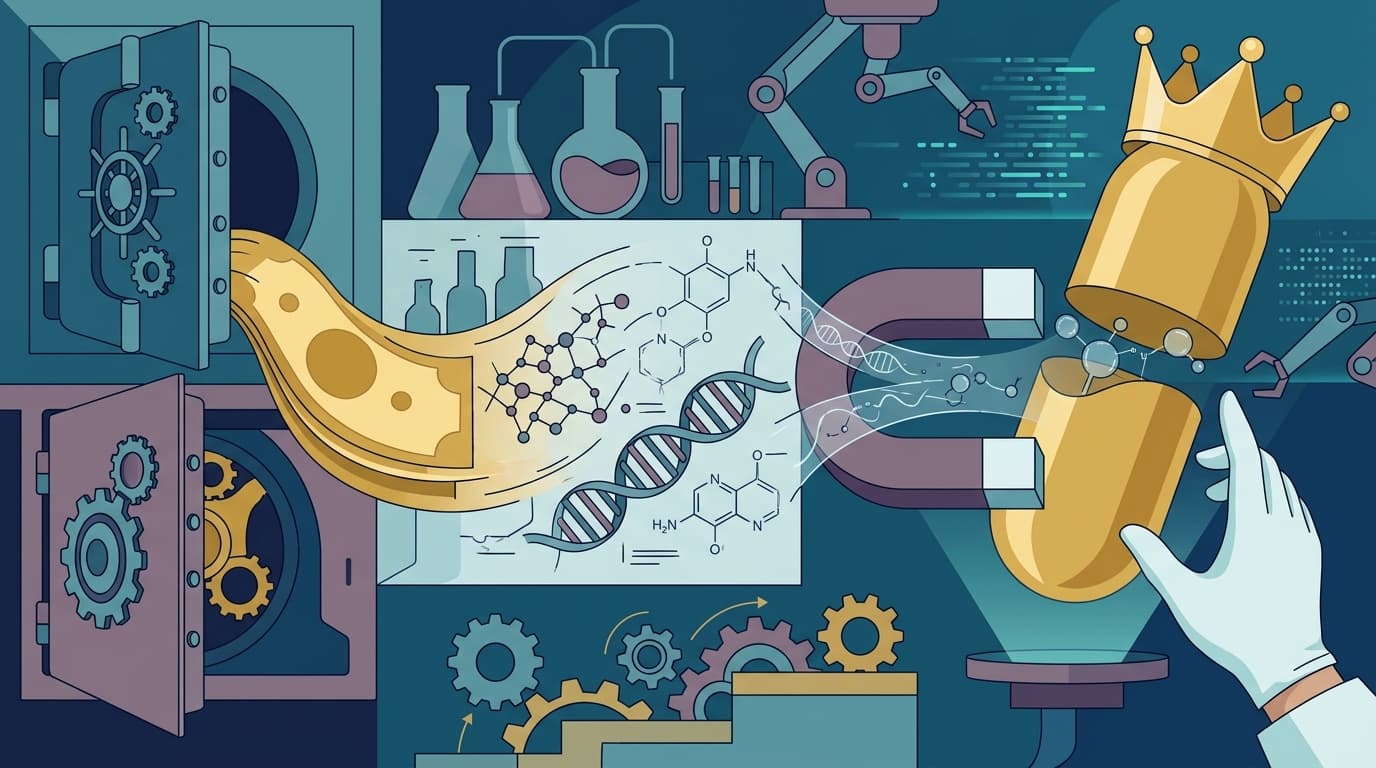
This is becoming a recognizable playbook. A biotech spends years and hundreds of millions building a technology platform. When the money runs out, Big Pharma doesn't acquire the company; it picks through the wreckage and buys individual assets at steep discounts.
Sangamo raised over $1 billion from pharma licensing fees, milestones, and equity investments over its lifetime. Its technology produced the first-ever in vivo gene editing in a human. And now its entire platform portfolio is selling for the price of a single Phase 1 clinical trial.
The pattern echoes what happened to bluebird bio, once valued above $10 billion. In February 2025, private equity firms Carlyle and SK Capital bought the whole company (three approved gene therapies included) for just $29 million in cash plus milestone-linked payments.
For large pharma, bankruptcy courts are becoming a legitimate sourcing channel. Section 363 sales let buyers acquire assets free and clear of debts and liens, which is corporate-speak for "no baggage." It's like buying a house at foreclosure auction: same property, fraction of the price.
Sangamo's bankruptcy doesn't mean its science was bad. It means the economics of being a small, pre-revenue gene therapy company in a high-rate environment are nearly impossible to sustain. The company burned through cash faster than it could generate milestones, and each partnership termination accelerated the spiral.
Lilly now controls a 30-year zinc finger patent estate and a suite of delivery technologies for a price that wouldn't buy a luxury condo building in Manhattan. Astellas gets a near-filing-ready Fabry disease therapy for what amounts to a rounding error on its balance sheet.
The 77 employees Sangamo retained to keep the lights on during bankruptcy are working to preserve value for the auction. But for the 51 who were laid off (roughly 40% of the remaining team), and for the shareholders who watched a once-$10-billion-in-potential-milestones company dissolve, the lesson is brutal.
In biotech, being first doesn't mean you finish. Sometimes it just means you're building the inventory for someone else's shopping spree.
Eli Lilly is paying up to $7.8 billion for Centessa Pharmaceuticals and its experimental sleep disorder drugs. It's the biggest signal yet that the GLP-1 king is building a second empire, and the orexin agonist race just got a lot more interesting.