Sandoz Just Went Shopping in Shanghai for $322 Million
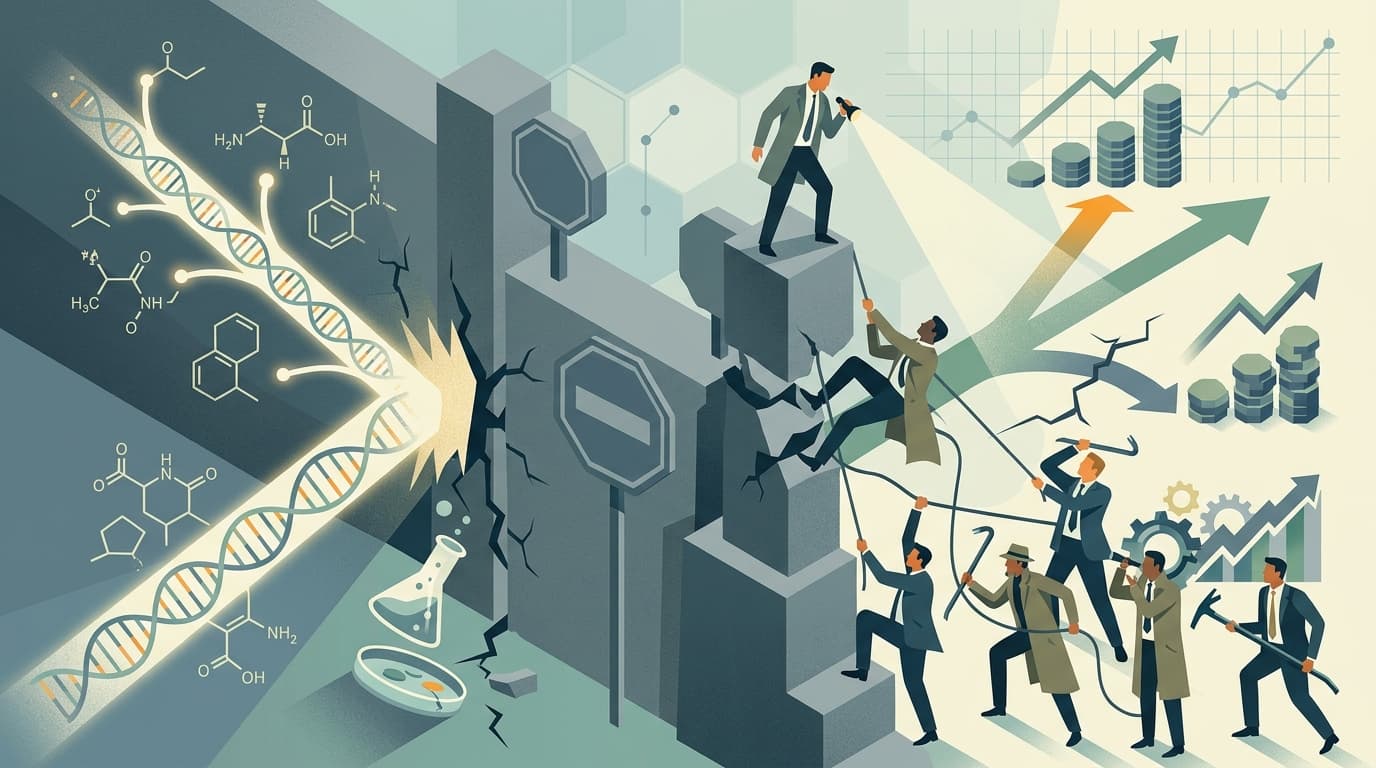
Sandoz just dropped up to $322 million on a licensing deal with Shanghai's Henlius Biotech for as many as ten biosimilar products. It's the latest power move in the company's post-Novartis strategy to dominate the global biosimilar market, and it says a lot about where Western pharma is finding its next blockbusters.
The Biggest Cart in the Biosimilar Aisle
Imagine walking into Costco and filling your cart with ten items, but each one is a biologic drug worth billions in future revenue. That's essentially what Sandoz just did.
The world's largest standalone biosimilar company signed a deal worth up to $322 million with Shanghai-based Henlius Biotech for rights to as many as ten biosimilar products. It's a milestone-based collaboration, not a single lump-sum purchase, and it gives Sandoz exclusive commercialization rights everywhere outside China. Henlius keeps the Chinese market and handles development and manufacturing.
For a company that's been on a post-breakup glow-up since splitting from Novartis in October 2023, this is the clearest signal yet: Sandoz wants to own the biosimilar market, and it's willing to shop globally to do it.
What's Actually in the Deal
The $322 million headline number breaks down into layers, like a very expensive cake. Reuters reported the structure as roughly $77 million upfront, up to $160 million in development milestones, and up to $77 million in commercial milestones. Sandoz expects to be invoiced up to $100.5 million in 2026 alone for the initial batch of assets.
Those initial assets include three biosimilar programs and an option on a fourth:
HLX05-N, a proposed biosimilar to Erbitux (cetuximab), the cancer drug
HLX16, a proposed biosimilar to Repatha (evolocumab), the cholesterol-lowering blockbuster
A proposed biosimilar to Benlysta (belimumab), used for lupus
An option on HLXTE-HAase1001, a recombinant human hyaluronidase (basically, an enzyme that helps deliver drugs under the skin instead of through an IV)
The deal can expand to cover up to ten biosimilars total, which would push Sandoz's portfolio from if every option gets exercised. That's not a shopping trip; that's a warehouse acquisition.
Get tomorrow's biotech intelligence before your competitors.
Join thousands of biotech professionals who start their day with our free, daily briefing.
39 to 46 assets
Why These Targets Matter
Not all biosimilars are created equal. Some are like making a good copy of a simple painting. Others are like trying to replicate the Mona Lisa while blindfolded.
Analysts flagged the Erbitux biosimilar as particularly interesting because it's technically hard to make. The original drug's patents have expired, but complexity has scared off most competitors. If Henlius can deliver a viable version, Sandoz would have a product with limited biosimilar competition: the dream scenario.
The Repatha biosimilar is another gem. Jefferies called it an attractive "late-decade opportunity," and it's easy to see why. Repatha is a PCSK9 inhibitor (a type of cholesterol drug) with a massive addressable market. A biosimilar version could bring the price down significantly, opening up access for patients and generating serious revenue for whoever gets there first.
Then there's Benlysta, one of the few drugs approved specifically for lupus. It's a smaller market, but it's also one where biosimilar competition barely exists yet.
Sandoz's Post-Divorce Glow-Up
When Novartis spun off Sandoz in late 2023, plenty of observers wondered whether the newly independent company could thrive on its own. Two and a half years later, the answer is looking like a resounding yes.
The numbers tell the story. Sandoz's biosimilar sales hit $2.8 billion in 2024, growing 30% year over year. By H1 2026, biosimilar revenue had already reached $1.9 billion, and the segment now represents roughly 30% of total net sales. Sandoz is the clear leader among pure-play competitors like Teva, Biocon, and Fresenius Kabi.
The strategy has been consistent: partner smartly, acquire selectively, and keep the pipeline deep. Earlier in 2026, Sandoz inked a deal with Samsung Bioepis covering up to five biosimilar assets, including a proposed vedolizumab biosimilar. The Henlius deal adds another layer of depth. Before this latest agreement, the pipeline had already expanded to up to 39 assets, and the Henlius deal potentially pushes it even higher.
Jefferies expects even more in-licensing activity ahead. Sandoz, it seems, is just getting started.
The Bigger Picture: China's Biosimilar Export Boom
This deal fits into a trend that's reshaping global pharma. Chinese biotech companies are no longer just serving their domestic market; they're becoming a primary pipeline source for Western drugmakers facing patent cliffs and rising R&D costs.
The numbers are staggering. In 2024, Chinese-to-Western licensing deals totaled an estimated $8.4 billion across 48 transactions. By 2025, that figure exploded to $137.7 billion across 186 cross-border deals, according to PharmCube data. And 2026 is keeping pace: by mid-February alone, reported deal value had already hit $49 billion across 38 deals, with average deal size up 76% compared to the same period in 2025.
AstraZeneca, AbbVie, Novartis, GSK, Pfizer: they've all been shopping in China. Sandoz is just the latest Western company to realize that some of the best biosimilar development is happening in Shanghai, not Switzerland.
For Henlius specifically, the company already has four marketed biosimilars (for rituximab, trastuzumab, adalimumab, and bevacizumab) and a growing clinical pipeline that includes a daratumumab biosimilar with FDA-cleared IND status. This isn't a startup hoping to get lucky. It's a proven developer looking to go global through the right partner.
What to Watch
The Sandoz-Henlius deal is milestone-based, which means the full $322 million only flows if the programs hit their targets. Development risk is real, especially for technically challenging biosimilars like the cetuximab candidate.
But the structure also means Sandoz isn't betting everything on one roll of the dice. The upfront commitment is manageable, the option to expand to ten products gives flexibility, and the ex-China rights model lets both companies play to their strengths.
For the biosimilar market as a whole, this deal reinforces something that's been building for years: the next wave of biosimilar competition won't come from one company doing everything in-house. It'll come from partnerships that connect the best developers with the best commercializers, regardless of geography.
Sandoz is betting $322 million that Henlius is one of those best developers. Given the track record on both sides, it's a bet worth watching.
Deals & M&A4 min read
Two Mid-Cap Pharma Companies Just Bet They're Better Together
Supernus and Indivior are merging to create a $2.2 billion-revenue CNS giant spanning addiction, ADHD, depression, and Parkinson's. Supernus shareholders get a 38% premium, Indivior shareholders get a $1 billion cash dividend, and Wall Street is already split on whether the math works.