The $2 Billion Biotech Factory That's Shutting Half Its Lights Off
Resilience raised over $2 billion to build America's biotech manufacturing future. Now it's shutting down six sites through a strategic bankruptcy play, and the ripple effects could hit supply chains across the industry.
A Company Built for a Boom That Never Came
Imagine spending $2 billion building the world's most advanced restaurant chain, only to discover that half your dining rooms are empty every night. That's roughly what happened to National Resilience, the contract drug manufacturer that raised more than $2 billion in equity financing since its founding in 2020, then watched demand fail to keep up with its ambitions.
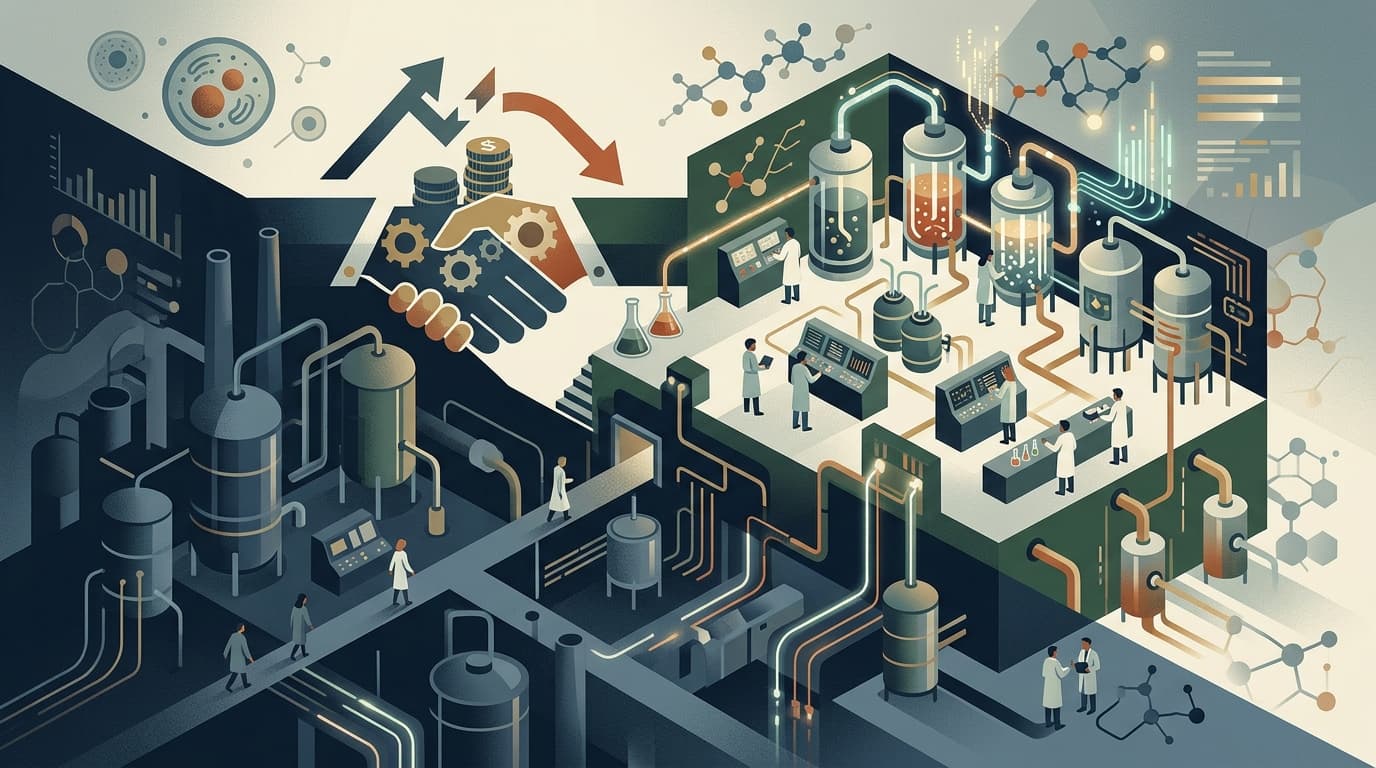
This week, the company announced it's winding down six manufacturing sites across the United States. The closures span Florida, California, and Massachusetts, and they're being executed through a bankruptcy filing by a separate legal entity that holds the leases for those facilities. Resilience itself isn't filing for bankruptcy. But the distinction feels a bit like saying "the house isn't on fire; just the garage is."
The sites going dark: Alachua, Florida; Fremont, California; San Diego, California; Allston, Massachusetts; Bedford, Massachusetts; and Marlborough, Massachusetts. That's a lot of square footage.
The Clever Bankruptcy That Isn't Really a Bankruptcy
Resilience's restructuring playbook is worth paying attention to, because it's a move we might see more of in biotech manufacturing. The company set up a separate affiliate to hold the leases on its underperforming sites. That affiliate is the one going through Chapter 11, not the parent company. Think of it like a controlled demolition: you blow up the parts of the building you don't want, while the rest stays standing.
The strategy was reportedly in the works since at least mid-2025, when industry watchers described it as a "manufactured" or strategic bankruptcy approach designed to shed costly lease obligations. It's not a sign of total collapse; it's a surgical move to cut fixed costs before they become fatal.
To keep the lights on at its remaining facilities, Resilience secured $250 million in bridge financing from its existing investors. The sites staying open tell you where the company sees its future: (packaging and fill/finish) and (GMP manufacturing). Those are the dinner tables that still have customers.
Get tomorrow's biotech intelligence before your competitors.
Join thousands of biotech professionals who start their day with our free, daily briefing.
Cincinnati
Toronto
The Eli Lilly Connection
One name conspicuously absent from the bad news: Eli Lilly. Resilience's Ohio operations have been manufacturing Lilly's blockbuster GLP-1 drugs, Mounjaro and Zepbound, and those facilities are explicitly staying open. When your biggest client is riding the hottest drug trend in a generation, you don't shut that factory down. You shut down everything else.
This detail reveals something important about the CDMO business model right now. The winners aren't the companies with the most capacity. They're the ones attached to the right drugs. If you're making GLP-1s, you're golden. If you're sitting on manufacturing space waiting for early-stage biotech clients to show up with orders, you might be waiting a very long time.
How a $2 Billion Bet Went Sideways
Resilience's story reads like a cautionary tale about timing. The company launched in 2020, right when the pandemic made everyone realize that U.S. biomanufacturing capacity was dangerously thin. The pitch was compelling: build domestic manufacturing infrastructure so America wouldn't be caught flat-footed again.
The money poured in. A $600 million Series C landed in August 2021. A $625 million Series D followed in June 2022. The U.S. Department of Defense kicked in up to $410 million in 2024 for domestic biomanufacturing. Oak Hill Advisors provided up to $825 million in long-term financing. Investors included heavyweights like ARCH Venture Partners, plus government-linked entities.
All that capital went into building out a sprawling network of manufacturing sites. The problem? The biotech industry entered a funding winter. Venture-backed startups, the very companies that were supposed to fill those manufacturing slots, started running out of cash. Pipelines slowed. Clinical programs got delayed or canceled. The demand that Resilience built for simply didn't materialize at the pace the company needed.
Resilience essentially built a highway system for a city that stopped growing.
The Bigger Picture: CDMOs Are in Trouble
Resilience isn't an isolated case. The entire contract drug manufacturing sector is feeling the squeeze, and the pressure points are coming from multiple directions at once.
The core issue is overcapacity. Manufacturing capacity in areas like cell and gene therapy grew more than twice as fast as clinical trial demand between 2019 and 2024. That's created a buyer's market where CDMOs (contract development and manufacturing organizations, the companies that make drugs for other companies) are competing on price, slashing margins, and, in some cases, shutting down.
Scale matters more than ever. Smaller players without marquee clients or diversified capabilities are getting crushed. Consolidation is expected to continue as weaker operators get absorbed or exit.
Meanwhile, the broader biotech funding slump keeps applying pressure from the demand side. Fewer startups advancing through clinical trials means fewer manufacturing orders. It's a vicious cycle: less funding leads to fewer drugs in development, which leads to less manufacturing demand, which leads to CDMO closures, which could eventually lead to supply constraints when the cycle turns back up.
The Supply Chain Ripple Effect
When a CDMO shuts down facilities, the fallout doesn't stay contained. Biotech companies that relied on those sites for drug production now need to find new partners, transfer their manufacturing processes (which can take months or years), and potentially delay clinical timelines.
Resilience has said it will honor existing contracts at closing sites through an orderly wind-down, with Alachua customers specifically mentioned as being served through contract closeout. But "orderly" is a relative term when your manufacturing partner is in restructuring mode.
Industry analysts have been flagging broader supply chain risks throughout 2025 and 2026. The concerns go beyond individual CDMO closures. Rising freight costs, disrupted supplies of active pharmaceutical ingredients (APIs, the key chemical compounds in drugs), energy price pressure on temperature-controlled facilities, and tariff uncertainty are all compounding the problem.
Biopharma bankruptcies remain near peak levels, according to industry reports. Each one carries the risk of stranded inventory, disrupted vendor contracts, and stalled development programs. It's not a single point of failure; it's death by a thousand cuts across the supply chain.
What Comes Next for Contract Manufacturing
The CDMO market isn't dying. The demand for outsourced manufacturing is real, driven by big pharma's patent cliff and the push to outsource mature product lines. But the growth won't be evenly distributed.
The winners will be large, diversified CDMOs with strong regulatory track records and connections to high-demand drug categories (think GLP-1s, bispecific antibodies, and select gene therapies). The losers will be smaller operators sitting on excess capacity in oversupplied niches, waiting for a biotech boom that may not arrive in time.
The smartest CDMOs are already adapting. Instead of building new facilities, they're investing in single-use technologies, continuous manufacturing, automation, and AI to squeeze more productivity out of existing space. It's the manufacturing equivalent of renovating your kitchen instead of buying a bigger house.
The Lesson Nobody Wanted to Learn
Resilience's story carries a painful irony. The company was literally named for the idea that U.S. drug manufacturing needed to be more resilient. It attracted billions in private and government capital on the promise that domestic biomanufacturing was a national security imperative.
That thesis wasn't wrong. The pandemic did expose dangerous vulnerabilities in pharmaceutical supply chains. But building capacity is only half the equation. You also need customers who can pay for it. And when biotech funding dried up, the customers vanished faster than the concrete could set.
The facilities in Cincinnati and Toronto will keep running. Mounjaro will keep getting made. But six shuttered sites across three states stand as a $2 billion reminder that in biotech manufacturing, timing isn't everything. It's the only thing.
Clinical & Regulatory5 min read
Capricor's Duchenne Drug Just Hit a Wall. Then the Activist Investors Showed Up.
Capricor's cell therapy for Duchenne muscular dystrophy faces a likely FDA rejection after advisors voted 9-to-3 against it, and activist investor Kaos Capital is simultaneously demanding a full boardroom overhaul. It's a two-front war that could determine the company's survival.