
A single Type 1 diabetes patient has been producing their own insulin for 14 months after receiving engineered cells in their forearm, with zero immunosuppressive drugs. Sana Biotechnology's tiny experiment could reshape the race for a diabetes cure.
Imagine getting a shot in your arm that teaches your body to make insulin again. No daily injections. No immune-suppressing drugs. No devices strapped to your body. Just your own transplanted cells, quietly doing the job your pancreas gave up on years ago.
That's the premise behind Sana Biotechnology's experimental cell therapy for Type 1 diabetes. And 14 months into the first-ever human test, it's still working.
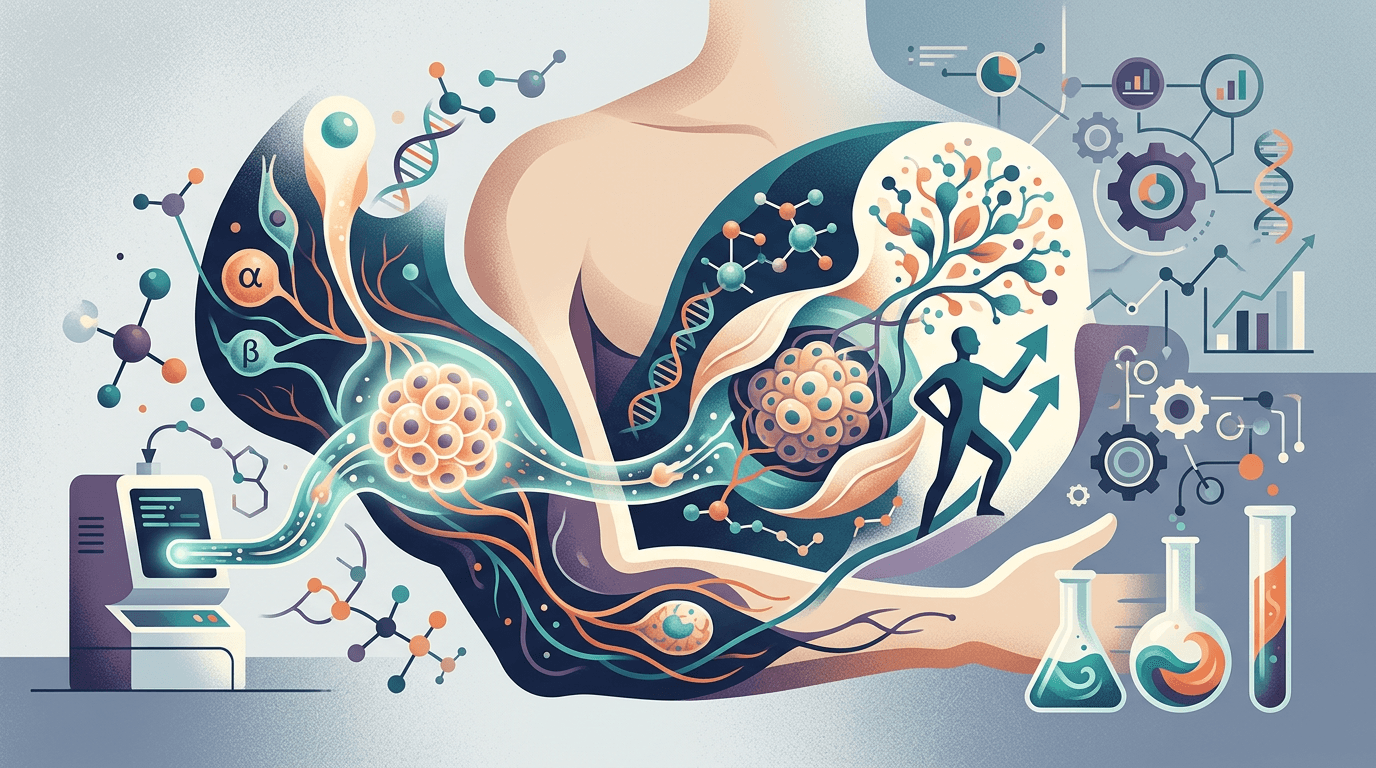
Sana's therapy, called UP421, takes donor-derived pancreatic islet cells (the tiny clusters that produce insulin) and genetically engineers them to hide from the immune system. Think of it like giving cells a cloaking device. Normally, your body treats transplanted cells like intruders and attacks them on sight. Sana's "hypoimmune" technology strips away the molecular ID badges, called HLA markers, that the immune system uses to spot foreign cells.
The result: cells that can survive inside a patient's body without the cocktail of immunosuppressive drugs that usually comes with any transplant.
In this first-in-human study at Uppsala University Hospital in Sweden, a single patient with Type 1 diabetes received UP421 injected directly into their forearm muscle. No immunosuppression. No encapsulation device. Just engineered cells, dropped into a muscle, left to fend for themselves.
Fourteen months later, those cells are still alive and producing insulin.
Before the transplant, the patient had undetectable C-peptide, a blood marker that indicates your body is making its own insulin. If C-peptide is at zero, your beta cells are essentially dead or gone. That's the hallmark of Type 1 diabetes.
At 14 months, both fasting and meal-stimulated C-peptide levels were still measurable. They were comparable to levels seen at six months and actually higher than levels at nine and twelve months. Even more encouraging: when the patient ate a mixed meal, C-peptide rose appropriately, mimicking the way a healthy pancreas responds to food.
A PET-MRI scan at 12 weeks confirmed the transplanted islet cells were still physically present at the forearm site. No safety concerns have been reported through the entire 14-month period.

The FDA just proposed letting biosimilar developers skip expensive U.S.-only comparison studies, potentially saving $20 million per program. Combined with other recent reforms, this could cut total development costs in half and reshape competition for blockbuster biologic drugs.


Join thousands of biotech professionals who start their day with our free, daily briefing.
Per-Ola Carlsson, the principal investigator at Uppsala, put it plainly: "This work suggests that the hypoimmune technology has the potential to enable a functional cure for type 1 diabetes without immunosuppression."
Before anyone starts popping champagne, some important caveats. This is one patient. The dose was intentionally low, designed to test safety and cell survival, not to eliminate the need for insulin injections. Sana isn't claiming their patient achieved insulin independence, and the company hasn't released detailed data on insulin dose reductions or time-in-range (a measure of how well blood sugar stays in a healthy zone).
Think of this study like a proof-of-concept flight for a new airplane engine. They weren't trying to fly coast-to-coast. They were testing whether the engine could stay running. It did, for 14 months and counting.
The real product is SC451, a more scalable version that uses stem cell-derived islet cells instead of donor-derived ones. That distinction matters enormously. Relying on deceased donors would limit supply to a trickle. Stem cell manufacturing could, in theory, produce enough cells for the millions of Americans living with Type 1 diabetes. Sana plans to file an IND (the regulatory green light to start a clinical trial) for SC451 and begin a Phase 1 study as early as 2026.
Sana isn't the only company trying to crack this code. The landscape breaks down into three camps, each with a different philosophy.
Vertex Pharmaceuticals has the strongest clinical data. Its therapy, zimslecel (VX-880), delivered stem cell-derived islets through the liver's portal vein; in the trial, 3 out of 12 patients formally achieved insulin independence, with 7 additional patients no longer using external insulin but not yet meeting the formal 12-month criteria. The catch? Patients need chronic immunosuppressive drugs, the same kind organ transplant recipients take for life. Those drugs carry serious side effects: increased infection risk, potential organ damage, and even cancer risk over time. Vertex also tried an encapsulated version that would shield cells from immune attack without drugs, but killed that program in March 2025 after it failed to meet efficacy targets (a $400 million writedown).
CRISPR Therapeutics and ViaCyte are pursuing gene-edited islets (VCTX210 and VCTX211) that use genetic modifications to dodge immune detection, similar to Sana's approach. Some of their candidates combine gene editing with encapsulation devices. Their Phase 1 trial started in 2022 and was still running as of 2025.
Then there's Sana's pure "stealth cell" approach: no device, no immunosuppression, just engineered cells living freely in the body. It's the most ambitious bet, and arguably the highest risk. If it works at therapeutic doses, it could leapfrog everyone.
The competitive narrative has shifted in a meaningful way. The question is no longer "can we replace islet cells?" Vertex proved that's possible. The question now is: can we do it without chaining patients to immunosuppression for life?
Sana's stock popped 7.8% to $3.36 on the day of the data release. But at $3.36 a share, the market is clearly still in "show me" mode.
The diabetes stem cell therapy market, valued at $5.4 billion in 2024, is projected to nearly triple to $14.6 billion by 2034. Whoever cracks the immunosuppression-free formula stands to capture a massive share of that growth.
The SC451 IND filing is the next milestone to watch. If Sana can move from one patient in Sweden to a proper Phase 1 trial with therapeutic dosing, we'll get our first real look at whether this technology can do more than keep cells alive. We'll learn whether it can actually replace insulin.
For now, one patient has a forearm that's been quietly making insulin for over a year. No pills. No pumps. No immune-suppressing drugs. In the world of Type 1 diabetes, where the standard of care has barely changed in a century, that's worth paying attention to.
Eikon Therapeutics just pulled off the largest biotech IPO in two years, raising $381 million on a platform that literally watches individual proteins move inside living cells. With Nobel Prize co-founder Eric Betzig and former Merck R&D chief Roger Perlmutter at the helm, the company is betting its cancer pipeline (and a billion-dollar war chest) on seeing biology differently.