Eikon Therapeutics just pulled off the largest biotech IPO in two years, raising $381 million on a platform that literally watches individual proteins move inside living cells. With Nobel Prize co-founder Eric Betzig and former Merck R&D chief Roger Perlmutter at the helm, the company is betting its cancer pipeline (and a billion-dollar war chest) on seeing biology differently.
Most biotech companies discover drugs by throwing molecules at targets and hoping something sticks. Eikon Therapeutics decided to build microscopes so powerful they could literally watch individual proteins move inside living cells. Then they went public and raised $381 million doing it.
That makes Eikon's February 2026 Nasdaq debut the largest biotech IPO in two years, topping Aktis Oncology's $318 million offering from just weeks earlier. The stock trades under the ticker EIKN, and the company's implied valuation sits at approximately $908 million. Not bad for a company whose founding insight was essentially: "What if we zoomed in harder?"
Nobel Prize Winners Make Good Co-Founders
Eikon was founded in 2019 by Eric Betzig, who co-won the Nobel Prize in Chemistry in 2014 for his work on super-resolution microscopy. Think of it this way: regular microscopes are like watching a football game from the nosebleed seats. Betzig's technology is like standing on the sideline with binoculars.
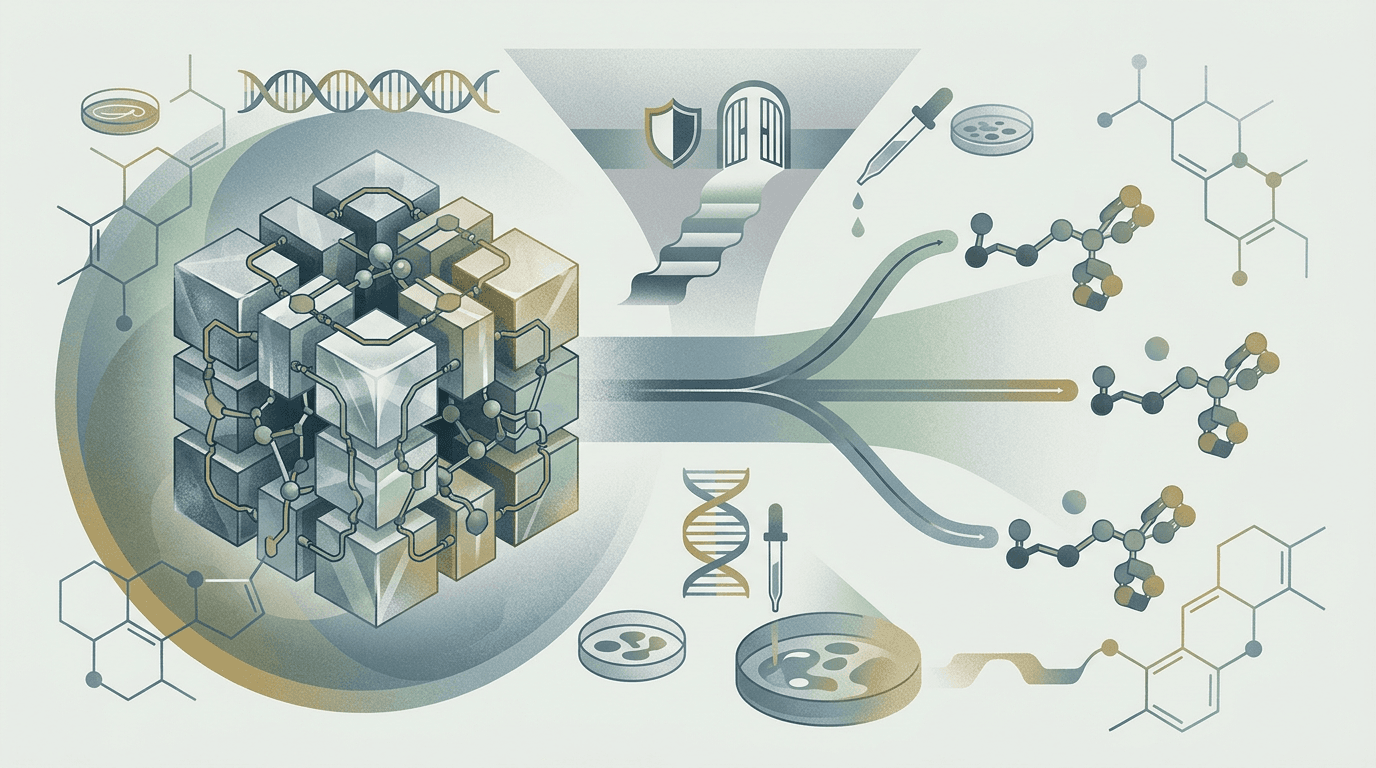
The company's platform, called single-molecule tracking, tags individual proteins with fluorescent markers and records them zipping around inside living cells. Machine learning algorithms then analyze those videos to figure out when a drug candidate changes protein behavior. Traditional drug screening is like testing whether a key fits a lock. Eikon's approach is like watching the entire lock mechanism in slow motion to understand why it opens.
They've scaled this to an industrial level too. Their automated system can image more than one million individual cells per day across over 13,000 test wells. That's not a science experiment; that's a factory.
The Man From Merck
Running this operation is Roger Perlmutter, who spent years as the head of research at Merck. While there, he oversaw the development of Keytruda, the blockbuster cancer immunotherapy that generates tens of billions in annual revenue. Having the guy who helped build one of the most successful cancer drugs in history lend credibility to your startup is, well, useful.
Get tomorrow's biotech intelligence before your competitors.
Join thousands of biotech professionals who start their day with our free, daily briefing.
Perlmutter brought several former Merck colleagues along for the ride. The board even includes Kenneth Frazier, Merck's former CEO. When media outlets called Eikon a "star-studded biotechnology startup," they weren't exaggerating.
What They're Actually Building
All those microscopes and algorithms funnel into a pipeline that's further along than most newly public biotechs. The lead candidate, EIK1001, is a dual agonist of toll-like receptors 7 and 8 (TLR 7/8). In plain English: it's designed to wake up two parts of the immune system so they attack tumors more aggressively.
The big idea is combining EIK1001 with Merck's Keytruda. Checkpoint inhibitors like Keytruda work brilliantly for some patients, but many either don't respond or eventually stop responding. EIK1001 aims to solve that problem by giving the immune system an extra kick.
Eikon is running a Phase 2/3 registrational trial (the kind that can lead to FDA approval) testing this combo in advanced melanoma. They're also testing the drug in non-small cell lung cancer, where early Phase 2 results have already shown tumor shrinkage in some patients. A global Phase 2/3 lung cancer trial is set to start dosing patients later this year.
Beyond EIK1001, the pipeline includes PARP inhibitors (EIK1003 and EIK1004) in Phase 1 and a WRN helicase inhibitor (EIK1005) in Phase 1/2 testing. In total, the company says it has more than a dozen prospective drug candidates spanning cancer and neurological conditions.
Wall Street Voted With Its Wallet
The IPO itself tells a story of investor hunger. Eikon originally planned to sell 17.65 million shares at $16 to $18 per share, which would have raised around $300 million. Instead, the offering was upsized to 21.2 million shares and priced at $18, the top of the range. That's the biotech equivalent of a restaurant raising prices and still having a line out the door.
J.P. Morgan, Morgan Stanley, BofA Securities, Cantor, and Mizuho ran the deal. If underwriters fully exercise their option to buy an additional 3.18 million shares, total proceeds could reach roughly $438 million.
This wasn't Eikon's first big fundraise, either. Before going public, the company had already pulled in over $1.1 billion in private funding, including a $518 million Series B in 2022 and a $350 million Series D in February 2025. The cumulative capital raised is staggering for a company that still hasn't gotten a drug approved.
Why This IPO Matters Beyond Eikon
Eikon's debut landed during what analysts are calling a reopening of the biotech IPO window. Four drugmakers raised about $1 billion combined in the same week.
The broader context matters here. A government shutdown in October 2025 had frozen the IPO market for weeks. Eikon's successful pricing suggests institutional investors are ready to deploy capital again, especially for companies with late-stage clinical data and credible leadership.
But there's a deeper signal worth noting. Eikon isn't just another immunotherapy company; it's a platform company built on technology that sees biology differently. Investors aren't only buying EIK1001's cancer trials. They're buying the thesis that watching proteins move at the molecular level will keep generating new drug candidates for years to come.
The Road Ahead
Eikon's 2026 is going to be pivotal. The melanoma interim data readout could validate (or deflate) the entire EIK1001 thesis. Lung cancer data is headed for a medical conference presentation in the back half of the year. And the Phase 2/3 NSCLC trial needs to get its first patients dosed on schedule.
For a company valued at roughly a billion dollars with zero approved products, the margin for error is thin. But Eikon has something most newly public biotechs don't: a war chest north of a billion dollars, a platform that could outlast any single drug candidate, and a leadership team that's been through this before at the highest level.
The microscopes are on. Now we wait to see what they find.
Clinical & Regulatory4 min read
The First Drug for a Disease That Had Zero
The FDA just approved the first-ever targeted therapy for arginase 1 deficiency, an ultra-rare disease that previously had zero approved treatments. For roughly 250 Americans living with ARG1-D, this changes everything.