Roche Just Bet on a Drug Target No Human Discovered
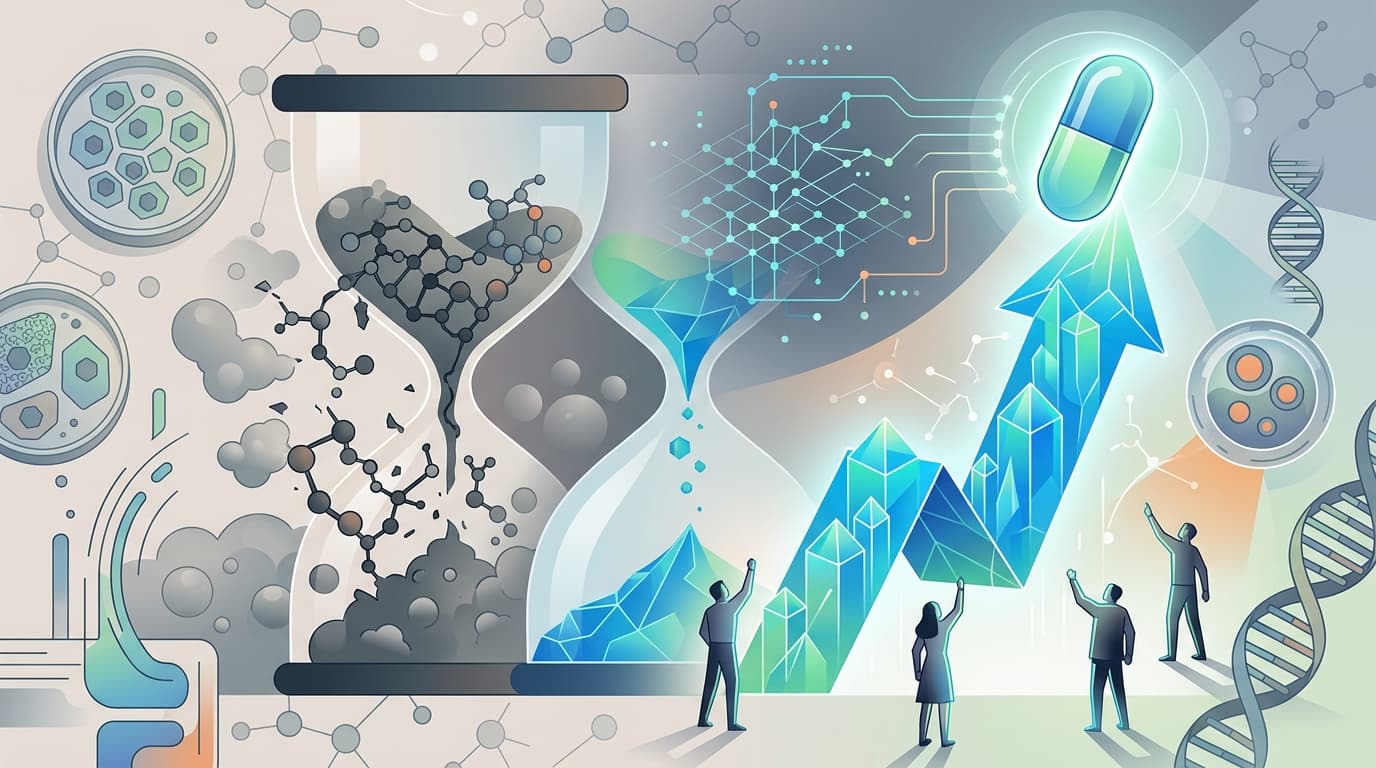
Roche just advanced the first AI-discovered drug target from its $12 billion Recursion partnership into a neurodegenerative disease program. In a field with a 99% failure rate, it's either a breakthrough moment for AI-driven drug discovery or the most expensive science experiment in history.
The Graveyard Gets a New Visitor
Neurodegenerative disease drug discovery is where good ideas go to die. Alzheimer's alone has a 99% clinical trial failure rate. Parkinson's and ALS aren't much better. Pharma companies have poured billions into the brain, and the brain has given almost nothing back.
So when Roche decided to advance a brand-new drug target for an undisclosed neurodegenerative disease this week, that alone wouldn't be news. What makes it interesting: the target wasn't found by a scientist with a hunch. It was found by an AI.
Specifically, it came from Roche's massive partnership with Recursion Pharmaceuticals, a company that has built what amounts to a biological search engine. The target is the first AI-discovered drug target to emerge from their collaboration, and it just moved into a formal early discovery program. Think of it as the moment an AI-generated hypothesis graduated from "interesting idea" to "worth spending real money on."
A $12 Billion Experiment, Four Years In
To understand why this matters, rewind to December 2021. Roche's Genentech unit signed a deal with Recursion worth up to $12 billion across as many as 40 drug programs. The upfront payment was $150 million, with each successful program potentially earning Recursion up to $300 million in milestones plus royalties.
The scope was ambitious: use Recursion's AI platform to find novel drug targets in neuroscience and one undisclosed oncology indication. Not just better molecules for known targets (plenty of companies do that), but genuinely new targets that humans hadn't identified before.
Four and a half years later, Roche has now exercised its first "validated target option" under the deal. The total cash paid to Recursion has reached roughly $216 million, including a $3 million milestone triggered by this specific option exercise. That's a lot of money for what is still early-stage work, but it signals something important: Roche's scientists looked at the data and said, "Yes, this is real enough to build a drug program around."
Get tomorrow's biotech intelligence before your competitors.
Join thousands of biotech professionals who start their day with our free, daily briefing.
How You Build a Google Map of the Brain
Recursion's approach is different from most AI drug discovery companies, and it's worth understanding why. Most AI platforms focus on molecule design: give them a known target, and they'll design a better drug to hit it. Recursion goes one step further upstream. They try to discover the target itself.
They do this by running an absurd number of experiments. Their automated labs process millions of cell-based experiments per week, systematically knocking out genes one by one and photographing what happens to the cells. For this neuroscience program, they grew over one trillion human neurons, knocked out more than 17,000 genes individually, and captured over 30 million cellular images.
All of that data feeds into foundation AI models (think of them as pattern-recognition engines trained on biological images rather than text). These models convert microscope photos into mathematical representations of cellular behavior, then look for connections that human scientists would never spot in a dataset that large.
Recursion calls the result a "map of biology." It's essentially a massive, searchable atlas of how cells behave when you break specific genes. If you want to find what's going wrong in a neurodegenerative disease, you can query the map for genes whose disruption produces disease-like patterns in neurons. That's how this target was found.
They also built a parallel map using 46 million images of microglia, the brain's immune cells, which play a central role in diseases like Alzheimer's and Parkinson's.
The 15-Month Stress Test
Finding a target is one thing. Convincing Roche it's worth pursuing is another.
After the AI flagged this particular target, the joint Recursion-Genentech team spent 15 months putting it through rigorous laboratory validation. They tested whether the target sat in disease-relevant biological pathways, whether it actually did something meaningful in cell-based disease models, and whether it met pre-agreed criteria in a formal validation plan.
Only after all of that did Genentech exercise its option. The program now moves into hit generation and chemistry optimization, where Recursion's AI-native chemistry platform will try to design small molecules that can interact with the target. If those molecules look promising, they'll eventually head toward animal studies and, potentially, human trials.
Neither company has disclosed which neurodegenerative disease they're targeting, or even the identity of the molecular target. That secrecy is standard for early-stage programs, but it also means we can't yet evaluate how novel or promising the biology really is.
Why Neurodegeneration Is the Perfect (and Scariest) Test Case
The choice of neurodegeneration as the proving ground for AI-driven target discovery is both logical and gutsy. It's logical because the field desperately needs fresh thinking. Conventional approaches have been stuck in a rut, chasing the same handful of targets (amyloid, tau, alpha-synuclein) with disappointing results. CNS drugs in general have roughly half the approval rate of drugs for other parts of the body.
It's gutsy because, well, this is where drug programs go to fail. The brain is hard to access, hard to measure, and hard to model. Animal studies in neurodegeneration are notoriously poor at predicting what will work in humans. Even if the AI found a genuinely novel and important target, turning it into a working drug still requires clearing every hurdle that has tripped up the field for decades.
But that's also the point. If AI-driven target discovery can produce something meaningful in neurodegeneration, it can probably work anywhere. This program is essentially a stress test for the entire concept.
What This Means for the Rest of the Industry
Analysts are treating this milestone as early but genuine validation of the AI-first target discovery model. Bloomberg noted that Roche is using the project as a test of whether AI can uncover new medicines. Financial coverage called Genentech's option exercise a "significant validation" of Recursion's platform.
The broader signal is structural. The Roche-Recursion deal established a template that other pharma companies are likely to follow: large, multi-program partnerships where AI companies get paid in stages (for building biological maps, for validated targets, for development milestones) rather than simple software licensing fees. Sanofi has a similar large-scale collaboration with Recursion, and the competitive pressure on other big pharma companies to lock in top AI platforms is growing.
The important caveat: this is still very early. The target hasn't produced a drug candidate yet, let alone entered clinical trials or helped a patient. The history of neurodegeneration research is littered with targets that looked promising in the lab and collapsed in the clinic.
But for the first time, an AI system identified a drug target that a top-five pharma company independently validated and chose to invest in. In a field defined by failure, that's at least a reason to pay attention.
The real test comes next: can the chemistry work? Can the molecule cross the blood-brain barrier? Can it actually slow a neurodegenerative disease in humans? Those answers are years away. But the experiment has officially begun.
Clinical & Regulatory4 min read
Moderna's Flu Shot Just Cleared Its Biggest Hurdle Yet
Moderna's mRNA flu vaccine just got a unanimous thumbs-up from the FDA's advisory committee. If approved by August 5, it would be the first mRNA flu shot ever licensed in the U.S., opening a multibillion-dollar market that could redefine Moderna's future beyond COVID.