Hackers Got Into Novo Nordisk's Clinical Trials. That's Worse Than It Sounds.
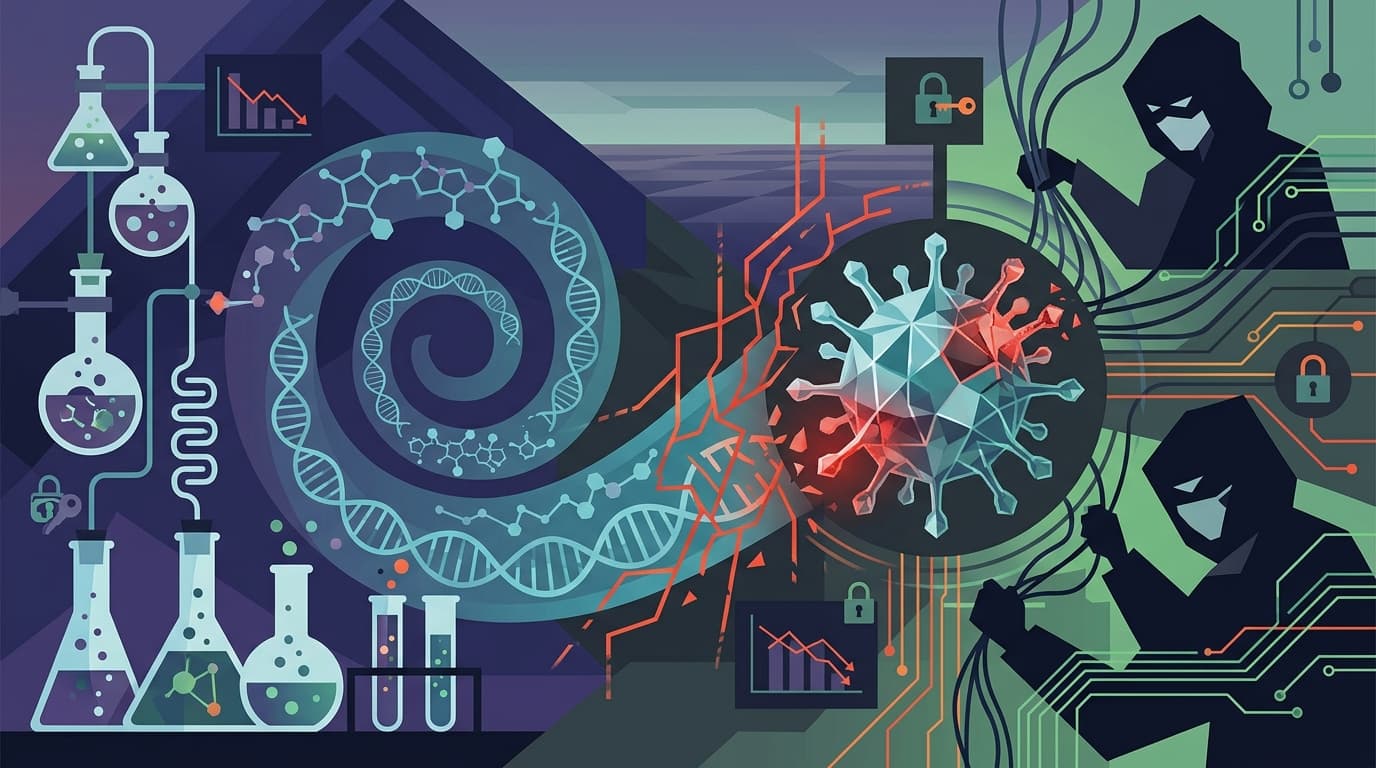
Hackers didn't just hit Novo Nordisk's corporate systems — they got into clinical trial patient data. With claims of 1.3 terabytes stolen and a $25 million ransom demand, this breach exposes how vulnerable drug development's most sensitive data really is.
Pharmaceutical companies get hacked all the time. Usually it's corporate emails, employee records, or financial systems. Annoying, expensive, but ultimately recoverable. What happened at Novo Nordisk is different.
This time, hackers got into the clinical trial data.
Not Your Typical Corporate Hack
Novo Nordisk disclosed this week that unauthorized actors accessed internal IT systems and copied data tied to patients in active clinical trials. We're not talking about spam-able email addresses. The stolen information includes patient IDs, sex, year of birth, biomarkers, health data, immunogenicity results, and lifestyle factors like smoking status, alcohol use, and BMI.
Novo says no names or direct identifiers were exposed. The data was "pseudonymized," meaning patient names were replaced with random codes. Think of it like a witness protection program for data: real information, fake identity. The company insists that nobody can identify participants from the stolen records alone.
That's reassuring on the surface. But privacy researchers would push back hard on that claim.
"Anonymous" Isn't as Anonymous as You Think
Here's where it gets uncomfortable. Studies consistently show that combining a few indirect identifiers (sex, birth year, ethnicity, a distinctive biomarker) can narrow down who someone is, especially in smaller trials or rare disease populations. One review of supposedly anonymized trial datasets found that 80% included sex and 84% included age, and many still contained direct identifiers that should have been stripped out.
Regulatory frameworks like those from the EMA and Health Canada aim to keep the probability of re-identifying any single person below about 0.09 (9%). That sounds small. But audits of real-world "anonymized" datasets have found risk scores ranging from 0.47 to 0.91 before anyone bothered to clean them up. And research on health data re-identification attacks reports success rates between 26% and 34% across various datasets.
Pseudonymization is a lock on the front door. It's not a vault. If an attacker already has the clinical data and can cross-reference it with public health registries, social media posts about trial participation, or patient advocacy databases, the lock starts to look pretty flimsy.
Get tomorrow's biotech intelligence before your competitors.
Join thousands of biotech professionals who start their day with our free, daily briefing.
The Bigger Theft Nobody's Talking About
The clinical trial data is concerning on its own. But there's a much larger story brewing underneath.
A hacking group called FulcrumSec claims it spent over two months inside Novo Nordisk's network and walked away with roughly 1.3 terabytes of data across 700,000 files. Their alleged haul includes source code, proprietary AI models, information on unreleased drug programs, Dicerna RNAi pipeline data, manufacturing processes, and records on approximately 41,000 experimental compounds. They reportedly demanded $25 million in ransom.
Novo Nordisk has not confirmed these broader claims. But if even a fraction of it is accurate, the competitive intelligence implications are staggering. Imagine a rival (or a nation-state actor) getting a detailed look at your entire R&D playbook: which molecules you're betting on, which ones you've abandoned, and what your AI models are predicting.
That's not just a privacy problem. That's a strategic one.
Clinical Trials Are Sitting Ducks
Novo Nordisk isn't an outlier; it's a symptom. The pharmaceutical industry has a growing cybersecurity problem, and clinical trial systems sit right in the blast zone.
Consider the trajectory. In 2024, there were 734 large healthcare data breaches reported in the U.S. alone. By 2025, that number climbed to 772, setting a new record. The Change Healthcare breach in 2024 affected a jaw-dropping 192.7 million people. And the Cencora supply-chain breach the same year exposed patient data across at least 27 major drug companies through a single compromised vendor.
A 2021 study found that 92% of pharma organizations had at least one exposed database accessible from the internet. Think about that: nine out of ten pharma companies had a database just sitting there, waiting for someone to knock on the door.
The industry is digitizing trials at breakneck speed, adopting electronic consent forms, wearable devices, cloud-hosted records, and remote monitoring platforms. Each new tool is another window a hacker can try to pry open. Security spending is rising (forecasts had cybersecurity budgets across pharma, providers, and payors reaching roughly $9.8 billion by 2025), but the attack surface is growing faster than the defenses.
So What Happens to Novo's Drug Pipeline?
The good news, for now: analysts don't think this derails Novo Nordisk's approval timelines. The company says core operations, including manufacturing and distribution, were never disrupted. It took some systems offline as a precaution, brought in external cybersecurity experts, and notified the relevant regulators.
The critical question is whether any data was altered, not just copied. If hackers only exfiltrated information (grabbed a copy and left), then the original trial databases should remain intact, complete with their audit trails and backups. That's a confidentiality breach, not an integrity breach.
But if there's any evidence of tampering with clinical datasets, corrupted audit trails, or compromised blinding, regulators like the FDA and EMA could demand additional validation, sensitivity analyses, or (in extreme cases) repeat studies. Nobody is reporting that scenario right now. Financial analysts are framing this as a compliance headache and a reputational bruise, not a pipeline killer.
The real costs will likely show up as regulatory scrutiny under GDPR (which requires breach notification within 72 hours and can trigger formal investigations), tighter data-management mandates, higher security spending, and the slow erosion of trust among patients who volunteer for clinical trials.
The Uncomfortable Truth About Trial Data
Every clinical trial runs on a social contract. Patients hand over their most intimate health details, trusting that the data will be protected, used responsibly, and never traced back to them. When that contract breaks, even partially, it doesn't just affect one company. It chills participation across the entire industry.
Novo Nordisk is the world's largest maker of diabetes and obesity drugs. Its GLP-1 therapies (think Ozempic and Wegovy) have made it one of the most valuable pharmaceutical companies in the world. Thousands of patients sign up for its trials every year. Those patients just learned that their biomarkers, health conditions, and lifestyle details are now in the hands of someone who wasn't supposed to have them.
The company can say the data was pseudonymized. It can say no one can identify participants. But "we don't think anyone can figure out who you are" is a hard sell to someone who trusted you with their blood work.
Pharma companies have spent decades perfecting molecule design, trial protocols, and regulatory strategy. Cybersecurity has been treated as an IT problem, not a core R&D risk. This breach should change that calculus. Because when hackers can reach the trial data itself, they're not just stealing files. They're touching the foundation that every drug approval is built on.
Clinical & Regulatory4 min read
Moderna's Flu Shot Just Cleared Its Biggest Hurdle Yet
Moderna's mRNA flu vaccine just got a unanimous thumbs-up from the FDA's advisory committee. If approved by August 5, it would be the first mRNA flu shot ever licensed in the U.S., opening a multibillion-dollar market that could redefine Moderna's future beyond COVID.