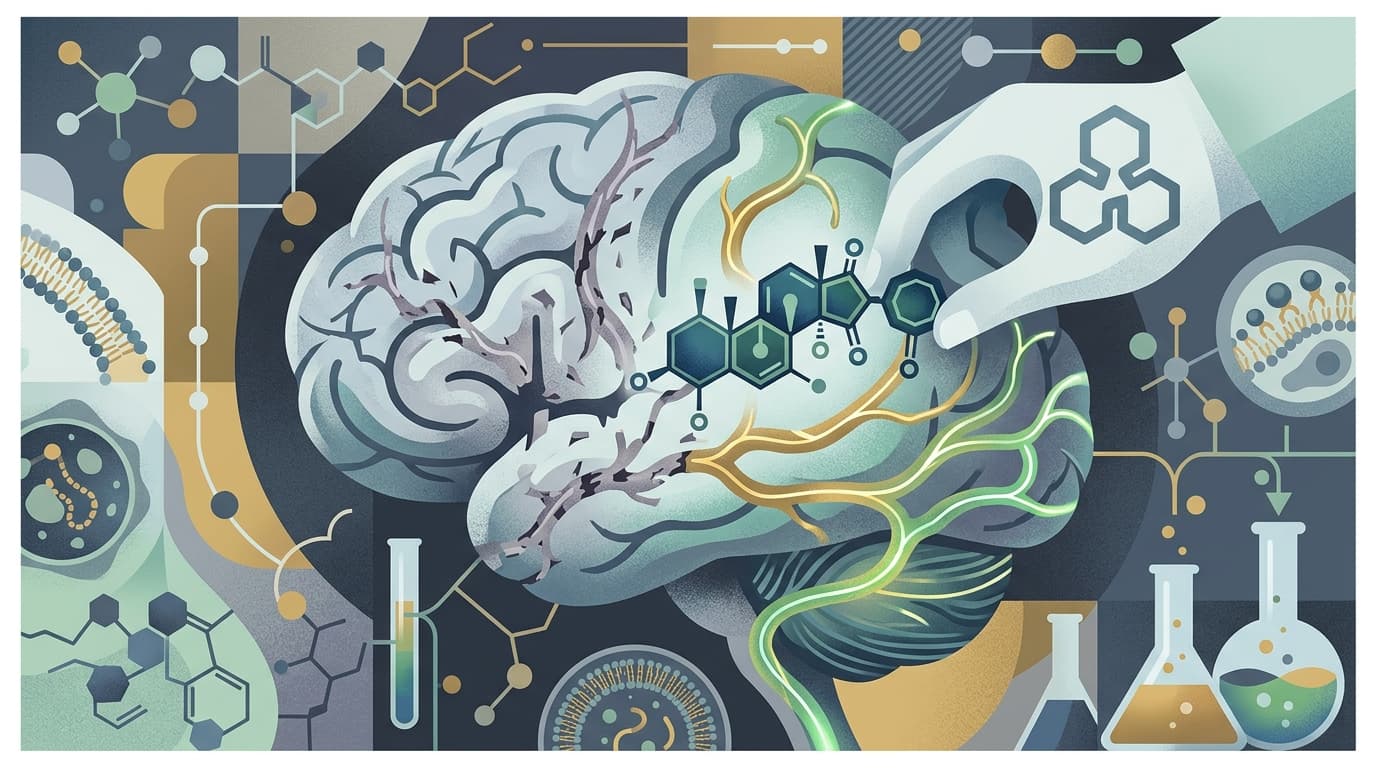

Roche revealed the science behind RG-6182, a first-of-its-kind reversible MAGL inhibitor now in Phase II for progressive MS. In a disease with almost no approved options, this drug targets an enzyme nobody has successfully drugged before.
Imagine being told there's a treatment for the early version of your disease, but once it gets worse, medicine basically shrugs. That's the reality for people with progressive multiple sclerosis.
Progressive MS is the phase where the disease stops coming in waves and starts a slow, relentless march. Nerves degrade. Disability accumulates. And the medicine cabinet is almost bare. For primary progressive MS (PPMS), there's exactly one approved therapy: Roche's own ocrelizumab, sold as Ocrevus. For non-relapsing secondary progressive MS, the options are even bleaker.
So when Roche quietly detailed the discovery work behind a completely new type of MS drug at a conference on September 17, it deserved more attention than it got.
The drug is called RG-6182 (also known as RO-7268489), and its target is an enzyme called monoacylglycerol lipase, or MAGL for short. If that sounds obscure, it is. MAGL has never been the target of an approved drug for any disease. But its biology is surprisingly elegant.
Think of MAGL as a molecular garbage disposal. Its day job is breaking down a molecule called 2-AG, which is one of your body's natural cannabinoids. Yes, your brain makes its own cannabis-like chemicals, and 2-AG is one of the most important ones. It helps protect neurons and calm inflammation.
When MAGL chews up 2-AG, two bad things happen at once. First, you lose the protective cannabinoid signaling. Second, the breakdown product is arachidonic acid, a building block for inflammatory molecules like prostaglandins. It's a biochemical double whammy: you lose your shield and gain a weapon pointed at your own brain.
Blocking MAGL flips that script. More 2-AG sticks around to protect neurons. Less arachidonic acid means fewer inflammatory signals. One target, two benefits.
Roche's RG-6182 is a reversible MAGL inhibitor, and that distinction matters more than it might seem.

Eli Lilly just agreed to pay up to $2.875 billion for a four-year-old biotech with one Phase 1 drug and zero revenue. The deal is the latest in Lilly's multi-billion-dollar immunology shopping spree, and it says a lot about where big pharma thinks the next blockbusters will come from.


Join thousands of biotech professionals who start their day with our free, daily briefing.
The most well-known MAGL inhibitor to reach human testing is ABX-1431, developed by Abide Therapeutics (now part of Lundbeck). That drug is an irreversible inhibitor: it permanently disables every MAGL molecule it touches. Irreversible inhibitors can be powerful, but they can also cause problems. Block an enzyme too completely and the body's feedback loops go haywire, sometimes reducing effectiveness over time.
A reversible inhibitor is gentler. It binds, does its job, and lets go. Think of it as the difference between welding a door shut and just holding it closed. You get the blockade you want, with a built-in safety valve. Roche is betting this approach will be better tolerated in a disease where patients need treatment for years or decades.
RG-6182 entered a Phase II trial called MINTAKA earlier this year, with the first patient enrolled in Q1 2026. The study design is clever: rather than testing the drug alone, it's being evaluated as an add-on to ocrelizumab in people with progressive MS.
The trial is multi-center, double-blind, and placebo-controlled. It's measuring safety, how the drug behaves in the body (pharmacokinetics), its biological effects (pharmacodynamics), and efficacy. The logic is straightforward. Ocrelizumab tackles one piece of the progressive MS puzzle by targeting B cells, a type of immune cell. RG-6182 would attack a completely different angle: the lipid-driven neuroinflammation that ocrelizumab doesn't fully address.
If the combination works, it could be the first time a progressive MS patient gets a treatment that fights the disease on two fronts simultaneously.
This isn't happening in a vacuum. Roche is running one of the most ambitious MS strategies in pharma, and RG-6182 is the newest piece on the board.
Ocrevus remains the cash engine. It's the only approved PPMS drug and continues to expand; the EMA recently recommended it for pediatric patients aged 10 and older with relapsing MS. But Ocrevus is aging, and Roche knows it.
The heir apparent is fenebrutinib, a BTK inhibitor that posted what Roche called "unprecedented" positive Phase III results in PPMS in November 2025 and in relapsing MS in early 2026. If approved, fenebrutinib would be the first BTK inhibitor to succeed in Phase III across both forms of MS. Regulatory filings are being discussed for 2026.
So the strategy reads like a three-act play. Ocrevus holds the line now. Fenebrutinib takes over next. And RG-6182, if it works, opens an entirely new chapter by going after a mechanism neither of the other two drugs touches.
The competitive landscape for MAGL inhibitors is remarkably thin. Beyond Lundbeck's ABX-1431, most MAGL programs across the industry (Takeda, Janssen, Pfizer, and various academic groups) are still stuck in preclinical or patent stages. Nobody else appears to have a reversible MAGL inhibitor anywhere close to Phase II for a neurological disease.
That's both exciting and sobering. It means Roche is exploring genuinely uncharted territory, which is rare in an industry that loves fast-following. But it also means there's limited clinical precedent to guide expectations. The science looks compelling in animal models (reduced inflammatory markers like IL-1β, IL-6, and TNF-α), but the gap between mouse brains and human brains has humbled plenty of drug developers before.
Progressive MS patients have been waiting decades for something truly new. Not a better anti-inflammatory, not a reformulation, not a tweak to an existing mechanism. Something that attacks the disease from a fundamentally different direction.
RG-6182 might be that something. A reversible MAGL inhibitor that boosts the brain's own protective chemicals while cutting off a key source of inflammatory fuel is, on paper, exactly the kind of dual-action approach progressive MS demands.
Phase II is still early days, and "might" is doing a lot of heavy lifting in that sentence. But in a therapeutic area this desperate for innovation, even a credible "might" is worth watching closely.
Novo Nordisk just dropped $1.4 billion on a macrocycle startup days after another billion-dollar delivery deal. The injection giant is betting its future on pills, and the reason has everything to do with Eli Lilly.