Roche Is Hiring a Chinese Startup to Invent Its Next Cancer Drug
Roche signed a deal worth up to $1 billion with Defand Therapeutics, a two-year-old Chinese startup with zero clinical trials, to discover molecular glue cancer drugs. It's Roche's fourth China partnership since August, and it signals a radical shift in how big pharma thinks about drug discovery.
The $1 Billion Bet on a Company With Zero Clinical Trials
Roche just handed a two-year-old Chinese biotech the keys to its drug discovery kitchen.
The Swiss pharma giant signed a collaboration with Defand Therapeutics, a Hangzhou-based startup founded in 2023, to discover molecular glue degraders for cancer and immune diseases. The deal could be worth close to $1 billion if all milestones are hit. And Defand hasn't put a single drug into clinical trials yet.
That's not a typo. Roche, one of the largest pharmaceutical companies on Earth, is outsourcing early-stage drug discovery to a startup that barely has a preclinical pipeline. It's the biotech equivalent of a Michelin-star restaurant hiring a home cook to develop new recipes, then paying them royalties for every plate sold.
So what's going on?
Molecular Glue: The Hottest Modality in Pharma
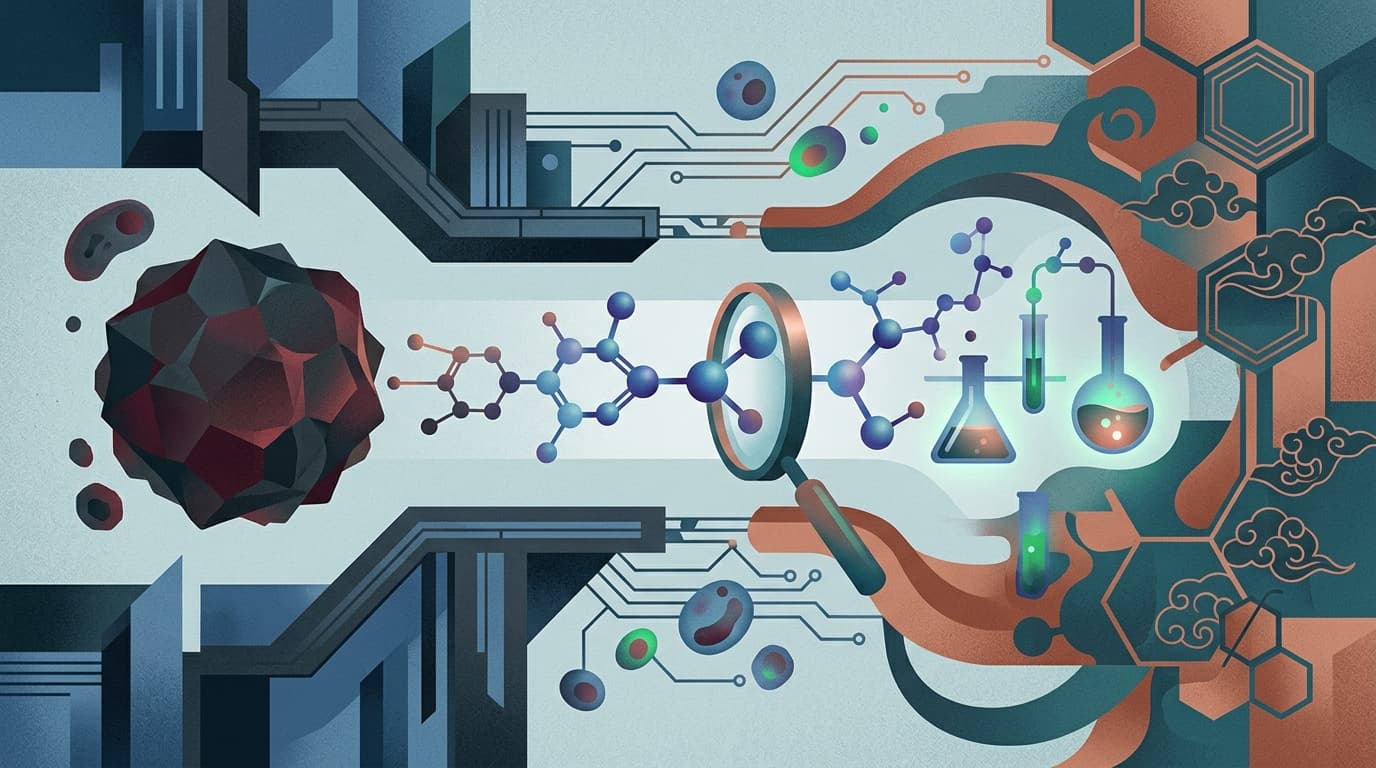
First, a quick primer. Most drugs work by blocking a protein, like sticking a cork in a bottle. Molecular glue degraders do something different: they trick the cell's own garbage disposal system into destroying a disease-causing protein entirely. Instead of plugging the hole, you shred the whole bottle.
This matters because many cancer-driving proteins are considered "undruggable" by traditional small molecules. Molecular glues offer a workaround, and the industry is racing to master the technology.
The space has exploded over the past two years. More than 20 molecular glue degraders have entered clinical trials. Novartis signed a jaw-dropping $5.7 billion deal with Monte Rosa Therapeutics in September 2025, one of the largest transactions the modality has ever seen. Pfizer partnered with Triana; Biogen teamed up with Neomorph; Eisai linked arms with SEED Therapeutics. Deals in the $1 billion to $1.5 billion range have become almost routine.
Roche clearly didn't want to be left out. But its choice of partner is what makes this deal unusual.
Why Defand? Why Now?
Defand's pitch is its high-throughput degrader screening platform, a system designed to rapidly identify molecular glue candidates against specific protein targets. The company works across cytoplasmic, nuclear, and even transmembrane proteins, giving it a broad canvas.
Get tomorrow's biotech intelligence before your competitors.
Join thousands of biotech professionals who start their day with our free, daily briefing.
Under the deal's structure, Defand handles the discovery work. Roche takes over for preclinical development, clinical trials, and commercialization, with exclusive global rights to anything that comes out of the collaboration. There's also an option to expand to additional targets down the road.
The financial details are telling. Reports suggest the upfront payment was under $10 million, with the rest of the roughly $1 billion package tied to development and commercial milestones. That's a classic "pay as you go" structure: Roche isn't betting the farm upfront, but it's dangling life-changing money if Defand delivers.
For a company founded in 2023 with no clinical-stage assets, that's an extraordinary vote of confidence.
Roche's China Strategy Is Evolving Fast
This is where the story gets bigger than one deal. The pattern of Roche's recent China partnerships reveals a deliberate strategy shift.
Traditionally, big pharma's China playbook was straightforward: find a Chinese biotech with a promising late-stage drug, license the rights outside China, and run with it. Think of it like buying a house that's already built.
Roche is now buying the land and hiring Chinese architects to design something new. Consider the recent streak: Roche's Genentech unit partnered with DualityBio on an antibody-drug conjugate payload platform, with DualityBio leading discovery and early development. Roche licensed a preclinical tri-specific T-cell engager from Simcere Zaiming in a deal worth up to $1.53 billion. And now Defand, where Roche is literally outsourcing the invention process itself.
The common thread? Roche is going earlier and earlier in the pipeline, engaging Chinese biotechs not as vendors of finished products but as innovation engines.
The Bigger Picture: China as Pharma's R&D Lab
Roche isn't alone. Across the industry, 2026 has seen a wave of Western pharma companies signing broader, more collaborative deals with Chinese biotechs. Pfizer inked a partnership with Innovent covering 12 early-stage oncology programs. Bristol Myers Squibb signed a deal with Hengrui spanning 13 early-stage programs across oncology, hematology, and immunology.
These aren't one-off license grabs. They're multi-program, platform-style collaborations that treat Chinese biotech as a genuine source of discovery talent, not just a cheaper place to run trials.
The economics make sense. China produces a growing share of new molecules entering global pipelines. Discovery costs are lower. Speed is often faster. And for Western pharma companies staring down patent cliffs, the math is irresistible.
But there's a catch.
The Elephant in the Room: Geopolitics
Washington has been tightening scrutiny on outbound investment into China, particularly around technology transfers. The BIOSECURE Act and related policy debates have cast a shadow over cross-border biotech partnerships. Every deal like this one raises a question: at what point does geopolitical friction start overriding commercial logic?
For now, the answer seems to be "not yet." The parade of nine-figure and ten-figure China deals in 2026 suggests that pharma executives still see the commercial upside as worth the political risk. But the tension is real, and it's growing. One shift in policy could change the calculus overnight.
Roche appears to be betting that the window is still open, and it's moving fast to take advantage.
What This Means for the Rest of the Industry
The Defand deal sends a few clear signals.
First, molecular glues are now a must-have modality. When Novartis, Pfizer, Biogen, Eisai, Roche, and others are all racing to sign platform deals, the competitive pressure is obvious. Any pharma company without a degrader strategy is going to feel increasingly exposed.
Second, China's role in global drug discovery is expanding, whether Washington likes it or not. The talent, the platforms, and the cost advantages are too significant to ignore. Expect more deals like this one.
Third, the structure of these deals is shifting. Pharma isn't just buying assets anymore; it's renting innovation capacity. That creates enormous upside for small biotechs like Defand (potentially $1 billion from a single partnership) while letting pharma spread risk across multiple bets.
Roche is treating a two-year-old Chinese startup like a drug discovery partner, not a vendor. That tells you everything about where the industry thinks the next generation of medicines is going to come from.
Clinical & Regulatory
4 min read
Four Deaths, One Drug, and the Future of Schizophrenia Treatment
The FDA flagged four patient deaths in Newron's evenamide program and kept its clinical hold in place, casting a shadow over one of the few schizophrenia drugs that doesn't work through dopamine. With a critical data readout looming in early 2027, the fate of a first-in-class glutamate modulator hangs in the balance.