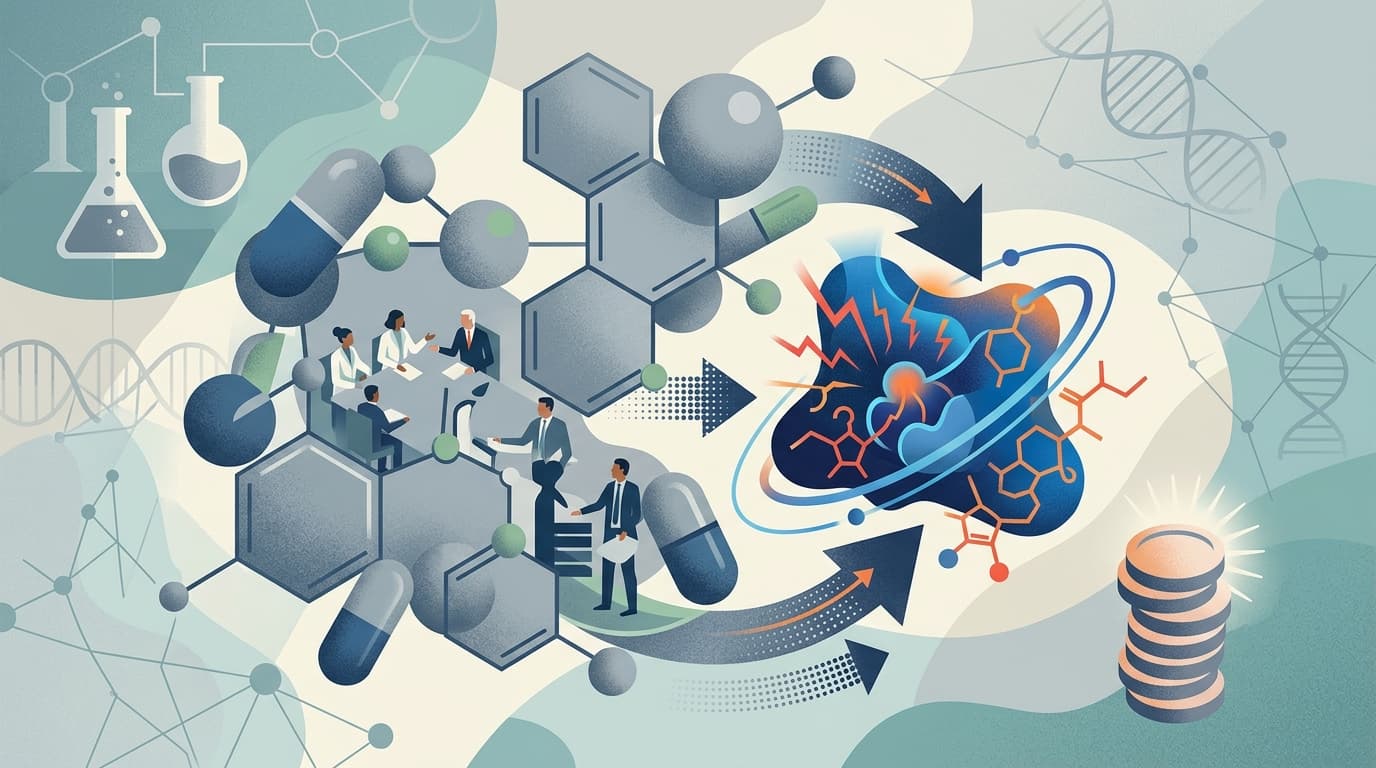

ByteDance just spun out its secret five-year drug discovery project into a $1.5 billion AI biotech company called Anew Labs. The TikTok parent raised $290 million and is betting its algorithm expertise can crack medicine's hardest problems.
The company behind TikTok, Douyin, and a fleet of addictive algorithms just placed a $1.5 billion bet on something nobody saw coming: discovering your next prescription drug.
ByteDance has officially spun out its internal drug discovery unit into a standalone company called Anew Labs. The Shanghai-based startup just closed roughly $290 million in its first external funding round, instantly reaching unicorn status. ByteDance still holds a 56% stake, which means the world's most powerful short-video empire is now also a majority owner of an AI biotech company.
Let that sink in for a second. The same organization that perfected the art of keeping you scrolling at 2 a.m. now wants to use similar AI muscle to design medicines for autoimmune diseases.
Anew Labs didn't appear out of thin air. ByteDance started recruiting AI drug discovery talent back in late 2020, and by 2021, it had assembled a formal team of about 50 core staff under a leader named Liu Kai. For five years, this group operated in the shadows of ByteDance's broader "AI for Science" division, building algorithms, running experiments, and quietly assembling a drug pipeline.
Think of it like a restaurant developing a secret menu for years before finally opening a pop-up. The pop-up just happens to be valued at $1.5 billion on day one.
The spinout transferred everything: the team, the technology platform, the algorithms, and the pipeline assets. ByteDance's cloud arm, Volcano Engine, continues to supply computing power, which is the biotech equivalent of moving out of your parents' house but still coming back for free laundry.
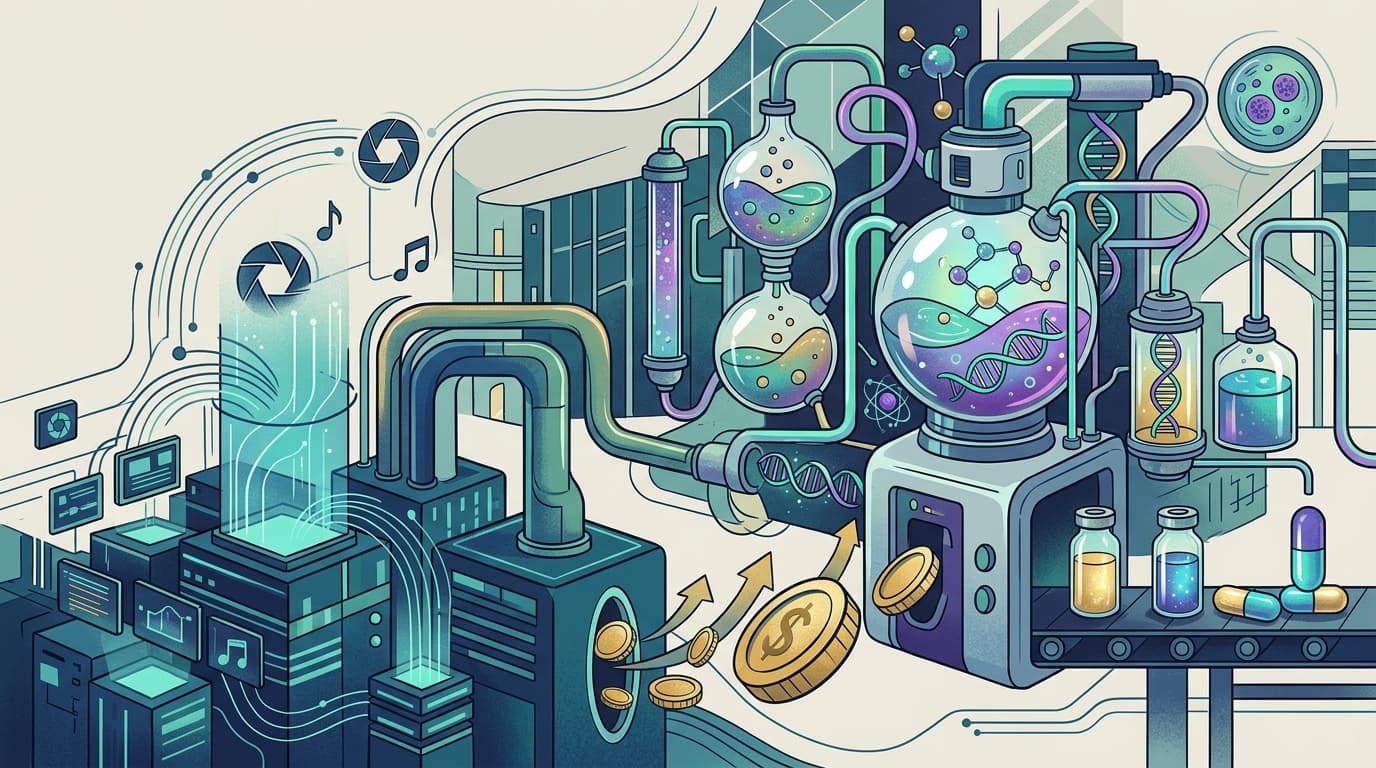
The company has built what it calls an agentic drug discovery engine, which is basically a suite of interconnected AI tools that work together in a loop. Instead of one model doing one job, multiple AI systems handle different parts of the drug design process: predicting protein structures, simulating molecular behavior, generating new drug candidates, and even making scientific reasoning decisions.

Viatris, one of the world's biggest generics companies, is paying $1.65 billion in cash for Pacira BioSciences and its non-opioid pain portfolio. The deal says as much about the future of generics as it does about pain management.

Join thousands of biotech professionals who start their day with our free, daily briefing.
Their toolbox includes models like AnewFold (protein structure prediction), AnewDesign (antibody and nanobody design), and AnewMind (a scientific reasoning AI that helps make drug development decisions). It's like having an assembly line where each station is staffed by a specialized AI, and they all talk to each other.
On the therapeutic side, Anew is focused on immunology and inflammation. Their most advanced public program is a small-molecule inhibitor targeting a protein called IL-17, which plays a key role in autoimmune diseases. That program has reportedly reached lead optimization, the stage where chemists refine a promising molecule into something that could actually become a drug. They also have an IL-4R program and two additional undisclosed targets, all preclinical.
The modalities are broad: small molecules, antibodies, nanobodies (think antibodies, but smaller and more nimble), and cyclic peptides. It's an ambitious spread for a company that just emerged from stealth.
The investor list reads like a who's who of Chinese venture capital. HSG (formerly Sequoia China), IDG Capital, and Hillhouse Investment led the round, with 5Y Capital co-leading. Other participants included Gaorong Ventures, Primavera Venture Partners, Boyu Capital, and the Shanghai Future Industries Fund, a state-backed vehicle that signals government enthusiasm for the sector.
That state backing matters. Local governments in pharma hubs have been ramping up support. Beijing launched state-backed hard-tech funds in late 2025 with more than 50 billion yuan each in committed capital, with biomedicine explicitly on the target list. Anew Labs isn't just riding a venture wave; it's surfing an industrial policy tsunami.
Anew Labs enters a field that's getting crowded at the top. Google's Isomorphic Labs is probably the closest comparison: an AI drug discovery unit spun out of a tech giant (Alphabet), which inked deals with Novartis and Eli Lilly worth nearly $3 billion in aggregate potential value. Then there's Xaira Therapeutics on the U.S. side, along with Nvidia supplying the infrastructure layer through its BioNeMo platform.
Endpoints News, which selected Anew for its 2026 Endpoints 11 list of the most compelling biotech startups (out of 150+ nominations), made a pointed observation: Anew Labs has actually disclosed more pipeline progress at this stage than Isomorphic or Xaira. That's notable. In AI drug discovery, everyone loves to talk about their models. Fewer companies show you the molecules.
The broader China AI drug discovery market is heating up fast, too. In 2025 alone, the sector saw 32 financings totaling more than 6.7 billion yuan, a 130% increase year over year. Insilico Medicine raised $293 million through a Hong Kong IPO. The capital is clearly flowing.
Industry watchers are framing this moment as a transition from "model-building" to "validation." That's a polite way of saying: the models are impressive, but can they actually produce drugs that work in human beings?
This is where every AI drug discovery company hits the same wall. Predicting protein structures is hard; getting a drug through clinical trials is exponentially harder. Biology is messy, unpredictable, and stubbornly resistant to being optimized by algorithms. Anew's programs are all preclinical, meaning they haven't yet been tested in a single patient.
The comparison to ByteDance's core business is almost too perfect. TikTok's algorithm recommends content with eerie precision because the feedback loop is instant: you either watch or you swipe. Drug discovery has a feedback loop, too, but it takes years and costs hundreds of millions of dollars to find out if your algorithm's recommendation was any good.
Still, the signal here is hard to ignore. A $1.5 billion valuation before a single drug reaches the clinic is a massive vote of confidence, not just in Anew Labs, but in the idea that the next generation of medicines might be designed by the same kind of AI that currently picks your playlist. Whether that confidence is justified won't be clear for years. But the race is on, and the company that taught machines to predict what you want to watch next is now teaching them to predict what molecules your body needs.
The stakes, obviously, are a little higher than screen time.
Roche signed a deal worth up to $1 billion with Defand Therapeutics, a two-year-old Chinese startup with zero clinical trials, to discover molecular glue cancer drugs. It's Roche's fourth China partnership since August, and it signals a radical shift in how big pharma thinks about drug discovery.