Roche Just Bought the AI That Reads Your Cancer Slides
Roche is paying up to $1.05 billion to acquire PathAI, the company whose software reads cancer tissue slides with artificial intelligence. It's the biggest signal yet that computational pathology is moving from science project to standard of care.
A Billion-Dollar Bet on Robot Pathologists
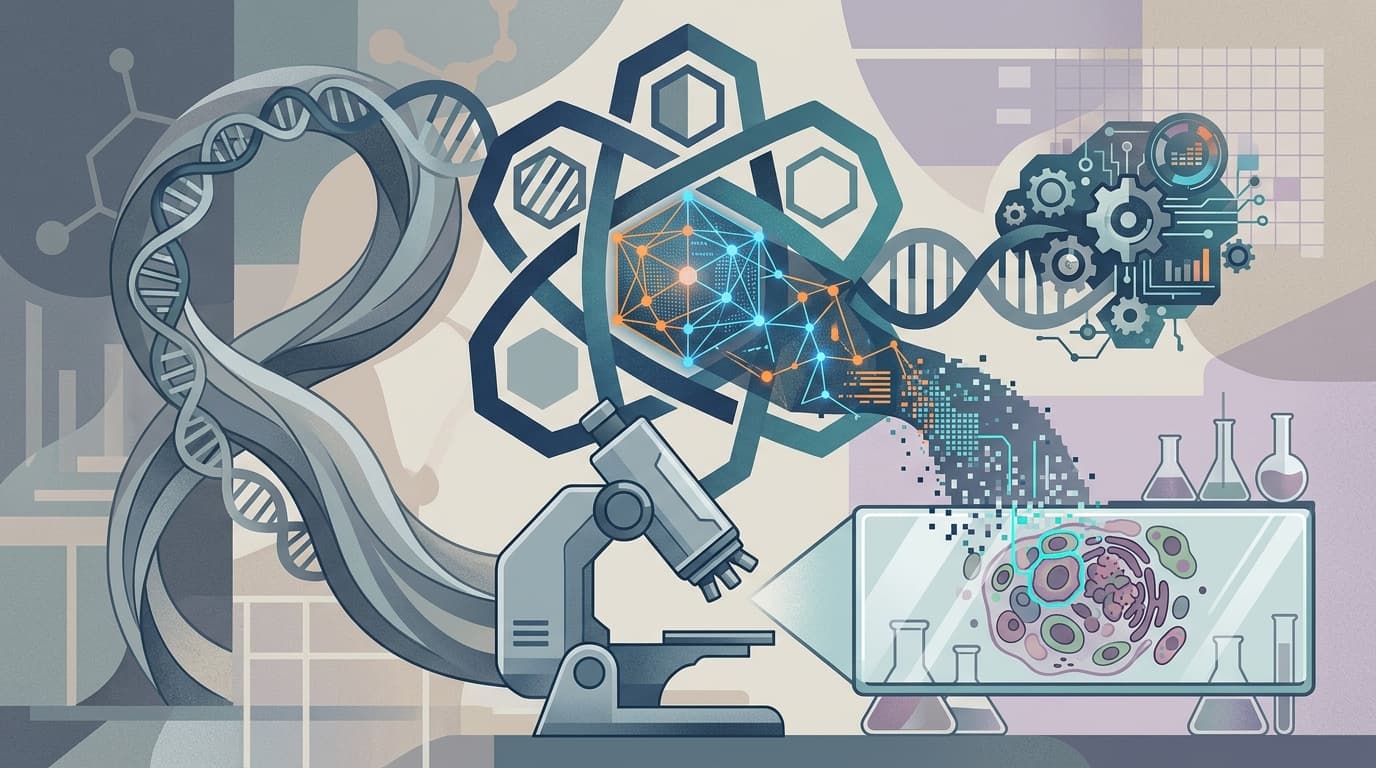
Every cancer diagnosis starts the same way. A pathologist sits at a microscope, stares at a thin slice of tissue on a glass slide, and makes a judgment call. It's a system that has worked for over a century. It's also shockingly subjective: two pathologists can look at the same slide and disagree on the diagnosis.
Roche just bet up to $1.05 billion that artificial intelligence can do it better.
The Swiss pharma giant announced a deal to acquire PathAI, a Boston-based company that builds AI software to analyze digital images of tissue samples. The price tag: $750 million in cash upfront, plus up to $300 million tied to future milestones. Once the deal closes (expected in the second half of 2026), PathAI will fold into Roche's Diagnostics division.
This isn't Roche buying a flashy AI startup on a whim. These two have been dating since 2021.
From First Date to Moving In Together
Roche and PathAI started collaborating five years ago on digital pathology. In 2024, they got more serious: PathAI signed on to work exclusively with Roche's tissue diagnostics business on AI algorithms for companion diagnostics (tests that help doctors pick the right drug for the right patient). Think of it as going from casual dinners to sharing a Netflix password.
The acquisition is the logical next step. Roche doesn't just want to partner with PathAI's technology; it wants to own it.
And the technology is substantial. PathAI's flagship product, AISight, is a cloud-based platform that turns glass slides into digital images and then runs AI algorithms to spot cancer cells, measure biomarkers, and quantify tissue features. The clinical version, AISight Dx, already has FDA clearance for primary diagnosis, meaning pathologists can legally use it as their main tool for reading slides.
PathAI also built something called AIM-MASH AI Assist, which became the first AI-powered pathology tool to earn qualification from both the FDA and the European Medicines Agency as an accepted tool for drug trials. In early 2026, the FDA gave to another PathAI product for analyzing skin cancer slides.
Get tomorrow's biotech intelligence before your competitors.
Join thousands of biotech professionals who start their day with our free, daily briefing.
Breakthrough Device status
This is not vaporware. It's a mature platform with regulatory credentials.
Why Roche Wants to Own the Microscope's Brain
Roche already sells the microscopes (well, digital slide scanners), the staining reagents, and the lab software. But until now, the AI layer sat outside its walls. Buying PathAI gives Roche something it didn't have: control of the entire stack, from the physical slide to the AI-generated diagnosis.
Picture it like Apple buying its own chip designer. When you control the hardware and the software, you can optimize the whole experience in ways that a patchwork of vendors never could.
The real prize, though, isn't efficiency. It's companion diagnostics.
Companion diagnostics are the gatekeepers of precision oncology. Before a patient gets an expensive targeted therapy, a companion test confirms they have the right biomarker. The number of FDA-approved companion diagnostic tests is climbing fast, and AI could make these tests faster, cheaper, and more accurate.
Roche is already pushing the frontier here. In April 2025, the FDA granted Breakthrough Device Designation to Roche's VENTANA TROP2 RxDx, described as the first AI-driven computational pathology companion diagnostic for lung cancer. No AI-based companion diagnostic has received full FDA approval yet, but this designation puts Roche at the front of the line.
Now imagine pairing that regulatory momentum with PathAI's platform and data. Roche could build AI-powered companion diagnostics that read tissue slides, identify the right patients, and match them to the right drugs, all within a single integrated system.
The Catch: When Your Platform Picks a Side
PathAI didn't just work with Roche. It partnered with Bristol Myers Squibb on oncology trials. It sold its clinical lab business to Quest Diagnostics in 2024 while licensing them the AISight platform. It struck a deal with Labcorp to deploy its technology nationally. It launched something called the Precision Pathology Network, billed as the first global network of digital pathology labs.
In other words, PathAI was everybody's friend. The Switzerland of digital pathology. (Ironic, given the buyer.)
Once Roche owns it, that neutrality evaporates. Analysts are already flagging this as a risk. Other pharma companies and lab networks now face an awkward choice: keep feeding data into a platform owned by a major competitor, or start shopping for alternatives.
The likely outcome isn't a mass exodus. It's more subtle: tougher contracts, stricter data firewalls, and a quiet migration toward independent AI pathology vendors like Proscia, Ibex Medical Analytics, and the newly combined Tempus/Paige (Tempus acquired Paige for $81.25 million in August 2025).
For those smaller players, Roche just handed them a gift-wrapped marketing pitch: "We're not owned by your competitor."
The Bigger Picture: AI Moves From Pilot to Plumbing
Zoom out, and this deal tells a story about where diagnostics is heading. For years, AI in pathology felt like a science fair project: cool demos, limited adoption, lots of promises. That era is ending.
The numbers tell the story. PathAI raised roughly $350 to $395 million in venture funding before this deal. It launched over 20 AI products. Its tools are embedded in clinical trials across multiple pharma companies. The FDA is granting breakthrough designations and clearances. AI pathology isn't experimental anymore; it's becoming infrastructure.
Roche's acquisition is the clearest signal yet. When a $250 billion pharma company writes a billion-dollar check for AI pathology, it's not hedging. It's declaring that computational pathology is the future of cancer diagnosis, and it plans to own a big piece of it.
What to Watch Next
Three things to track as this deal moves toward closing:
Regulatory approvals. The deal needs standard antitrust clearance. Given that digital pathology AI is still a fragmented market with plenty of competitors, this should be straightforward, but regulators have been unpredictable lately.
Partner defections. Will PathAI's pharma and lab partners stick around under Roche ownership, or will they diversify? The first 12 months after closing will be telling.
The first AI companion diagnostic approval. Roche's VENTANA TROP2 RxDx is the frontrunner. If it gets FDA approval, it won't just validate Roche's strategy; it'll validate the entire field. Every other diagnostic company will be scrambling to catch up.
The microscope hasn't changed much in 150 years. Roche is betting a billion dollars that its time is finally up.
Clinical & Regulatory4 min read
Moderna's Flu Shot Just Cleared Its Biggest Hurdle Yet
Moderna's mRNA flu vaccine just got a unanimous thumbs-up from the FDA's advisory committee. If approved by August 5, it would be the first mRNA flu shot ever licensed in the U.S., opening a multibillion-dollar market that could redefine Moderna's future beyond COVID.