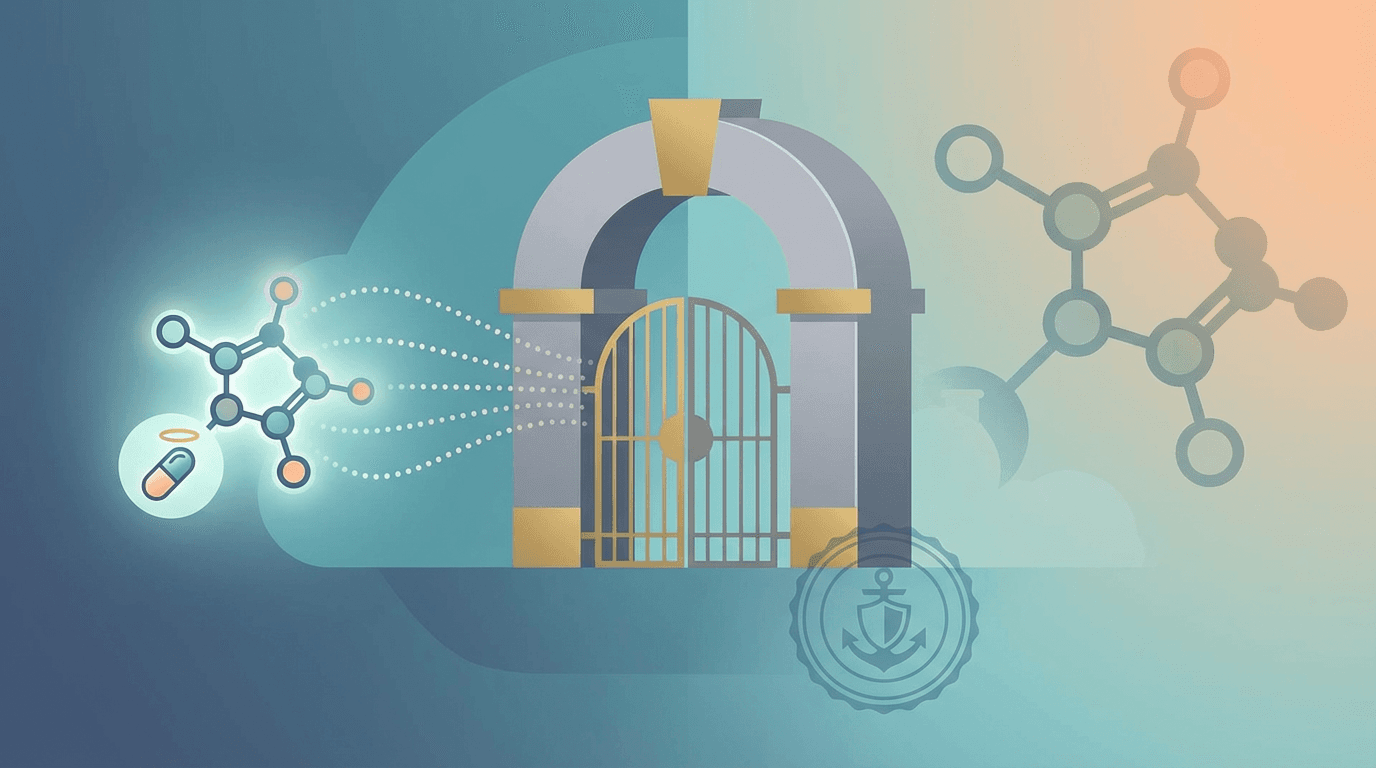

Iberdomide just landed priority review with an August 17 FDA decision date, putting it on track to become the first cereblon E3 ligase modulator ever approved for myeloma. It binds its target 20 times tighter than Revlimid, and the way it got filed could change how myeloma drugs reach patients.
Multiple myeloma patients have been waiting over two decades for a true upgrade to one of their most important drugs. That upgrade now has an August deadline.
Bristol Myers Squibb's iberdomide just scored priority review from the FDA, with a decision date of August 17, 2026. If approved, it would become the first in an entirely new class of drugs called CELMoDs (cereblon E3 ligase modulators) to reach myeloma patients. Think of CELMoDs as the next evolution of the blockbuster drug lenalidomide (brand name Revlimid), which has been a backbone of myeloma treatment for years.
Same family tree. Way more firepower.
To understand why iberdomide matters, you need to understand what it improves on.
Lenalidomide and its cousin pomalidomide are immunomodulatory drugs (IMiDs). They work by hijacking a protein in your cells called cereblon and using it like a trash compactor. Cereblon tags certain bad-actor proteins, specifically transcription factors called Ikaros and Aiolos that help myeloma cells survive, and feeds them into the cell's recycling machinery for destruction.
It's a clever trick. But lenalidomide isn't great at it. It binds to cereblon loosely, like a wrench that doesn't quite fit the bolt. Only about 20% of the cereblon molecules shift into the right shape to do their job efficiently.
Iberdomide grabs cereblon with 20-fold higher affinity than lenalidomide. At full dose, it flips 50-100% of cereblon into that active "closed" shape, compared to lenalidomide's 20%. The result: faster, deeper destruction of the proteins that keep myeloma alive. It also revs up the immune system more aggressively, boosting both T-cells and natural killer cells to hunt down cancer.
If lenalidomide is a flip phone, iberdomide is the smartphone. Same basic idea, radically better execution.
The filing is built on data from the Phase 3 EXCALIBER-RRMM trial, which enrolled over 800 patients with relapsed or refractory multiple myeloma, meaning their cancer came back or stopped responding after one or two prior treatments.

RTW Investments just agreed to hand Candel Therapeutics $100 million to launch a cancer-killing virus, but only if the FDA approves it first. The deal's clever structure and the Phase 3 data behind it could be a blueprint for small biotechs everywhere.


Join thousands of biotech professionals who start their day with our free, daily briefing.

Patients were randomized to receive either iberdomide plus daratumumab and dexamethasone (the experimental arm) or daratumumab, bortezomib, and dexamethasone (the standard-of-care arm). The trial had two co-primary endpoints: progression-free survival and something called MRD negativity.
MRD stands for minimal residual disease. It measures whether there's any detectable cancer left after treatment, down to the level of one cancer cell per 100,000 healthy cells. Going MRD-negative is like getting your bank account to zero debt; you've cleared out essentially everything.
The iberdomide arm hit statistically significant improvement in MRD negativity rates compared to the control. That's the good news, and it's what BMS used to file.
The catch? Progression-free survival data is still immature. We don't yet know if clearing more residual disease actually translates into patients living longer without their cancer progressing. The trial is still running to answer that question.
This is important context. MRD negativity is a promising signal, strongly correlated with better long-term outcomes in blood cancers. But it's not the same as proving patients live longer. BMS is essentially betting that the FDA will accept the surrogate while the harder data catches up.
That bet looks increasingly smart, because the FDA has been signaling exactly this kind of flexibility.
In January 2026, the agency released draft guidance formally establishing MRD negativity and complete response as acceptable surrogate endpoints for accelerated approval in multiple myeloma trials. This was years in the making: an FDA advisory committee endorsed the approach back in 2024, and MRD has been used as an endpoint in leukemia since at least 2018, when it supported the approval of Blincyto.
The logic is straightforward. Traditional endpoints like overall survival can take years to mature in myeloma, where patients often live a long time with treatment. MRD negativity offers a faster read on whether a drug is working at a deep biological level. For a disease where patients cycle through multiple lines of therapy, getting effective drugs to market faster is a real clinical need.
Iberdomide's filing is one of the first major tests of this new framework in earlier-line myeloma. If the FDA approves based primarily on MRD data, it sets a precedent that could reshape how myeloma drugs get developed going forward.
Multiple myeloma treatment is having a moment. The global market is projected at roughly $26-31 billion in 2026, growing at 6-7% annually. CAR-T therapies like Johnson & Johnson's CARVYKTI, bispecific antibodies like Regeneron's linvoseltamab, and a slew of BCMA-targeted agents are all fighting for position.
Most of those are either infusions or one-time cellular therapies. Iberdomide offers something different: an oral pill that patients can take at home, combined with existing standards like daratumumab. That's a meaningful practical advantage. Not every patient can access a CAR-T center, and not every relapse warrants the intensity of cellular therapy.
BMS isn't stopping with iberdomide, either. The company has two more CELMoDs in development, mezigdomide and golcadomide, targeting later-line and resistant disease. If the class works as hoped, BMS could own the CELMoD category the way it dominated the IMiD era with Revlimid through its Celgene acquisition.
BMS Chief Medical Officer Cristian Massacesi called the FDA acceptance a "testament to the potential of iberdomide... as a novel, potent, oral treatment option, with a manageable safety profile." He added that filing on MRD shows BMS's "commitment to pioneering new ways" to bring cancer therapies forward.
That's corporate-speak, sure. But the underlying point is real. If iberdomide gets approved by August, it does several things at once. It validates CELMoDs as a drug class. It reinforces MRD as a regulatory shortcut for myeloma. And it gives patients who've relapsed after first-line treatment a potent new oral option that works through a mechanism their cancer hasn't seen before.
The unanswered question remains survival. MRD negativity strongly predicts better outcomes; in acute lymphoblastic leukemia, 64% of MRD-negative patients were disease-free at 10 years compared to just 21% of MRD-positive patients. But myeloma isn't leukemia, and correlation isn't causation. The EXCALIBER trial will eventually deliver PFS and overall survival data, and that's when we'll know if iberdomide truly lives up to its billing.
For now, the clock is ticking toward August 17. The first CELMoD could be on pharmacy shelves before summer ends. After 20 years of IMiDs running the show, that's a sequel worth watching.
Roche's oral breast cancer drug giredestrant just got its FDA date, and its secret weapon isn't the drug itself. It's the combination strategy that cut disease progression by 62% in the patients who need it most.