
A Japanese biotech with molecular mimicry tricks teams up with an AI startup to go after "undruggable" protein targets, starting with obesity. Their bet: that smart chemistry plus smarter computation can crack what brute-force screening never could.
Some proteins are just rude. They sit inside your cells, cause disease, and refuse to interact with any drug you throw at them. Scientists call these "undruggable" targets, and they've been haunting pharma for decades.
Now a small Japanese biotech and an AI startup think they've found a way to pick the lock. PRISM BioLab and Receptor.AI just announced a strategic collaboration to combine their platforms and go after the targets that everyone else has struggled to hit. Their first mission: metabolic disease, including obesity.
It's the kind of partnership that sounds like a buzzword buffet at first glance. But dig into what each company actually brings, and there's a real logic here.
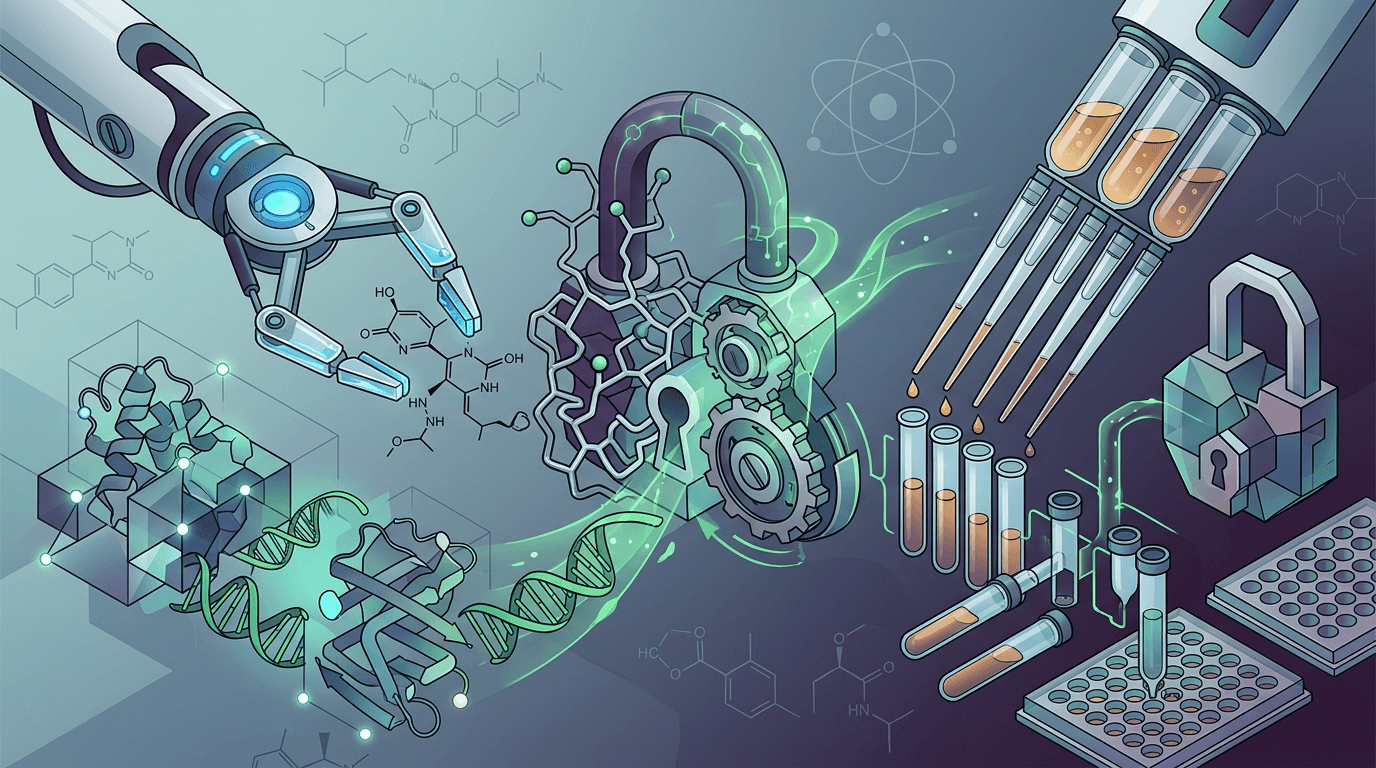
To understand why this matters, you need to know about protein-protein interactions, or PPIs. Think of them as handshakes between proteins inside your cells. When those handshakes go wrong, diseases happen: cancer, fibrosis, metabolic disorders. The problem? Traditional small-molecule drugs are like trying to pry apart two clasped hands with a toothpick. The contact surfaces are too big, too flat, and too slippery.
Biologics (large, injectable proteins) can sometimes disrupt PPIs, but they can't get inside cells. That's the catch-22: small molecules can get in but can't grip the target; biologics can grip but can't get in.
PRISM BioLab has spent nearly two decades building a workaround.
Founded in 2006 in Fujisawa, Japan, PRISM developed a proprietary chemistry platform called PepMetics®. The concept: build small molecules that are shaped like the key parts of proteins, specifically the twisted "alpha-helix" and looped "beta-turn" structures that proteins use when they shake hands with each other.
Imagine you're trying to break up a secret handshake. Instead of jamming your whole arm in there, you sculpt a tiny fake hand that mimics just the right grip. That's PepMetics. The molecules are rigid, three-dimensional, and designed to wedge into PPI surfaces. Crucially, they're small enough to be taken as a pill.

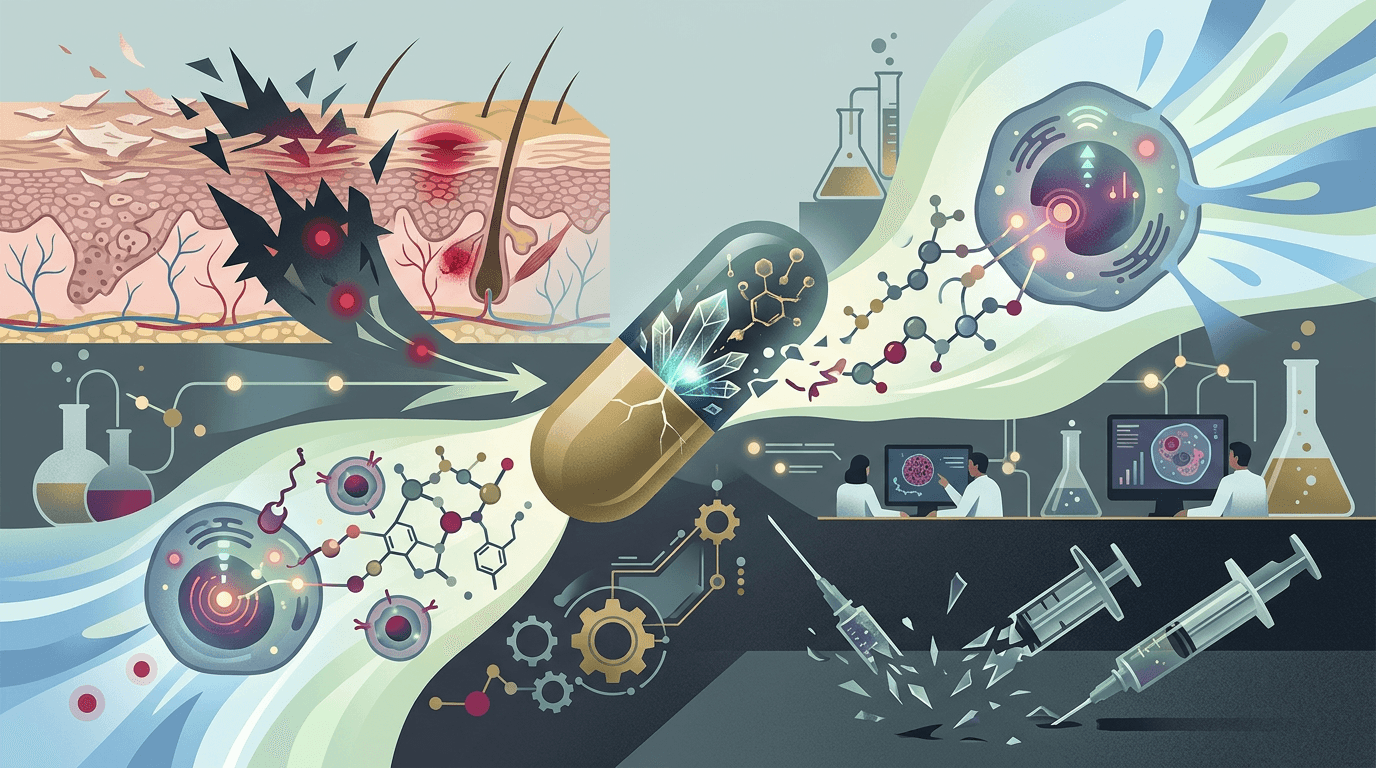
J&J just got FDA approval for the first oral pill that rivals injectable biologics in clearing psoriasis. ICOTYDE beat the only other oral option head-to-head, and it's gunning for three more diseases next.

Join thousands of biotech professionals who start their day with our free, daily briefing.
PRISM has built a library of over 20,000 of these compounds. They've already licensed some to major pharma: Eisai picked up a cancer program targeting a specific PPI, and Ohara Pharmaceuticals grabbed a liver disease candidate. Both are in clinical development.
The company went public on the Tokyo Stock Exchange Growth Market, raising about 1.8 billion yen (roughly $12 million). Its Series C alone pulled in approximately 2.9 billion yen across multiple tranches, with Eli Lilly participating in a 1.5 billion yen round in January 2024. When Lilly writes a check for your platform, people tend to pay attention.
So PRISM has the chemistry. What it needs is a faster way to search through the possibilities. That's where Receptor.AI comes in.
Receptor.AI builds what it calls a "physics-informed, multi-objective AI navigation engine" named QuorumMap. In plain English: it's software that can virtually screen billions of molecular structures, predict how they'll behave in the body (absorption, toxicity, stability), and design new candidates from scratch. The platform handles small molecules, peptides, and macrocycles, which are ring-shaped molecules that sit in that interesting middle ground between small drugs and large biologics.
The platform can predict more than 40 safety and drug-like properties simultaneously. Receptor.AI has racked up over 40 joint discovery projects with pharma companies and academic labs.
The core idea of this partnership is elegant. PRISM contributes its PepMetics chemical library and expertise in PPI-targeting chemistry. Receptor.AI contributes its computational muscle to navigate that chemical space more intelligently.
Dr. Alan Nafiiev, Receptor.AI's founder and CEO, put it well: the collaboration shifts intracellular drug discovery "from 'screening harder' to navigating smarter," balancing selectivity with the permeability and stability needed for oral drugs.
Their first target is a receptor involved in metabolic disease, including obesity. Given that oral GLP-1 drugs for obesity are among the hottest areas in all of pharma right now, the timing feels deliberate. Receptor.AI will lead the molecular design, while both companies plan to jointly court pharmaceutical partners interested in the combined platform.
This isn't PRISM's first AI rodeo. In April 2025, the company partnered with Elix to integrate PepMetics with Elix's Discovery AI platform. It also teamed up with Talus Bio for AI-guided profiling of transcription factor targets. PRISM is clearly on a strategy of surrounding its chemistry with as many computational co-pilots as possible.
And they're not alone in this thinking. The broader industry is moving fast. Eli Lilly and Nvidia announced a $1 billion, five-year AI drug discovery partnership. Servier committed $888 million to Insilico Medicine. Isomorphic Labs, the Google DeepMind spinout, inked deals with Eli Lilly and Novartis. Analysts estimate AI-enabled workflows could compress early discovery timelines by 30 to 40 percent.
But (and this is important) there's a cautionary asterisk. AI-discovered compounds haven't yet proven they succeed in clinical trials at higher rates than traditionally discovered ones. The technology is clearly speeding up the front end of drug development. Whether that translates to more approved medicines remains an open question.
PRISM BioLab and Receptor.AI aren't trying to boil the ocean. They're combining a niche chemistry platform with targeted AI to go after a specific, hard-to-hit class of drug targets. The initial focus on obesity gives them a massive commercial tailwind if they can generate viable candidates.
The real test won't be the press release; it will be whether this platform produces molecules that pharmaceutical partners actually want to license. PRISM has done it before with Eisai and Lilly. The question now is whether AI navigation can help them do it faster, cheaper, and for targets that were previously out of reach.
If picking undruggable locks were easy, someone would have done it already. But a fake handshake and a very fast computer? That's at least worth watching.
Aldeyra Therapeutics just received its third FDA rejection for dry eye drug reproxalap, with regulators once again citing inconsistent efficacy data. The stock plunged over 70%, and Wall Street is running out of patience for a drug that keeps failing the same test.