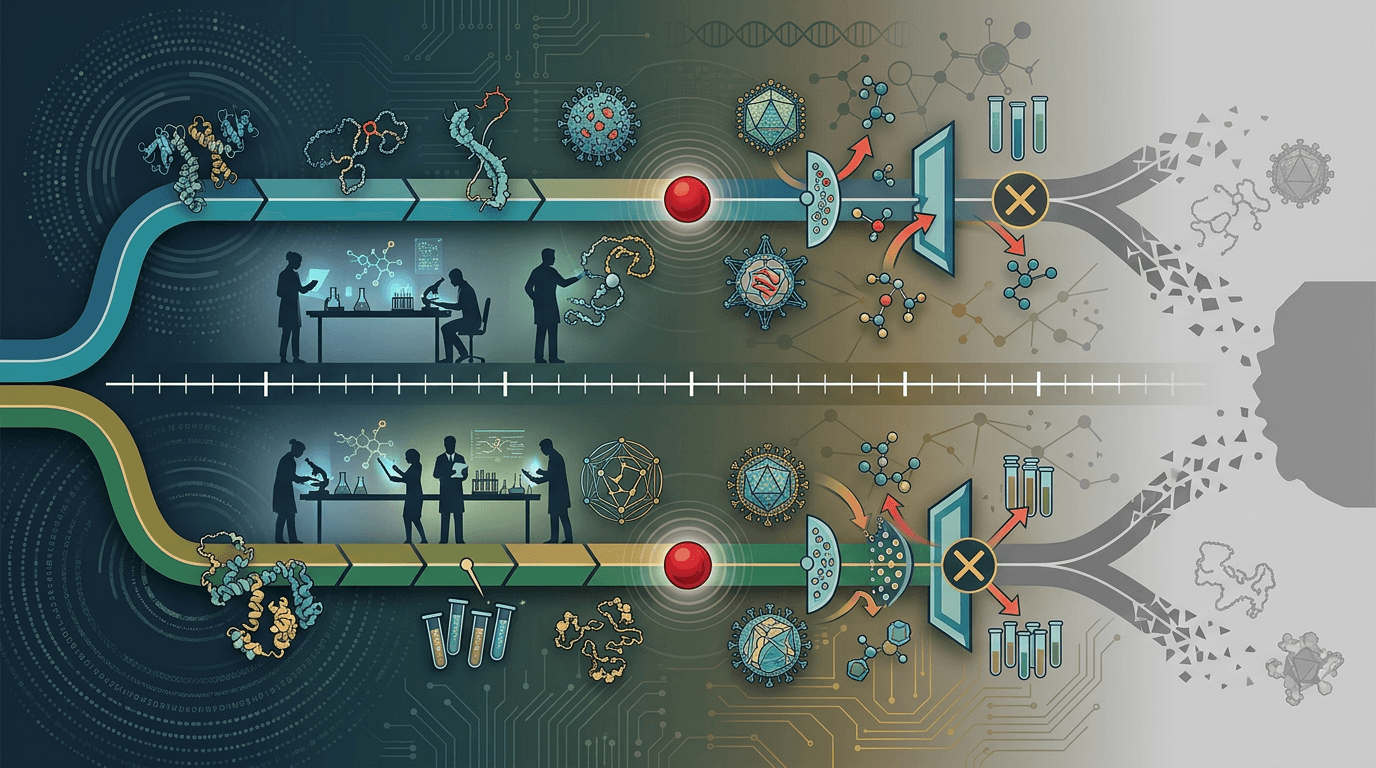

PI3K inhibitors nearly destroyed an entire drug class with toxic side effects and worse survival outcomes. Now Relay Therapeutics thinks its motion-designed molecule can resurrect the target in a rare disease no one else can treat.
PI3K inhibitors were supposed to be the next big thing in cancer. Instead, they became one of oncology's most spectacular cautionary tales. Multiple drugs hit the market and then crashed out, plagued by brutal side effects and, in some cases, patients who actually died faster on the treatment than off it.
So when Relay Therapeutics announced it's going "full steam ahead" on a PI3K inhibitor for a rare disease, the natural reaction is: are you serious?
Turns out, they might be onto something.
To appreciate why Relay's move is bold, you need to understand the wreckage. The PI3K pathway sits at the center of cell growth and survival, making it a juicy target for cancer drugs. But hitting that target cleanly has been nearly impossible.
Idelalisib, the prototype PI3K inhibitor, earned black box warnings for liver damage, severe colitis, lung inflammation, and life-threatening infections. Duvelisib had a similar rap sheet. Copanlisib triggered dangerous blood sugar spikes and blood pressure surges. And alpelisib, the one PI3K drug still standing in solid tumors, causes hyperglycemia so severe that patients sometimes need insulin.
The worst part? In at least six randomized trials, patients on PI3K inhibitors survived longer without their cancer progressing, yet died sooner overall. That's like a car that goes faster but also catches fire. In 2022, an FDA advisory committee voted 16 to 0 to demand randomized trials for any future PI3K drugs in blood cancers. The message was clear: this class is on thin ice.
Relay Therapeutics looked at that wreckage and saw an opportunity, not a warning sign. Their argument: previous PI3K drugs failed because they were blunt instruments. They hammered both the mutant (disease-causing) and wild-type (healthy) versions of the PI3K protein. That's like using a flamethrower to light a candle.
Relay's drug, zovegalisib (formerly RLY-2608), is different by design. It's an allosteric inhibitor, meaning it doesn't bind where traditional PI3K drugs do. Instead, it latches onto a hidden pocket that only opens up in mutant PI3K proteins. Think of it as a lock that only exists on the broken version of the protein.

For 40 years, the best treatment for a devastating genetic lung disease has been a weekly IV drip. Now Sanofi and Wave Life Sciences are racing toward radically different solutions, and the data is getting very interesting.


Join thousands of biotech professionals who start their day with our free, daily briefing.

The company discovered this pocket using its Dynamo platform, which combines cryo-electron microscopy of full-length proteins with long-timescale molecular simulations. Essentially, Relay watched the protein move over time, spotted the moments when mutant proteins flex differently from healthy ones, and designed a molecule to exploit that difference.
The result: zovegalisib inhibits a broad range of cancer-causing PI3K mutations while largely sparing the healthy version and other PI3K family members. That triple selectivity (mutant over wild-type, alpha isoform over others, and allosteric over orthosteric) is what Relay believes changes the game.
The early numbers in breast cancer have been encouraging. In heavily pretreated patients with PIK3CA-mutant, hormone receptor-positive metastatic breast cancer, zovegalisib plus fulvestrant delivered a median progression-free survival of roughly 10 to 11 months. The overall response rate hit about 39% in these patients, many of whom had already failed multiple prior treatments.
More importantly, the safety profile looks genuinely different from the PI3K disasters of the past. Most side effects were low-grade and manageable. The hyperglycemia, rash, and GI toxicity that plagued alpelisib appeared less frequent and less severe.
The FDA noticed. In February 2026, the agency granted zovegalisib Breakthrough Therapy Designation for use after CDK4/6 inhibitor failure in PIK3CA-mutant breast cancer. That designation opens the door to faster regulatory interactions, rolling review, and potentially shorter timelines to approval. Relay is now running a Phase 3 trial called ReDiscover-2.
But the breast cancer story is only half the picture. Relay is simultaneously developing zovegalisib for PI3Kα-driven vascular anomalies, a group of rare genetic diseases where the exact same PIK3CA mutations that cause cancer instead cause abnormal blood vessel growth and tissue overgrowth.
These conditions fall under the umbrella of PIK3CA-Related Overgrowth Spectrum, or PROS. Patients (often children and young adults) develop complex vascular malformations that are painful, disfiguring, and sometimes life-threatening. Current treatments are mostly surgical, and the few drug options available carry significant side effects. Alpelisib has been tried, but its toxicity profile makes chronic use in young patients especially problematic.
Relay estimates that roughly 170,000 patients per year in the U.S. have vascular anomalies driven by PIK3CA mutations. That's surprisingly large for a rare disease, and the unmet need is enormous.
The company has a Phase 1/2 trial underway and plans to present initial clinical data at the ISSVA (International Society for the Study of Vascular Anomalies) meeting in 2026. If zovegalisib's mutant-selective profile translates into better tolerability for chronic use, it could become the first precision therapy designed specifically for this population.
Analysts are cautiously bullish. The most optimistic price target is $25 from HC Wainwright. Multiple covering analysts rate the stock a Buy or equivalent.
The rare disease angle adds a layer that pure oncology plays don't have. Orphan drug pricing, smaller trial sizes, and a patient population with virtually no targeted alternatives could accelerate the commercial story. It also de-risks the overall zovegalisib program: even if the breast cancer competitive landscape gets crowded (Eli Lilly is pushing its own next-gen PI3K inhibitor, tersolisib, toward frontline trials), the vascular anomaly franchise could stand on its own.
Relay's story is ultimately a test of a simple idea: that understanding how proteins move can unlock drugs that static snapshots never could. The PI3K graveyard is full of drugs designed from frozen crystal structures. Zovegalisib was designed by watching the protein breathe.
If the vascular anomaly data hold up, Relay won't just have revived a maligned drug target. It will have proven that motion-based drug design can solve problems the rest of the industry gave up on. That's worth watching closely, no matter which side of the PI3K debate you're on.
A little-known Chinese biotech just posted Phase 3 obesity data that rivals Eli Lilly's best oral drug. Now it's racing to file for approval in a market of 500 million overweight adults.