Pfizer's Two-in-One Cancer Drug Wants to Dethrone the King of Oncology
Pfizer is betting big on a single molecule that fights cancer two ways at once, and it's headed straight for a showdown with the best-selling cancer drug on Earth. The Phase III data could reshape oncology or leave Pfizer's $1.25 billion gamble looking very expensive.
Keytruda is the best-selling cancer drug on the planet. Merck's checkpoint inhibitor pulls in more than $20 billion a year, and it dominates first-line lung cancer treatment the way Netflix once dominated streaming: everyone uses it, and nobody really has a better option.
Pfizer thinks it found one.
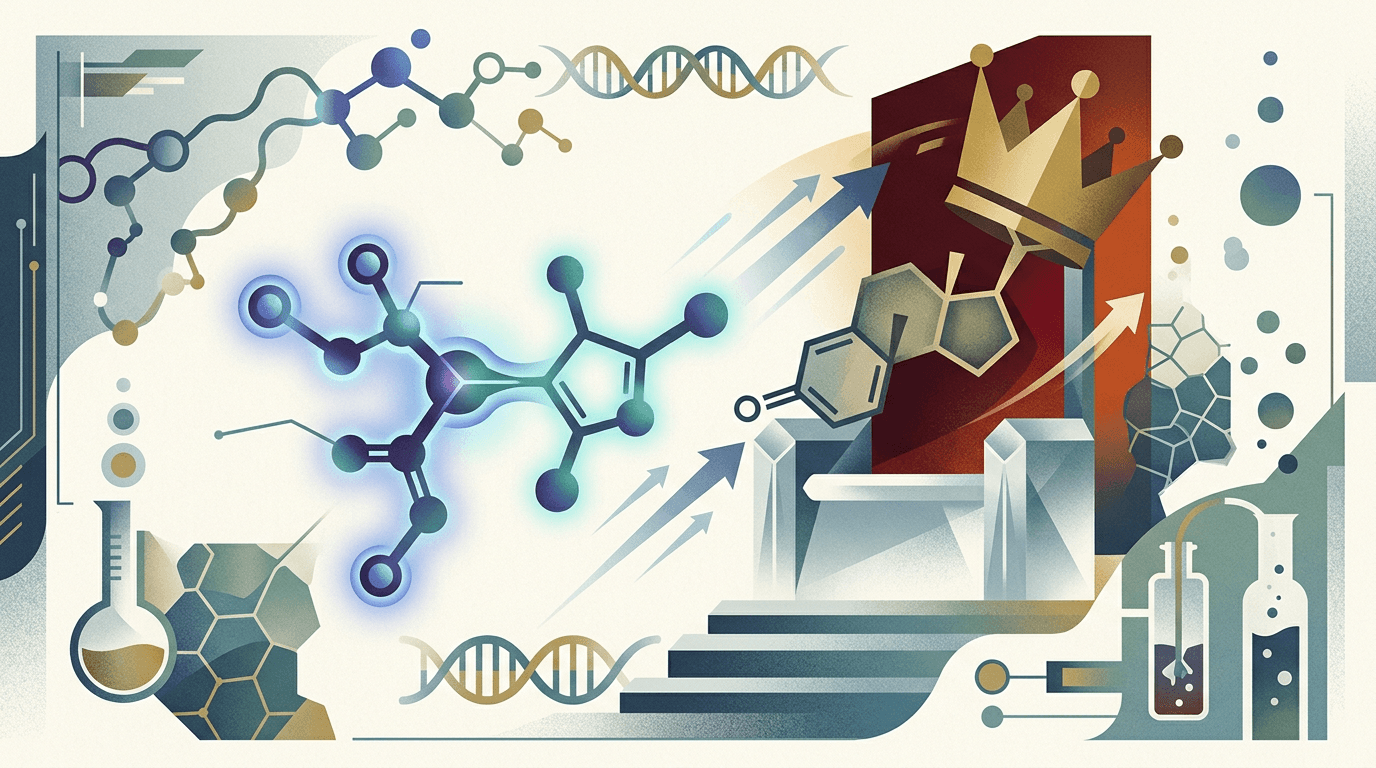
The company just advanced PF-08634404, a bispecific antibody that blocks two cancer targets at once, into a massive Phase III program across three tumor types. The trials will pit Pfizer's new weapon directly against Keytruda-based regimens in lung cancer and against bevacizumab (Avastin) combos in colorectal cancer. If it works, this single molecule could become the new backbone of cancer treatment, replacing two-drug cocktails with one cleverly engineered protein.
That's a big "if." But Pfizer paid $1.25 billion upfront just to license this drug from China's 3SBio. At that price, they're not dabbling. They're swinging for the fences.
The Swiss Army Knife of Cancer Drugs
To understand why PF-08634404 matters, you need to know how modern cancer treatment works. Right now, oncologists often combine two separate drugs to fight tumors: a checkpoint inhibitor (like Keytruda) that takes the brakes off the immune system, and an anti-angiogenic drug (like Avastin) that starves tumors of their blood supply.
Think of it like fighting a house fire. Keytruda is the water hose. Avastin cuts the gas line feeding the flames. Together, they work better than either one alone.
PF-08634404 does both jobs in a single molecule. It's a bispecific antibody, meaning it has two different binding sites: one grabs PD-1 (the immune checkpoint that tumors exploit to hide from your T cells) and the other grabs VEGF (the protein tumors use to grow new blood vessels). One drug, two mechanisms.
But it's not just about convenience. The real magic is something called cooperative binding. When PF-08634404 latches onto VEGF, its grip on PD-1 gets tighter; up to approximately 100 times stronger in preclinical studies. And vice versa. It's like a lock that gets harder to pick the more keys you insert. Two separate drugs can't do that because they float around independently, never influencing each other's performance.
Get tomorrow's biotech intelligence before your competitors.
Join thousands of biotech professionals who start their day with our free, daily briefing.
This cooperative effect means the drug concentrates its firepower right where tumors are richest in both targets. Theoretically, you get stronger cancer-killing at the tumor site with potentially fewer side effects elsewhere in the body.
Three Trials, Three Tumor Types, One Very Expensive Bet
Pfizer isn't testing PF-08634404 in some rare, niche cancer where a modest benefit earns approval. They're going after the biggest markets in oncology.
Trial #1: Lung cancer (Symbiotic-Lung-01). This is the headliner. About 1,410 patients with advanced non-small cell lung cancer (NSCLC) will be randomized to receive either PF-08634404 plus chemo or Keytruda plus chemo. It covers both squamous and nonsquamous subtypes, regardless of PD-L1 expression (a biomarker that predicts how well checkpoint inhibitors work). The co-primary endpoints are progression-free survival and overall survival, meaning Pfizer needs to show patients live longer or stay cancer-free longer.
Trial #2: Small cell lung cancer (Symbiotic-Lung-04). This one uses an adaptive Phase II/III design in first-line extensive-stage SCLC, an aggressive cancer with few good options. Around 500 patients will eventually be enrolled, with overall survival as the primary endpoint.
Trial #3: Colorectal cancer (Symbiotic-GI-03). Roughly 800 patients with first-line metastatic colorectal cancer (microsatellite stable, no BRAF mutation) will get PF-08634404 plus chemo versus bevacizumab plus chemo. The primary endpoint here is progression-free survival.
Notice the pattern: every single trial pits PF-08634404 against a current standard of care. Pfizer isn't looking for a participation trophy. They want to prove superiority.
The Early Report Card Looks Promising (With Caveats)
Pfizer didn't launch these Phase III trials on a hunch. Phase II data from China, where the drug originated as SSGJ-707, showed encouraging signals.
In nonsquamous NSCLC, PF-08634404 plus chemotherapy produced an overall response rate of about 59%. In squamous NSCLC with nab-paclitaxel as the chemo partner, that number jumped to roughly 69%. Those are solid numbers for first-line lung cancer.
But the safety data deserves a close read. About 39% of patients on PF-08634404 plus chemo experienced grade 3 or higher side effects (the serious kind that can land you in the hospital). A comparator arm using a different checkpoint inhibitor clocked in at about 33%. That gap isn't enormous, but it's noticeable. Hypertension, bleeding, and proteinuria are the classic concerns with anything that blocks VEGF, and analysts are watching these signals closely.
The Phase II data also came with a caveat: follow-up was short, especially in the squamous cohort. Response rates look great on paper, but durability and survival are what ultimately matter. That's precisely why Phase III trials exist.
Pfizer Needs This More Than You Think
Zoom out from the science for a moment and look at Pfizer's business situation. The company is guiding for roughly $59.5 to $62.5 billion in 2026 revenue, which is essentially flat. COVID revenues have cratered. Several key drugs face patent cliffs. The $43 billion Seagen acquisition gave Pfizer a world-class antibody-drug conjugate (ADC) portfolio, but those assets need time to mature.
PF-08634404 sits at the center of Pfizer's long-term oncology strategy. The company has described it as a potential "backbone therapy across tumor types," which is corporate-speak for "we want this to be as big as Keytruda." Beyond the three Phase III indications, Pfizer is running early-stage studies in liver cancer, bladder cancer, and kidney cancer. If the backbone thesis holds, PF-08634404 could eventually touch a half-dozen tumor types.
Wall Street is cautiously intrigued. Analysts see this as a binary catalyst: if Phase III data beat Keytruda, the drug could generate billions in peak annual sales across indications. But if the data come back as merely "non-inferior" (translation: about the same as Keytruda), uptake would be limited and Pfizer's premium investment in the asset starts looking questionable.
The Competition Is Already Circling
Pfizer isn't alone in this race. The PD-1/VEGF bispecific space has turned into one of the hottest arenas in oncology, largely because of one drug: ivonescimab.
Developed by China's Akeso and licensed globally to Summit Therapeutics, ivonescimab became the first approved PD-1/VEGF bispecific in China. Its landmark HARMONi-2 trial showed it cut the risk of disease progression by roughly 49% compared to Keytruda alone in PD-L1-positive NSCLC. That result sent shockwaves through the industry and validated the entire drug class.
Now the floodgates are open. BioNTech is pushing BNT327 (a PD-L1/VEGF bispecific from Biotheus). Merck obtained an exclusive global license to develop, manufacture, and commercialize LM-299 from LaNova Medicines. Innovent, Junshi, ABL Bio, and RemeGen all have their own versions in various stages of development.
Pfizer's advantage is scale. Few companies can simultaneously run 1,410-patient lung cancer trials, 800-patient colorectal trials, and still have bandwidth for exploratory studies in five other tumor types. The Seagen infrastructure in Bothell, Washington, and Pfizer's La Jolla research hub give the company deep biologics engineering capabilities that most competitors can't match.
But scale doesn't guarantee better data. Ivonescimab has a head start, and its results set a high bar.
What Happens Next
The next 18 months will determine whether PF-08634404 becomes Pfizer's next franchise or an expensive lesson in competitive oncology. The squamous NSCLC readout will be the first real test. If those results look strong, expect Pfizer's stock to react and the oncology world to take serious notice.
For patients, the stakes are simpler and more profound. Lung cancer remains the leading cause of cancer death worldwide. Colorectal cancer isn't far behind. If a single molecule can outperform the current best treatments while simplifying care (one infusion instead of two), that's not just a commercial win for Pfizer. It's a genuine step forward.
The science is elegant. The early data are encouraging. The competition is fierce. And roughly $1.25 billion says Pfizer believes this is the real deal. Now we wait for the data to prove them right, or wrong.
Deals & M&A
5 min read
The $2 Stock That Just Sold for $1.1 Billion
Esperion Therapeutics once traded above $115. It was languishing under $2 when ARCHIMED swooped in with a $1.1 billion take-private deal. The cholesterol drug everybody forgot about might be the smartest private equity bet of the year.