A Cancer Vaccine Built Just for You Is Closer Than You Think
Moderna and Merck just finished enrolling their pivotal Phase III trial for a cancer vaccine custom-built from each patient's tumor DNA. The Phase IIb data already showed a 49% reduction in cancer recurrence at five years, and now the real test begins.
The Netflix Algorithm, but for Cancer
Imagine if your doctor could sequence your tumor, identify the exact mutations making it dangerous, and then build a vaccine designed to teach your immune system to hunt down those specific cancer cells. Not a one-size-fits-all treatment. A therapy as unique as your fingerprint.
That's not science fiction anymore. Moderna and Merck just finished enrolling patients in the pivotal Phase III trial of intismeran autogene, the most advanced personalized cancer vaccine in the world. Full enrollment in a Phase III trial is like finishing construction on a rocket: now you light the fuse and see if it flies.
What Actually Happened
The trial is called INTerpath-001, and it's testing whether adding a custom-built mRNA vaccine to Merck's blockbuster immunotherapy Keytruda (pembrolizumab) can keep melanoma from coming back after surgery. The control group gets Keytruda alone, which is already the standard of care. The experimental group gets Keytruda plus a vaccine designed specifically for their tumor.
The study enrolled patients with Stage IIB, IIC, III, or resected stage IV melanoma, people who've had their tumors surgically removed but face terrifyingly high odds of recurrence. We're talking 39% to 74% recurrence rates for stage III patients, depending on the subtype. Even with Keytruda, roughly half of these patients will see their cancer return.
That's the gap this vaccine is trying to close.
How You Build a Vaccine for One Person
The process sounds like something out of a Marvel movie, but it's real and happening right now in clinical trials.
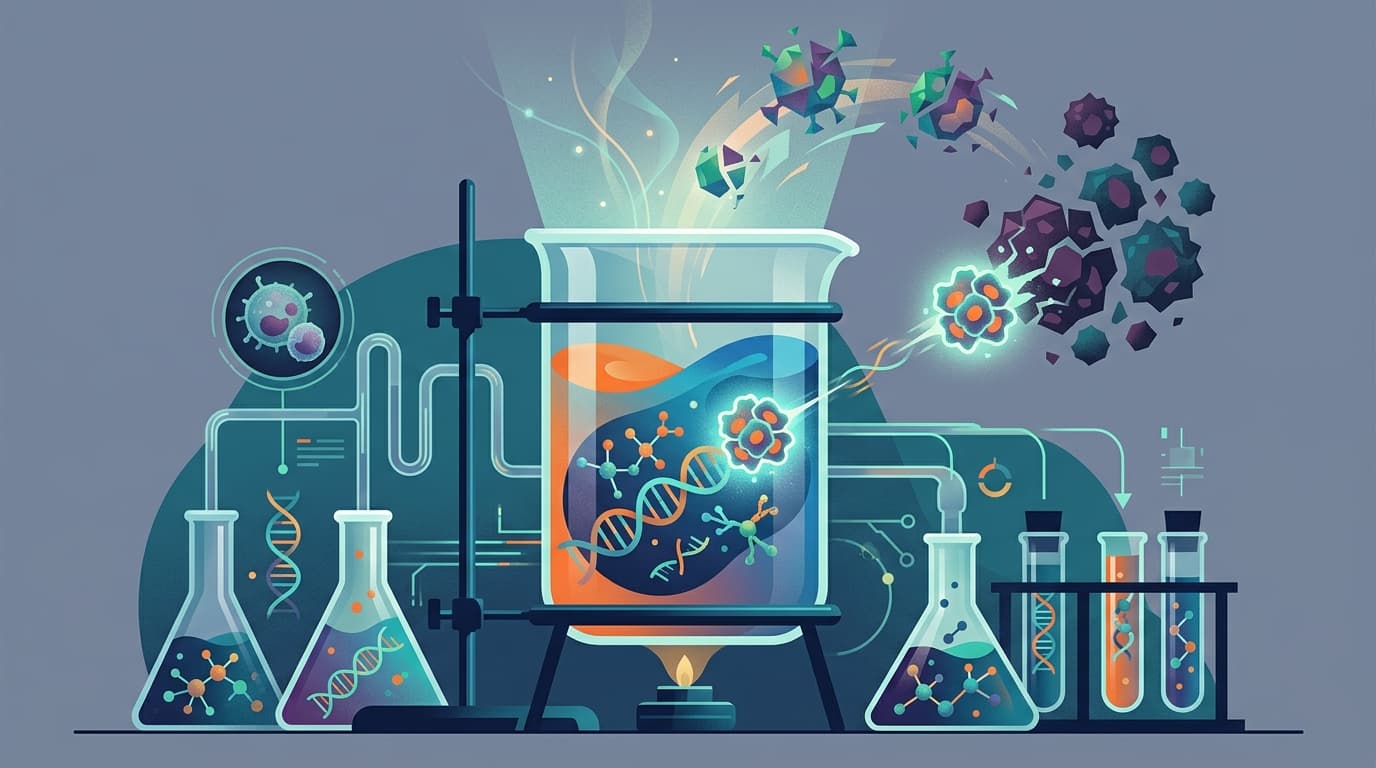
First, doctors take a sample of the patient's tumor and sequence its DNA. Algorithms then compare the tumor's genetic code to the patient's healthy tissue, hunting for mutations unique to the cancer. These mutations produce abnormal proteins called neoantigens (think of them as name tags that only cancer cells wear).
The software picks up to and encodes them into a single synthetic mRNA molecule. That mRNA gets wrapped in lipid nanoparticles (the same delivery tech behind COVID vaccines) and injected into the patient's arm.
Get tomorrow's biotech intelligence before your competitors.
Join thousands of biotech professionals who start their day with our free, daily briefing.
34 of the best neoantigen targets
From there, the patient's immune cells read the mRNA instructions, build those neoantigen proteins, and essentially create a "wanted poster" for the immune system. T cells learn to recognize and kill anything displaying those specific markers. Pair that with Keytruda, which removes the brakes tumors use to shut down T cells, and you've got a one-two punch: more cancer-killing soldiers and fewer ways for cancer to hide.
The Data That Got Everyone's Attention
This Phase III trial didn't materialize out of thin air. It was built on the back of KEYNOTE-942, a Phase IIb study with results that made oncologists sit up straight.
At five years of follow-up, patients who received the personalized vaccine plus Keytruda had a 49% lower risk of their cancer returning or dying compared to those on Keytruda alone. The hazard ratio was 0.51, with a one-sided p-value of 0.0075. For the non-statisticians: that's a strong, statistically meaningful result.
What's even more remarkable is the durability. The benefit at five years was virtually identical to the three-year mark. In oncology, seeing a treatment effect hold steady over that long a period is unusual and exciting. It suggests the vaccine may be training the immune system to maintain long-term surveillance, like installing a permanent security camera instead of hiring a one-night watchman.
Why Wall Street Is Paying Attention
Analysts are projecting $3 to $5+ billion in peak annual sales for the melanoma indication alone, assuming Phase III confirms what Phase IIb showed.
But melanoma is just the opening act. Moderna and Merck have eight Phase II and Phase III trials running across multiple tumor types, including non-small cell lung cancer, bladder cancer, and kidney cancer. Lung cancer, with its far larger patient population, could dwarf the melanoma opportunity if results hold up.
For Moderna, this is the lifeline beyond COVID. For Merck, it's a way to extend the Keytruda franchise as patent expiration looms on the horizon.
The Competition (and What Happened to It)
The personalized cancer vaccine race had more runners a couple of years ago. It's thinning out.
Gritstone Bio, which was developing its own neoantigen vaccine platform, filed for bankruptcy in October 2024. Strong immune responses in the lab didn't translate into meaningful clinical benefit in advanced cancers. Lesson learned: getting T cells excited is one thing; shrinking tumors is another.
BioNTech and Genentech are still in the game with their own mRNA neoantigen vaccine, autogene cevumeran (BNT122). But the program has hit turbulence. Their first-line melanoma trial failed its primary endpoint. A bladder cancer study was placed on temporary hold due to a safety concern. Their most important upcoming readout is in colorectal cancer, expected later in 2025 or 2026.
Right now, Moderna and Merck have the clearest path and the strongest data. That could change with one bad Phase III readout, but the lead is real.
What Could Go Wrong
Plenty, honestly. Phase IIb enrolled 157 patients. Phase III will include several hundred, possibly up to 1,000. A larger, more diverse population could dilute the effect size. The hazard ratio might shrink from 0.51 to something less dramatic.
Manufacturing is another headache. Each vaccine is custom-built, requiring tumor sequencing, algorithmic neoantigen selection, and individual mRNA production. Scaling that process globally without bottlenecks is a logistical puzzle no one has solved at commercial scale yet.
Then there's the price tag. Stacking a custom-built vaccine on top of an already expensive Keytruda regimen will invite serious scrutiny from insurers and health technology assessors, especially in Europe.
The Timeline from Here
Interim Phase III data are expected later in 2026. If results are strongly positive, a regulatory submission could come in 2027, with potential first approvals in late 2027 or 2028. Meaningful revenue wouldn't start flowing until around 2028 to 2030.
So this isn't a story about money yet. It's a story about proof. Can a vaccine built for one person, targeting that person's specific cancer mutations, actually keep cancer from coming back? The Phase IIb data say yes. The Phase III trial is now fully loaded and counting events.
The next twelve months will tell us whether personalized cancer vaccines are the real deal, or the most scientifically elegant near-miss in oncology history.
Deals & M&A
5 min read
The $2 Stock That Just Sold for $1.1 Billion
Esperion Therapeutics once traded above $115. It was languishing under $2 when ARCHIMED swooped in with a $1.1 billion take-private deal. The cholesterol drug everybody forgot about might be the smartest private equity bet of the year.