
A Shanghai biotech just raised $110 million to chase something nobody has achieved: the first CAR-T cell therapy approved for solid tumors. Oricell's early liver cancer data is turning heads, and the IPO clock is ticking.
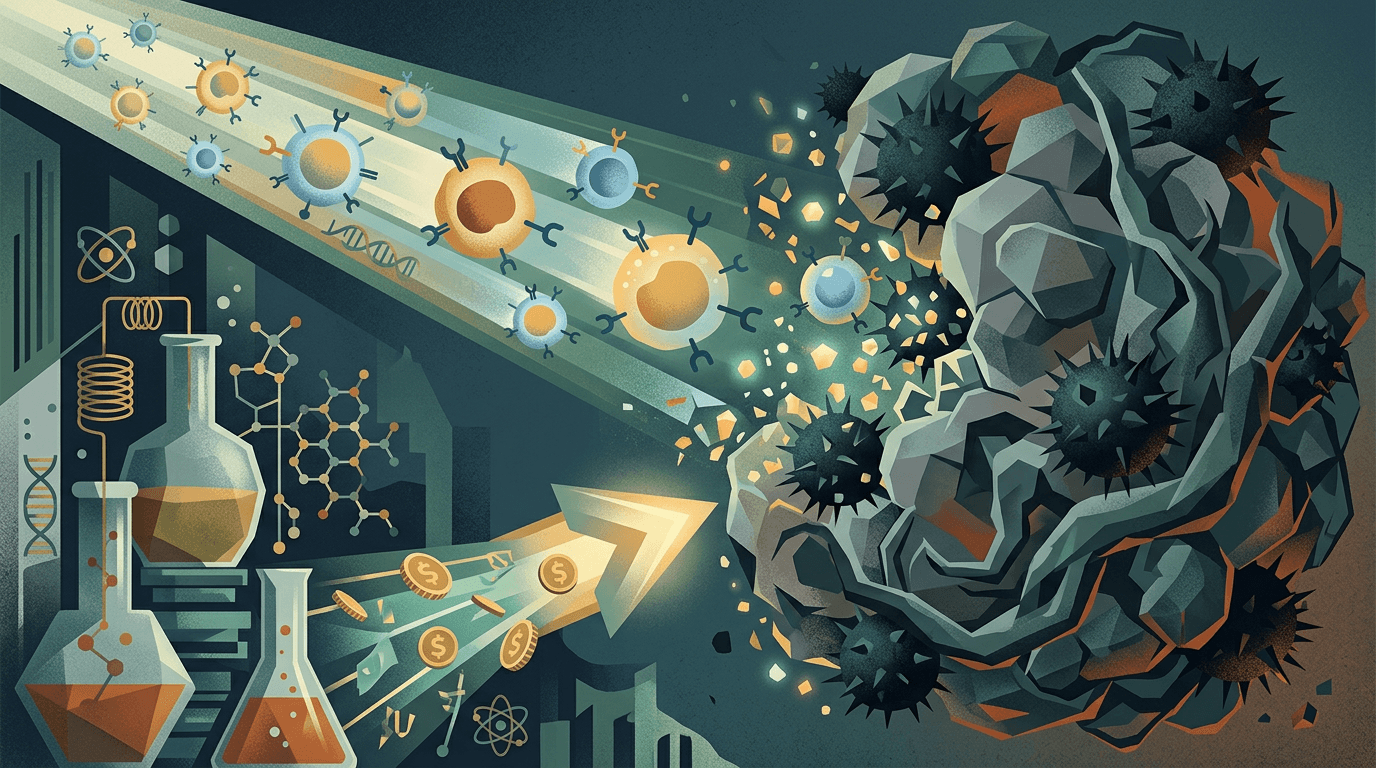
CAR-T cell therapy has been a miracle for blood cancers. Patients with leukemia and lymphoma who ran out of options have walked away in remission after a single infusion. But solid tumors, the cancers that form actual lumps and masses? Those have been CAR-T's white whale. The therapy keeps bouncing off them like a tennis ball off a brick wall.
Oricell Therapeutics thinks it can change that. And investors just handed the Shanghai-based biotech $110 million to prove it.
The pre-IPO financing round closed on April 9, with a heavyweight roster of backers. Vivo Capital, Qiming Venture Partners, Beijing Medical and Health Care Industry Investment Fund, and a leading global healthcare fund co-led the round. An international sovereign wealth fund also participated, alongside E-Town Capital, Luxin Venture Capital, and several others.
This wasn't a single lump sum, either. Oricell had already locked in $70 million in a Series C1 closing back in January 2026. The latest tranche pushed cumulative funding past the $110 million mark, giving the company serious runway to chase its IPO and, more importantly, push its lead drug into late-stage trials.
The plan for the cash: accelerate global expansion, strengthen manufacturing capabilities, and prepare for a public listing. The company hasn't disclosed a specific IPO timeline, but "pre-IPO" doesn't leave a lot of ambiguity. They're getting ready for the big stage.
Oricell's crown jewel is Ori-C101, an autologous CAR-T therapy (meaning it's built from the patient's own immune cells) that targets a protein called GPC3 on the surface of liver cancer cells. Specifically, it goes after hepatocellular carcinoma (HCC), the most common type of liver cancer and one of the deadliest cancers worldwide.
If you're wondering why this matters: no CAR-T therapy has ever been approved for any solid tumor, anywhere in the world. Blood cancers are a friendlier environment for engineered T-cells, because the targets float around in the bloodstream where the immune system naturally operates. Solid tumors are more like fortresses, surrounded by a hostile microenvironment that suppresses immune cells before they can do their job.

Biotech IPOs raised $1.7 billion in Q1 2026, the biggest quarter since 2021, with median deal sizes more than doubling. But the real story isn't just the money coming back; it's about which companies are getting funded and what Eli Lilly's aggressive shopping spree tells us about what's next.


Join thousands of biotech professionals who start their day with our free, daily briefing.
Oricell's early data, though, is genuinely encouraging. In a Phase 1 study of 10 patients with advanced HCC, every patient who received the highest dose achieved an objective response, meaning their tumors measurably shrank. One patient hit a complete response (the tumor effectively disappeared) and showed no signs of relapse at nine months.
Ten patients is a tiny study. Nobody should be planning a victory parade. But for a cancer type where CAR-T has historically failed, those numbers are worth watching closely.
Beyond Ori-C101, Oricell has a second program generating buzz. OriCAR-017 targets GPRC5D, a protein found on multiple myeloma cells. It earned FDA IND clearance in January 2024 and has published data in The Lancet Haematology, which is the biotech equivalent of getting your short film into Sundance.
The company also has an in vivo CAR-T program (engineering T-cells directly inside the patient's body, skipping the complex extraction-and-reinfusion process) and a secreting CAR-T called OriC902 designed for hard-to-treat solid tumors. Three proprietary technology platforms power the whole pipeline, including an antibody screening system.
Oricell isn't raising money in a vacuum. Chinese biotech is experiencing a funding surge that's hard to ignore. The country's biopharma industry racked up over $60 billion in licensing deals with multinational firms in just the first quarter of 2026, a five-year high for quarterly deal flow.
China now leads the world in CAR-T clinical trial volume, surpassing the U.S. The economics are staggering compared to the West, and that cost advantage has turned China into a global R&D magnet. Companies like Legend Biotech (whose cilta-cel for multiple myeloma is already approved in the U.S. and Europe) have paved the road. Now a new generation of Chinese CAR-T developers, Oricell among them, are following it with even more ambitious targets.
Of course, geopolitics casts a long shadow over all of this. U.S.-China tensions have complicated cross-border investment and made American stock exchanges less accessible for Chinese biotechs. That's pushed many companies toward Hong Kong's HKEX, which has become the go-to launchpad for Chinese biotech IPOs, with over 400 firms currently queued for listings.
Oricell hasn't said where it plans to list, but the playbook is well-established at this point: raise pre-IPO capital, build a global data package, debut in Hong Kong, and pursue licensing deals with Western pharma giants to access U.S. and European markets.
It's a pragmatic strategy. Big pharma clearly isn't letting political friction stop it from shopping in China's pipeline.
The real story here isn't the $110 million. Biotech companies raise money every day. The real story is what happens if Ori-C101 actually works in a pivotal trial.
CAR-T's inability to crack solid tumors has been one of the biggest frustrations in cancer medicine for the past decade. If a Chinese biotech, armed with faster manufacturing, lower trial costs, and early data showing tumors shrinking in liver cancer patients, can break through that barrier? It reshapes the entire competitive landscape.
Oricell is still early. The Phase 1 data is from just 10 patients; the pivotal trials haven't started yet. Plenty of promising cancer therapies have stumbled in larger studies. But the combination of compelling early results, well-funded development, and a massive unmet medical need makes this one worth tracking.
The white whale is still out there. Oricell just bought itself a bigger harpoon.
Neurocrine Biosciences is spending $2.9 billion to acquire the only approved drug for a rare hunger disorder most people have never heard of. The deal says a lot about where biotech's biggest bets are heading.