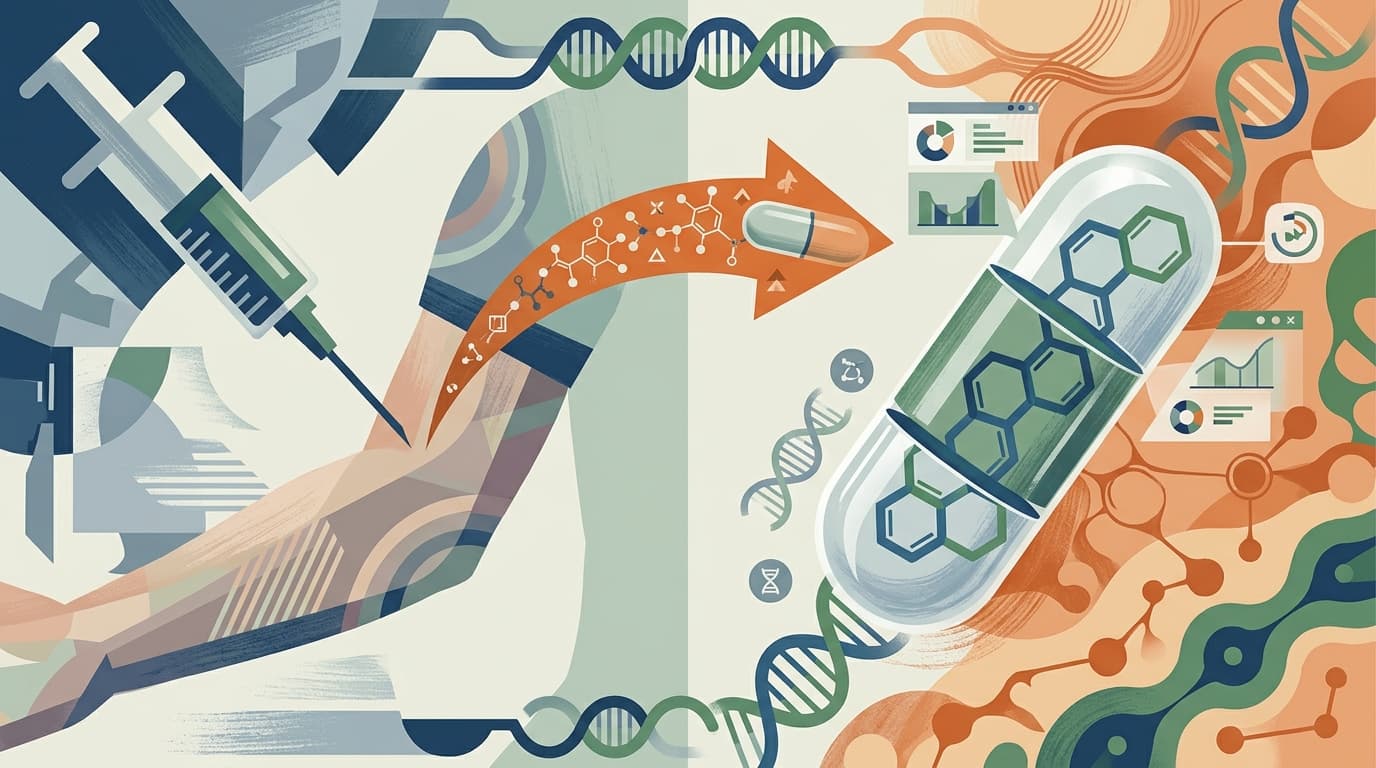
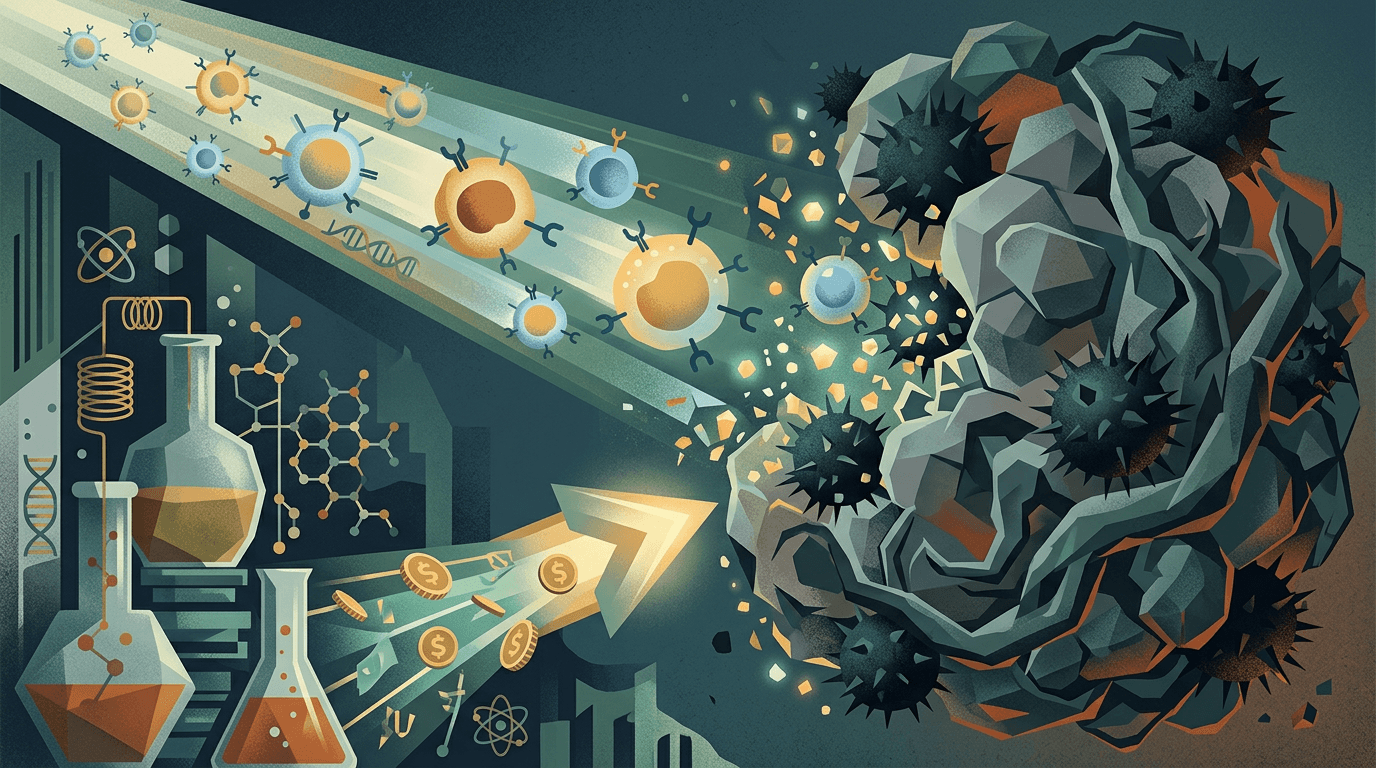
Biotech's IPO Drought Is Over. The Rain Is Coming in Buckets.
Biotech IPOs raised $1.7 billion in Q1 2026, the biggest quarter since 2021, with median deal sizes more than doubling. But the real story isn't just the money coming back; it's about which companies are getting funded and what Eli Lilly's aggressive shopping spree tells us about what's next.
For four years, biotech founders stared at the IPO window like kids pressing their faces against a candy store glass. The door was locked. Investors weren't buying. The post-2021 hangover was brutal, and the market had basically put up a "gone fishing" sign for anyone trying to go public.
Then Q1 2026 happened.
Biotech companies raised $1.7 billion in IPOs during the first three months of the year. That's the biggest quarterly haul since 2021, the last time the market was actually fun. And the size of these deals? The median IPO raised $287.5 million, more than double the same period last year.
Something has clearly shifted. But the story isn't just "money is back." It's about which companies are getting funded, and what that tells us about where biotech investing is headed.
Not a Flood, More Like Targeted Rainfall
Before you start imagining confetti cannons on the Nasdaq floor, let's pump the brakes slightly. Only about six biotech companies actually went public in Q1. That pace is roughly the same as the lean years of 2022 through 2025. This isn't a return to the 2021 frenzy, when seemingly anyone with a PowerPoint and a molecule could IPO.
What changed is the size of each deal. Two of those IPOs cleared $300 million, a rarity since the pandemic boom. Think of it like a restaurant that went from serving 50 cheap meals a night to serving six $500 tasting menus. Same number of tables, wildly different revenue.
PitchBook analyst Ben Zercher has called this a "bifurcated reopening." Translation: investors are being extremely picky. They want companies with drugs already in mid-to-late-stage clinical trials (Phase 2 or Phase 3, the stages closest to FDA approval). If your company is still in the lab tinkering with early ideas, Wall Street will ghost you.
The new rule of biotech IPOs is simple: show me your data, or show yourself the door.
The Four Deals That Define the Moment
Let's look at the companies that cracked the code this quarter, because each one tells us something different about what investors want right now.
Get tomorrow's biotech intelligence before your competitors.
Join thousands of biotech professionals who start their day with our free, daily briefing.
Eikon Therapeutics: $381 Million
Eikon kicked off February with the largest biotech IPO since 2024, selling 21.2 million shares at $18 each on the Nasdaq. The company is built on Nobel Prize-winning "super-resolution microscopy" technology, which lets researchers watch proteins move inside living cells in real time. Think of it as upgrading from a blurry security camera to 4K high-definition footage of what's happening inside your body.
But investors weren't buying a microscope company. They were buying a four-drug clinical pipeline spanning melanoma, lung cancer, ovarian cancer, and brain tumors. The lead program, EIK-1001, is already in Phase 2/3 trials for advanced melanoma in combination with Merck's blockbuster Keytruda.
The pedigree helps, too. Eikon is led by former Merck research chief Roger Perlmutter, and the company raised over $1.2 billion in private funding before going public.
Generate Biomedicines: $400 Million
The biggest raise of the quarter came from Generate Biomedicines, which sold 25 million shares at $16 each on February 26. The Flagship Pioneering-backed company uses generative AI to design therapeutic proteins from scratch, positioning itself at the intersection of biotech's two hottest buzzwords.
Their flagship program, GB-0895, is an AI-designed protein that targets a molecule called TSLP in severe asthma. It competes with AstraZeneca's Tezspire but promises a key advantage: dosing every six months instead of monthly. Two Phase 3 trials launched in December 2025.
The market's verdict was mixed, though. Shares fell about 21% on their first day of trading. Generate represents the "platform" end of Zercher's bifurcated market: investors are intrigued by the AI story but less willing to pay up for companies whose technology is the product rather than a specific drug. The company reported a $223 million net loss over the trailing twelve months, which certainly didn't help the debut.
Aktis Oncology: $318 Million
Aktis actually beat everyone to the punch, completing the first biotech IPO of 2026 in early January. The company develops alpha-emitter radiopharmaceuticals (essentially tiny radioactive missiles that target cancer cells while sparing healthy tissue). Radiopharmaceuticals have become one of oncology's hottest areas, and Aktis is riding that wave with its miniprotein delivery platform.
The company allocated about $150 million of its IPO proceeds to advance its lead candidate, Ac-AKY-1189, which targets Nectin-4 expressing tumors. First results are expected in Q1 2027.
The investor list reads like a who's who of pharma: Eli Lilly, Bristol Myers Squibb, and Merck all backed Aktis in a $175 million Series B round in 2024. Lilly even expressed interest in buying up to $100 million worth of IPO shares. When three of the world's largest drug companies are elbowing each other to invest in your startup, you're doing something right.
AgomAb Therapeutics: $200 Million
The Belgian biotech rounded out the quarter's big deals by listing on Nasdaq on February 6, selling American Depositary Shares at $16 each. AgomAb focuses on fibrotic diseases (conditions where scar tissue builds up in organs), with its lead candidate, ontunisertib, in Phase 2 for fibrostenosing Crohn's disease.
What makes AgomAb's IPO notable is its European roots. Getting a Belgium-based company through a $200 million U.S. listing in just three weeks from announcement to pricing is no small feat. The company had raised over $238 million in venture funding before going public, giving it the financial cushion investors now demand.
A second candidate, AGMB-447, is in Phase 1 for idiopathic pulmonary fibrosis (a chronic scarring of the lungs), with early data expected in the second half of 2026.
What Lilly's Shopping Spree Tells Us
Did you notice a pattern in those deals? Eli Lilly keeps showing up. They expressed interest in up to $100 million of Aktis stock. They participated in Aktis's Series B. Lilly isn't just watching the IPO market reopen; they're stationed at the door with a shopping cart.
This is a meaningful signal. When one of the world's most valuable pharmaceutical companies starts snapping up equity in newly public biotechs, it suggests they see these companies as potential acquisition targets or partners. For smaller biotechs still deciding whether to file for an IPO, Lilly's aggressive posture is essentially a flashing neon sign that reads: "We're buying."
The Macro Clouds Haven't Fully Cleared
For all the optimism, analysts aren't popping champagne just yet. HSBC's Jonathan Norris has pointed to macro headwinds (geopolitical tensions, FDA leadership changes, economic uncertainty) as factors that could slow the IPO pipeline. The window is open, but it could narrow quickly.
ION Analytics views this quarter as normalization, not a boom. The market isn't returning to 2021's irrational exuberance. It's settling into a new pattern where Phase 2 and Phase 3 data are the minimum admission ticket. Companies that would have easily IPO'd five years ago on a promising preclinical idea now need to show real clinical evidence before investors will write checks.
Broader healthcare capital markets activity supports the cautious optimism. The overall IPO market saw 22 traditional offerings raise $9.4 billion in Q1, up from $7.9 billion in Q1 2025. Biotech punched well above its weight, accounting for six of the seven pharma and life sciences IPOs during the quarter.
The Scorecard for the Rest of 2026
Industry observers have set the bar at 20 or more biotech IPOs for 2026 to qualify as a genuinely "good" year. Last year managed only 8. To hit that target, the pace needs to roughly triple from here, which is ambitious but not impossible if market conditions cooperate.
Sofinnova's Antoine Papiernik anticipates a gradual expansion, with more smaller, higher-risk companies testing the waters as the market strengthens. That would represent a real shift: the early movers in Q1 were all well-funded, clinically advanced companies with pharma backing. If riskier biotechs start getting funded too, it would signal that investor confidence has genuinely broadened.
For now, the message from Q1 is clear. The biotech IPO market isn't back to its old self. It's evolved into something more selective, more demanding, and (arguably) more rational. The days of going public on a dream and a Series A are over. But if you've got Phase 2 data, a strong investor syndicate, and a story Wall Street can believe in? The window is wide open. Just don't forget to bring your receipts.
Clinical & Regulatory
4 min read
The GLP-1 Pill That Could Make Needles Obsolete
The FDA just approved Eli Lilly's Foundayo, an oral GLP-1 pill for obesity that you can pop any time of day without fasting or needles. With two-thirds of injectable patients quitting within a year, this little tablet could blow the market wide open.