
Eli Lilly just got FDA approval for Foundayo, the first small-molecule obesity pill that you can take anytime, anywhere, no needles required. With $1.7 billion in projected first-year sales and a price that undercuts injectables by 85%, the GLP-1 wars just went oral.
For years, losing weight on a GLP-1 drug meant one thing: a weekly injection. Millions of people stabbed themselves with pens full of semaglutide or tirzepatide, tolerated the nausea, and watched the pounds melt away. But millions more looked at that needle and said, "No thanks."
They just got a new option.
On April 1, 2026, the FDA approved Eli Lilly's Foundayo (orforglipron), a once-daily pill for chronic weight management. It's the company's first oral GLP-1 receptor agonist (a class of drugs that mimic a gut hormone to curb appetite and slow digestion), and it's aimed squarely at adults with obesity or those who are overweight with at least one related health problem like high blood pressure or type 2 diabetes.
The approval landed with a thud heard across Wall Street and pharmacy counters alike. Foundayo became available just five days later, on April 6, through LillyDirect, with broader distribution to U.S. pharmacies and telehealth planned afterward.
Why does this matter so much? Because fewer than 3% of eligible Americans currently take a GLP-1 drug for obesity. The reasons are familiar: cost, access, stigma, and yes, needles. A pill changes that last variable entirely.
Foundayo's approval rested on the ATTAIN-1 trial, which enrolled 3,127 adults and ran for 72 weeks. At the highest dose, patients lost an average of 12.4% of their body weight, about 27.3 pounds. The placebo group? A measly 0.9%.
Nearly 60% of people on the top dose dropped at least 10% of their body weight, and roughly 40% hit the 15% mark. Beyond the scale, the drug also improved cholesterol, triglycerides, blood pressure, and slashed C-reactive protein (a marker of inflammation) by 47.7%.
Those are solid numbers. But let's be honest about context.
Injectable semaglutide (the drug in Wegovy) delivered about 14.9% weight loss in its landmark trial. Injectable tirzepatide (Lilly's own Zepbound) crushed both with 20.9% at its highest dose. Foundayo's 12.4% sits below both, though these trials used different patient populations and timeframes, so direct comparisons are imperfect. Think of it like comparing marathon times run on different courses in different weather: directionally useful, not definitive.

A small biotech developing a promising liver disease treatment was killed not by bad science or a failed trial, but by a single FDA meeting cancellation. Kezar Life Sciences' collapse reveals how regulatory delays are becoming an existential threat to the companies driving biomedical innovation.


Join thousands of biotech professionals who start their day with our free, daily briefing.
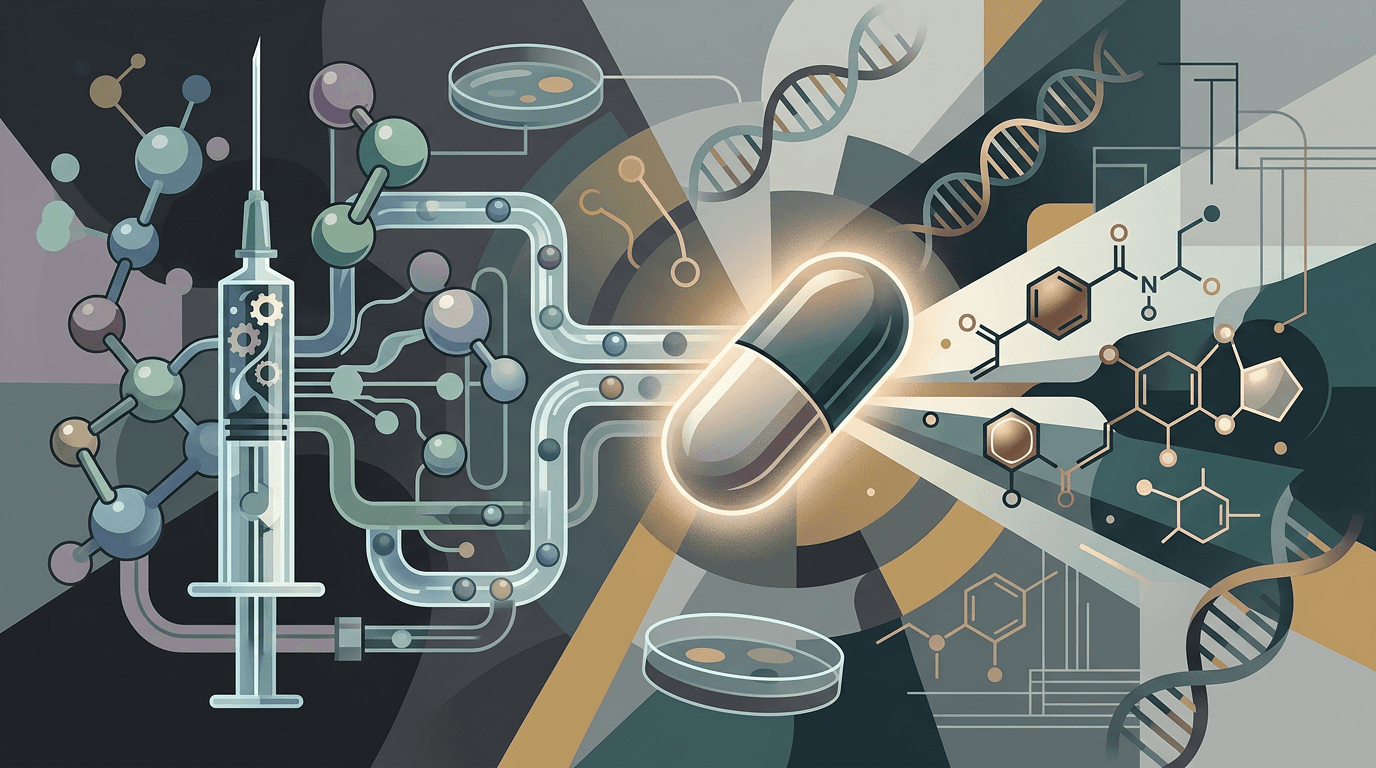
What Foundayo lacks in raw potency compared to injectables, it makes up for in sheer simplicity. It's a tablet you take once a day, any time of day, with or without food or water. No refrigeration. No injection training. No specialty pharmacy hoops.
Compare that to the existing injectable ritual: find a pharmacy that has it in stock, learn proper injection technique, rotate injection sites, store it in the fridge. For patients who travel frequently, have needle phobia, or simply don't want to deal with the hassle, a pill is transformational.
Patients start at 0.8 mg daily and gradually ramp up over several months. The dose escalates through a series of steps (2.5 mg, 5.5 mg, 9 mg, 14.5 mg, up to 17.2 mg), with each level lasting at least 30 days. It's a slow climb designed to minimize the GI side effects that plague every drug in this class.
Speaking of which: the side effects are what you'd expect. Nausea, constipation, diarrhea, and vomiting were the most common complaints, though they tended to be mild and faded over time. Discontinuation rates due to adverse events ran between 5.3% and 10.3% across doses, which is notably higher than placebo. The label also carries warnings for pancreatitis, acute kidney injury, and gallbladder disease, consistent with other GLP-1 drugs.
Lilly priced Foundayo at $149 per month for self-pay customers through LillyDirect, with home delivery included. Patients with commercial insurance can start at just $25 per month. In a market where injectable GLP-1s carry list prices exceeding $1,000 monthly without insurance, that's a dramatic shift.
The pricing isn't just competitive; it's strategic. Lilly knows that cost is the single biggest barrier to GLP-1 adoption. More than half of adults who have ever taken these drugs report difficulty affording them, according to KFF research, and nearly a quarter describe it as "very difficult." By undercutting the traditional price point, Lilly is betting that volume will more than compensate for margin.
Analysts seem to agree. Projections peg Foundayo at $1.7 billion in U.S. sales for 2026 alone, with peak revenue estimates reaching a staggering $36 billion. If that number sounds absurd, consider that Lilly's existing GLP-1 franchise (Mounjaro and Zepbound) already generated $36.5 billion in 2025, accounting for 56% of the company's total revenue.
Foundayo doesn't enter an empty battlefield. Novo Nordisk received FDA approval for its own oral semaglutide for obesity (essentially a pill version of Wegovy) in late December 2025, launching it in early January 2026 and giving it roughly a three-month head start. Novo's pill delivers about 13.6% average weight loss, slightly edging out Foundayo's numbers, though the two have never been tested head-to-head in an obesity trial.
But Foundayo has a structural advantage. It's a small molecule, not a peptide. That distinction matters more than it sounds. Peptide-based oral drugs (like Novo's) are notoriously finicky; they're fragile, hard to absorb, and often require strict dosing conditions. Small molecules are generally easier to manufacture at scale, more stable, and simpler to take. Foundayo's "anytime, any way" dosing reflects that advantage.
Lilly also came prepared with $1.5 billion in stockpiled supply and major investments in manufacturing capacity. After the painful GLP-1 shortages of 2024 and 2025, Lilly clearly learned its lesson: don't launch a blockbuster you can't deliver.
The oral GLP-1 market is projected to explode in the coming years, fueled by the simple reality that most people would rather swallow a pill than inject themselves.
Lilly isn't stopping with obesity, either. Orforglipron is being studied for type 2 diabetes, sleep apnea, and hypertension, among other conditions. The company has filed for approval in more than 40 countries.
Meanwhile, the pipeline behind both Lilly and Novo is filling fast. Structure Therapeutics, Viking Therapeutics, and several Chinese biotech firms are racing to join the party.
But for now, the story is straightforward. The biggest barrier between hundreds of millions of people and effective obesity treatment just got a little lower. Not because of a scientific breakthrough in how GLP-1 drugs work, but because of a change in how patients take them.
Sometimes the most important innovation isn't the molecule. It's the delivery.
Eli Lilly and Biogen dropped nearly $14 billion in acquisitions on the same day, sending the biotech index soaring 7%. It might be just the beginning of a record-breaking M&A year.