CRISPR Therapeutics just showed that a single IV infusion can slash cholesterol and triglycerides for at least a year by permanently editing a gene in liver cells. The one-year Phase 1a data for CTX310 are stunning, but the jump from 15 patients to the real world is where things get interesting.
Imagine Never Taking a Cholesterol Pill Again
You wake up. You skip the pill bottle on the nightstand. You do that every morning for the rest of your life, because a single IV infusion years ago rewrote the gene responsible for your sky-high cholesterol. That's the pitch behind CTX310, and new data from CRISPR Therapeutics suggests it might actually work.
Presented at the European Society of Cardiology Congress in 2026, the one-year results from a Phase 1a trial showed that a single dose of CTX310 cut LDL cholesterol by up to 84% and triglycerides by up to 78% in the patients who got the highest dose. Those numbers held steady through twelve months of follow-up, with no treatment-related serious side effects.
Let that sink in for a second. One infusion. One year later. Still working.
How You Edit a Gene to Fix Cholesterol
CTX310 targets a gene called ANGPTL3, which acts like a brake pedal on your body's fat-clearing machinery. Normally, enzymes called lipases break down triglycerides and LDL in your blood. ANGPTL3 slows those enzymes down. People born with naturally broken copies of this gene tend to have remarkably low cholesterol and fewer heart attacks. CRISPR Therapeutics is essentially trying to give everyone that genetic advantage.
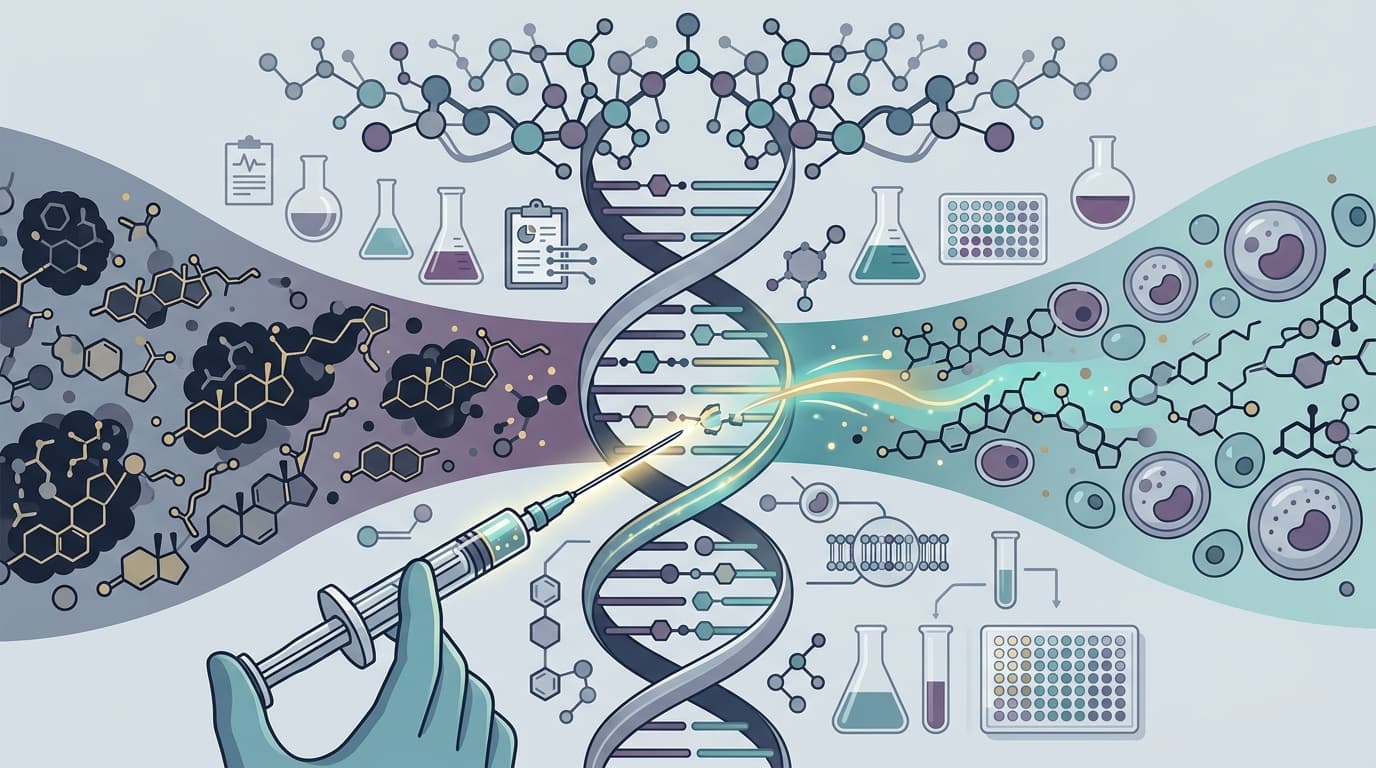
The therapy packages two molecular tools (Cas9 mRNA and a guide RNA) inside a tiny fat bubble called a lipid nanoparticle, or LNP. Think of it like a biological FedEx package addressed to your liver. Once the nanoparticle arrives at liver cells, the CRISPR machinery cuts the ANGPTL3 gene. The cell's own repair system patches it back together imperfectly, creating a permanent "loss-of-function" edit that dials down ANGPTL3 production.
One delivery. Permanent rewrite. No refills.
The Numbers Behind the Hype
The Phase 1a trial enrolled patients with stubborn lipid problems, including people with familial hypercholesterolemia (inherited high cholesterol) and severe hypertriglyceridemia. Most were already on statins or other lipid-lowering drugs. CTX310 was given as a single IV infusion at doses ranging from of lean body weight.
Get tomorrow's biotech intelligence before your competitors.
Join thousands of biotech professionals who start their day with our free, daily briefing.
0.1 to 0.8 mg/kg
At the highest dose, the mean reduction in ANGPTL3 protein was 79%, with some patients seeing drops as steep as 89%. Triglycerides fell an average of 48%, while LDL cholesterol dropped a mean of 53%. All of these effects persisted through one full year of follow-up.
To put that in perspective, Regeneron's evinacumab (brand name Evkeeza), the only approved ANGPTL3-targeting drug, lowers LDL by about 50% in its core patient population. But evinacumab requires repeated infusions every four weeks. CTX310 aims to match or beat that efficacy with a single shot.
Safety: The Part That Actually Matters
Gene editing is permanent. That's the feature and the risk. You can't un-edit a gene, so the safety bar is extraordinarily high.
So far, the data is reassuring. Among the 15 participants in the published dataset, there were no dose-limiting toxicities and no treatment-related serious adverse events. Three patients experienced infusion-related reactions, and one had a temporary bump in liver enzymes that resolved within two weeks. CRISPR's updated report at ESC confirmed no Grade 3 or higher liver enzyme elevations across the study.
One sobering note: a participant who received the lowest dose died suddenly 179 days after treatment. Investigators did not attribute this to CTX310, but with only 15 patients in the study, every serious event gets scrutinized. The trial is designed for up to 90 participants, which should provide a much clearer safety picture.
The Competitive Race to Edit Heart Disease Away
CRISPR Therapeutics isn't alone in this space. Verve Therapeutics is pursuing a similar concept but targeting a different gene: PCSK9, the same protein that drugs like Repatha and Praluent were built around. Verve uses base editing, a more precise cousin of CRISPR that changes a single DNA letter rather than cutting the strand entirely.
Verve's program has shown promise; its VERVE-102 candidate produced dose-dependent LDL reductions in a Phase 1 study published in the New England Journal of Medicine. But Verve also learned a hard lesson when its earlier candidate, VERVE-101, hit safety bumps (liver enzyme spikes and low platelet counts) that forced it to pause enrollment and pivot to a next-generation approach.
That cautionary tale matters for CTX310, too. Gene editing for cardiovascular disease is still in its infancy, and early-phase safety signals can reshape entire programs overnight.
Wall Street Liked It, Then Shrugged
Analyst reactions to the ESC data were broadly positive. Citizens reiterated a Market Outperform rating with an $80 price target, calling CTX310 an important near-term catalyst. Morgan Stanley was the skeptic in the room, maintaining an equalweight rating at $60, arguing that much of the upside is already baked into the stock.
The broader analyst consensus sits at a Buy rating across 13 analysts, with an average price target around $73. Interestingly, CRSP shares actually traded lower on the day of the presentation, a classic "buy the rumor, sell the news" dynamic that biotech investors know all too well.
The Billion-Dollar Question
Can a single infusion truly replace a lifetime of cholesterol pills? The biology says maybe. The early data says possibly. But we've seen this movie before in biotech: spectacular Phase 1 results that don't survive the jump to larger, controlled trials.
What CTX310 needs next is a bigger patient pool, longer follow-up, and eventually a randomized trial with hard cardiovascular outcomes (think heart attacks and strokes, not just lipid levels on a lab report). The estimated enrollment of 90 patients in this Phase 1a trial will help, but the real test is still years away.
Still, the concept is undeniably compelling. We already accept that some people are genetically lucky when it comes to cholesterol. CRISPR Therapeutics is betting it can manufacture that luck in a single afternoon at an infusion center. If it works, "take your statins" might one day sound as outdated as "take your insulin" would to a cured diabetic.
That's a big if. But it's the kind of if that keeps this field interesting.
4 min read
The Heart Drug That Just Crashed a Party It Wasn't Invited To
Cytokinetics' aficamten just proved it works in non-obstructive HCM, a condition affecting hundreds of thousands of patients with zero approved targeted therapies. The ACACIA-HCM trial hit both primary endpoints, and the NEJM published the data the same day it was presented at ESC 2026.