Novartis Keeps Betting on the Same Tiny Molecule Trick
Novartis just signed its second collaboration with Orionis Biosciences, a $1.4 billion bet on molecular glue degraders that could crack open the 80% of disease targets traditional drugs can't reach. It's the latest in a protein degradation spending spree that now totals over $10 billion in potential milestones.
Most drugs work like a key in a lock. They slide into a protein's active site and block it from doing its job. It's elegant, it's proven, and it covers maybe 20% of the proteins that cause disease.
The other 80%? They don't have a good keyhole. The industry calls them "undruggable," which is really just a polite way of saying "we haven't figured it out yet."
Novartis thinks it has, and it just doubled down on the idea. The Swiss pharma giant signed a second collaboration with Orionis Biosciences, a clinical-stage biotech out of Boston and Ghent, Belgium. The deal is worth up to $1.4 billion in milestones and royalties, with $40 million heading to Orionis upfront. The focus: molecular glue degraders, a class of tiny molecules that could unlock targets conventional drugs can't touch.
Superglue for Proteins (Sort Of)
To understand why Novartis keeps writing checks for this stuff, you need to understand what molecular glues actually do.
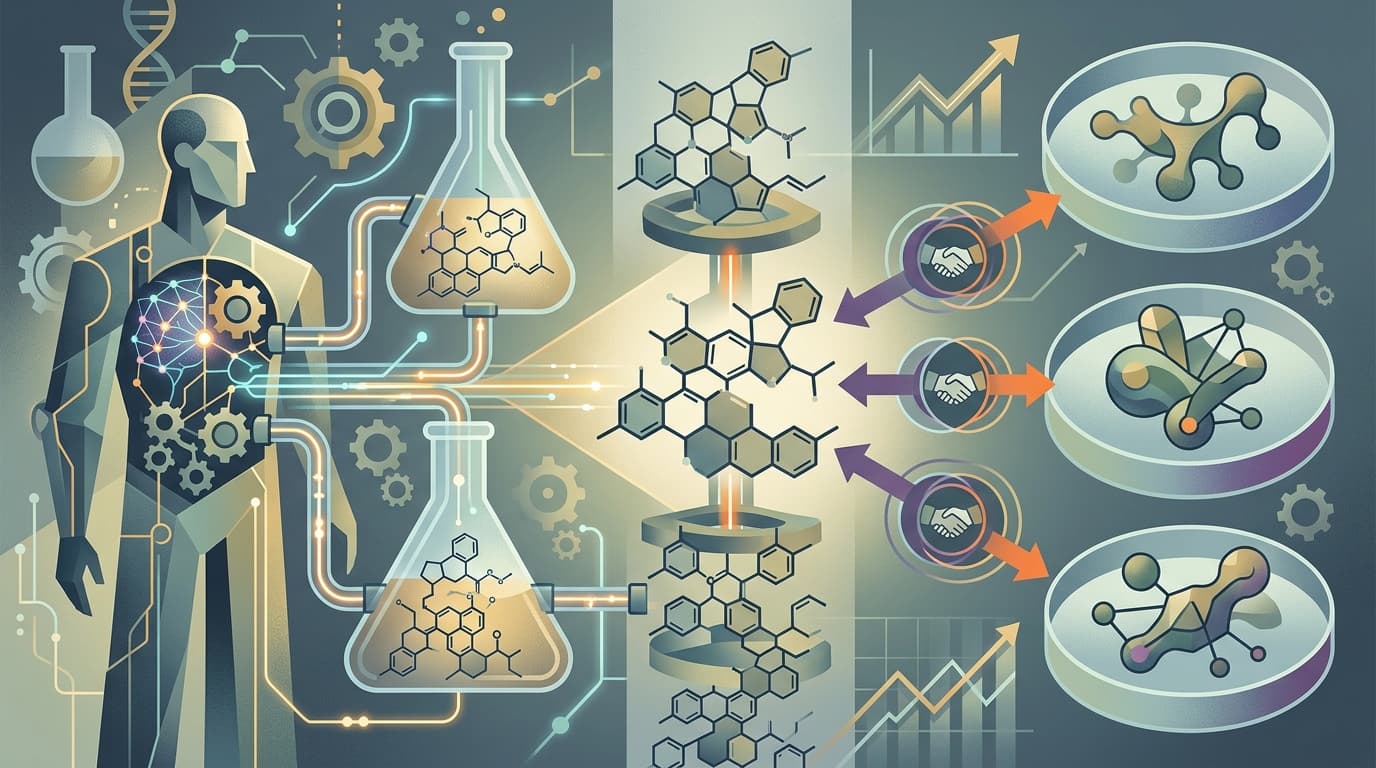
Picture two people at a party who would never talk to each other: a disease-causing protein and your cell's trash disposal system (called an E3 ligase). A molecular glue is like a mutual friend who grabs both of them, pushes them together, and forces an introduction. Once they're stuck in conversation, the trash system tags the disease protein for destruction. The cell chews it up and spits it out.
The beauty is simplicity. Unlike PROTACs (their bulkier cousins, which are essentially molecular dumbbells connecting two binding elements), molecular glues are small, single molecules. That makes them easier to turn into pills and potentially easier to get into tricky tissues like the brain.
The problem? For decades, scientists mostly found molecular glues by accident. The famous ones, like lenalidomide (a blockbuster blood cancer drug), were discovered before anyone even understood why they worked. Designing new glues on purpose has been one of biotech's hardest puzzles.
Orionis claims to have cracked that puzzle, and Novartis seems to agree.
Get tomorrow's biotech intelligence before your competitors.
Join thousands of biotech professionals who start their day with our free, daily briefing.
The Platform That Caught Novartis's Eye
Orionis isn't just pitching one drug. It's pitching a machine for finding drugs.
The company's Allo-Glue™ platform takes a slightly different approach than most glue hunters. Instead of screening millions of molecules and hoping one sticks, Orionis designs glues that allosterically reprogram proteins. In plain English: the glue binds to one spot on a protein, which changes the protein's shape, which then creates a brand-new surface for the trash disposal system to grab onto.
Think of it like bending a coat hanger into a hook. The hanger itself hasn't changed material; it's just been reshaped so it can hang on something it couldn't before.
Orionis pairs this chemistry with an AI-driven discovery engine that profiles which trash-disposal proteins (ligases) can be "wired" to which disease targets. The goal is to turn glue discovery from art into engineering.
The 2026 deal gives Novartis access to this engine across multiple disease areas and challenging targets. Specific targets haven't been disclosed, but the companies have pointed toward oncology, rare diseases, and other areas with high unmet need.
A Relationship Six Years in the Making
This isn't a first date. It's more like moving in together.
Novartis and Orionis first linked up in March 2020, when Orionis literally came out of stealth mode by announcing a four-year research pact with the pharma giant. That original deal included research funding, a convertible note investment from Novartis, and milestone-based economics (exact numbers were never disclosed).
The fact that Novartis came back for round two tells you something important. Big pharma companies walk away from collaborations all the time when early results disappoint. Expanding the relationship, and attaching a $1.4 billion potential price tag to it, signals that whatever Orionis showed Novartis behind closed doors was compelling enough to bet bigger.
The structure itself is classic pharma risk management. That $40 million upfront is modest by industry standards; the real money is heavily backloaded into research, development, and commercial milestones. Translation: Novartis pays the big bucks only if the science works. If it doesn't, Orionis keeps the upfront cash and Novartis walks away without a catastrophic write-down.
Novartis Is Building a Glue Empire
Zoom out, and this Orionis deal is just one tile in a much larger mosaic. Novartis has been on a molecular glue shopping spree that's unprecedented in the industry.
Consider the receipts:
Novartis licensed Monte Rosa's MRT-6160, a molecular glue targeting a protein called VAV1 for autoimmune diseases, in a deal worth $150 million upfront and up to $2.1 billion in total milestones. That program is already heading into multiple Phase 2 studies, making it one of the most advanced non-cancer glue programs in existence.
Novartis then signed a second, broader collaboration with Monte Rosa Therapeutics for a cereblon glue platform deal worth $120 million upfront and up to $5.7 billion in total milestones. That deal gave Novartis access to Monte Rosa's QuEEN™ discovery engine for finding glues that degrade immune-related targets.
And there's more. Novartis partnered with Dunad Therapeutics back in 2021 for covalent degraders (up to $1.3 billion in milestones) and struck a deal with Arvinas in 2024 for an oral androgen receptor degrader in prostate cancer, worth $150 million upfront and up to $1.01 billion in milestones.
Add it all up, and Novartis has committed to north of $10 billion in potential milestone payments across its protein degradation partnerships. No other pharma company comes close to that level of conviction in this space.
Why Glues? Why Now?
The timing isn't random. Several forces are converging to make molecular glues one of the hottest modalities in drug development.
First, the technology finally caught up to the ambition. AI-driven discovery, structural biology, and chemoproteomics (tools that let scientists see exactly which proteins a molecule touches inside a cell) have made rational glue design possible for the first time. Companies like Monte Rosa, Orionis, Neomorph, and Ambagon have built platforms specifically to exploit this window.
Second, big pharma is running out of easy targets. The low-hanging fruit in drug discovery has mostly been picked. The proteins left on the table are the hard ones: scaffolding proteins with no enzymatic pocket, transcription factors, protein-protein interactions. Molecular glues offer a way to reach them.
Third, the competitive landscape is heating up fast. Gilead signed a CDK2 molecular glue option deal with Kymera in June 2025. Novo Nordisk partnered with Neomorph. Takeda teamed up with Degron Therapeutics. Genentech (Roche's subsidiary) has its own collaboration with Orionis from 2023. Analysts estimate there are now 65-plus molecular glue or glue-like drugs in development across 50-plus companies. The field went from niche curiosity to strategic priority in about three years.
The Risks Nobody's Ignoring
For all the excitement, molecular glues still have a lot to prove.
The clinical track record for rationally designed glues is thin. Most approved glue drugs (lenalidomide, pomalidomide) belong to the older IMiD class and were discovered, not designed. The new wave of purpose-built glues is still mostly in preclinical or early Phase 1 testing. Seed Therapeutics' RBM39 degrader just got its IND cleared in August 2025 with a Phase 1 start planned for 2026.
Off-target effects remain a concern. When you're forcing two proteins together that nature never intended to meet, unintended consequences are a real possibility. Selectivity (making sure your glue only grabs the right target) is technically demanding and still being refined across the field.
And then there's the economics. That $40 million upfront for Orionis is relatively small for a deal headlined at $1.4 billion. The gap between those two numbers represents a mountain of scientific and clinical risk that has to be climbed before anyone sees the big payouts. Most backloaded biotech deals never pay out their full milestone value; they're designed to look impressive in press releases while keeping the pharma partner's downside manageable.
What It All Means
Novartis isn't just buying drugs. It's buying a thesis: that the future of medicine belongs to molecules that can destroy disease-causing proteins, not just block them. The Orionis deal, stacked on top of Monte Rosa, Arvinas, and Dunad, makes Novartis the most aggressive big pharma player in the protein degradation space by a wide margin.
For Orionis, a company that launched with a modest €5 million seed round and raised $55 million in Series B financing (with Novartis and Cormorant Asset Management as backers), this deal provides the kind of validation and funding that can transform a platform biotech into a pipeline powerhouse.
The molecular glue gold rush is officially on. Whether these tiny molecules can deliver on their enormous promise is still an open question, but Novartis is betting billions that the answer is yes. And in biotech, when the biggest players start placing bets this large, the rest of the industry tends to follow.
Clinical & Regulatory
5 min read
Big Pharma Is Spending $300 Billion to Avoid a Single Tax
The Trump administration threatened 100% tariffs on imported branded drugs. Pharma's response? Over $300 billion in pledged U.S. manufacturing investments, a wave of direct-to-consumer sales channels, and the biggest reshoring scramble the industry has ever seen.