Big Pharma Is Spending $300 Billion to Avoid a Single Tax
The Trump administration threatened 100% tariffs on imported branded drugs. Pharma's response? Over $300 billion in pledged U.S. manufacturing investments, a wave of direct-to-consumer sales channels, and the biggest reshoring scramble the industry has ever seen.
Imagine someone told you they'd double your rent on July 31 unless you renovated your entire house. You'd probably start calling contractors. That's essentially what just happened to the global pharmaceutical industry.
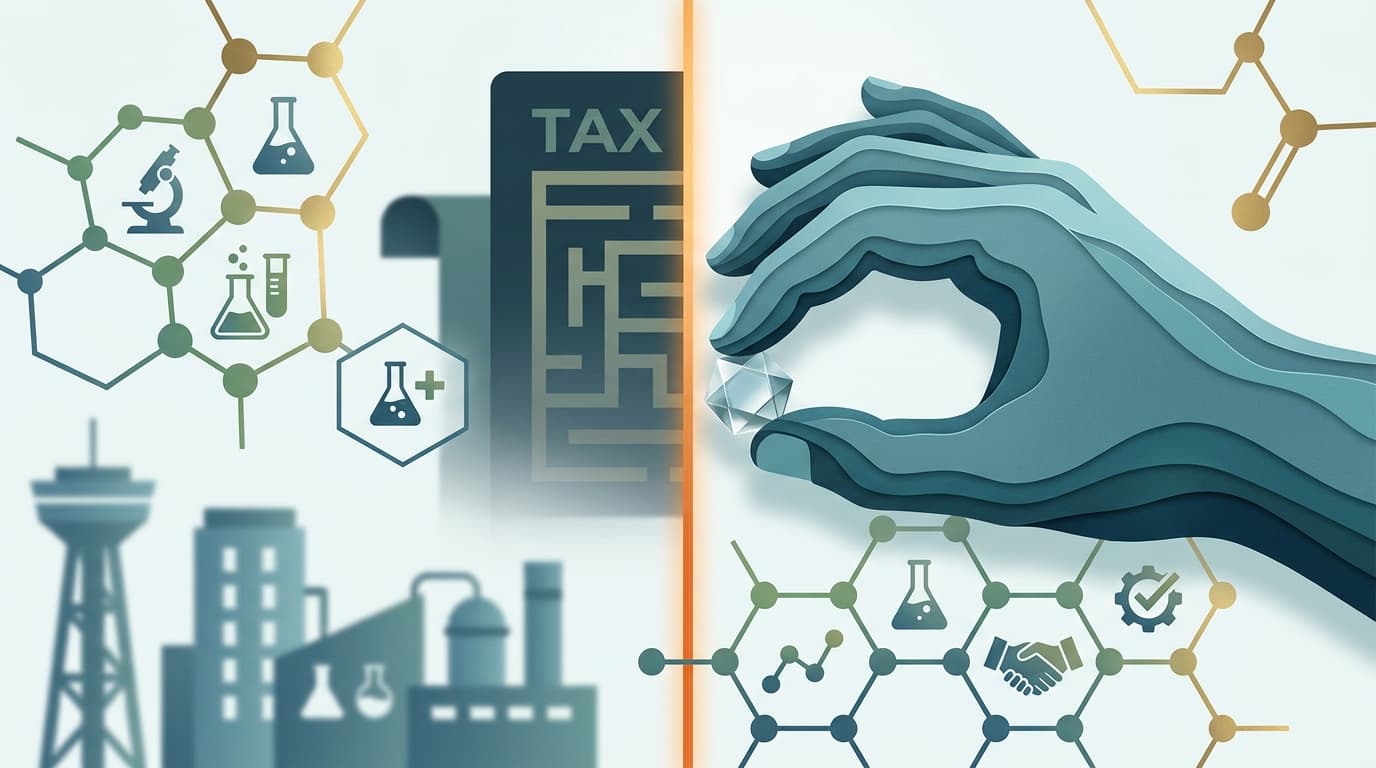
The Trump administration's April 2 proclamation dropped a bombshell: tariffs on certain imported patented drugs, with tiered rates, country-specific carve-outs, and extensive exemptions, effective as soon as July 31 for the biggest companies. The result? A reshoring frenzy unlike anything the sector has ever seen, with more than $300 billion in pledged U.S. manufacturing investments from the world's largest drugmakers. It's the most expensive game of "Mother, May I" in corporate history.
The Carrot, the Stick, and the Fine Print
The tariff structure isn't a blunt instrument. It's a choose-your-own-adventure with three paths.
Path one: Sign a most-favored-nation (MFN) pricing deal with HHS (basically, charge Americans no more than you charge other rich countries) and commit to building U.S. factories. Your reward? A 0% tariff through January 2029. Gold star.
Path two: Build U.S. plants but skip the pricing deal. You start at a 20% tariff, which escalates to the full 100% by April 2030. Not ideal, but survivable.
Path three: Do nothing. Pay 100%. Good luck explaining that to shareholders.
There are also special rates for allied countries. The EU, Japan, South Korea, and Switzerland got a 15% rate through negotiated agreements. The UK landed somewhere around 10%. Everyone else faces the full freight unless their manufacturers cut individual deals.
One crucial detail: generics and biosimilars are exempt, at least for now. The administration said it would reassess that carve-out in a year, which is the policy equivalent of "we'll see."
Get tomorrow's biotech intelligence before your competitors.
Join thousands of biotech professionals who start their day with our free, daily briefing.
The numbers being thrown around are staggering. European pharma companies alone have pledged roughly $170 billion in U.S. investments. When you add American and other global players, the total crosses $350 billion by some estimates.
Let's walk through the headliners.
Pfizer cut the most straightforward deal: lower Medicaid prices to match what it charges in other developed nations, invest $70 billion in U.S. R&D and manufacturing, and receive a three-year tariff exemption. Clean trade.
Eli Lilly is going full construction mode with $27 billion earmarked for four new mega-sites. A $5 billion facility in Virginia leads the pack, followed by a $3.5 billion complex in Pennsylvania and a $3 billion expansion in Wisconsin. Lilly isn't hedging; it's all in.
Johnson & Johnson committed $55 billion over four years, a 25% jump over its previous four-year spending. New plants in North Carolina are part of that build-out. AstraZeneca pledged $50 billion, anchored by a $4 billion drug-substance facility in Virginia, its largest single manufacturing investment anywhere on the planet.
Roche doubled its planned North Carolina spending to $2 billion. Novartis is building six to seven new plants across North Carolina, Texas, Florida, and California as part of a $23 billion U.S. plan. GSK committed $30 billion over five years. Even Gilead, not exactly known for manufacturing drama, pledged $32 billion through 2030.
Why This Is Harder Than It Sounds
Building a drug factory isn't like opening a Costco. Pharmaceutical manufacturing facilities take years to construct, validate, and get FDA-approved. You can't just flip a switch and start pumping out biologics in Alabama.
And the underlying dependency problem runs deep. About 80% of active pharmaceutical ingredients used in U.S. medications are manufactured overseas. India alone fills roughly half of all U.S. generic prescriptions. But about 70 to 75% of India's API imports come from China, though imports themselves account for only about one-third of India's total API requirement, creating a supply chain with deep interdependencies.
For key starting materials (the chemical building blocks that go into APIs), China controls an estimated 60 to 80% of global supply. In some categories, like penicillin intermediates, that number hits 90%. Even companies that "reshore" final drug production may still depend on Chinese raw materials for years to come.
The Price You Pay (Literally)
The tariff threat isn't just reshuffling factory maps. It's reshaping how drugs reach patients.
Several companies are launching direct-to-consumer sales channels, partly to comply with the administration's TrumpRx.gov portal and partly because cutting out pharmacy benefit managers (PBMs, the middlemen who negotiate drug prices) can actually improve margins even at lower sticker prices.
Novo Nordisk is now selling Ozempic directly to cash-paying patients for $499 per month through its own pharmacy and GoodRx. It's also working with telehealth companies like Hims & Hers and Ro to sell Wegovy directly. Through TrumpRx, some patients could see prices drop to around $350 per month.
Roche is in active talks with the government about direct-to-consumer sales but hasn't announced specific terms yet. Pfizer is participating in TrumpRx with what it calls a "significant discount" to list prices. The playbook is clear: lower the price patients see, skip the middlemen, keep the margin math working.
What Wall Street Thinks
Analysts are surprisingly chill. BMO Capital Markets called the tariff threat mostly "headline risk" for companies already building in the U.S. Jefferies went further, calling it a potential "win for Pharma" among firms with existing domestic footprints.
Not everyone is relaxed. Bernstein estimated tariffs could add about $46 billion in costs across the industry, with margin impacts varying significantly by company size—less than 50 basis points for large-cap pharma, but potentially exceeding 200 basis points for smaller and mid-cap names. Asian drugmakers without significant U.S. manufacturing saw their shares drop on the announcement, a reminder that this policy has clear winners and losers.
For generics, the picture is bleaker. Brookings warned that tariffs on already razor-thin margins could lead to product discontinuations or quality cuts, potentially worsening drug shortages in fragile markets like injectables.
The Bigger Picture
What's unfolding is the most aggressive industrial policy move in pharmaceutical history, framed not as healthcare reform but as national security under the same legal authority used for steel and aluminum tariffs.
The bet is straightforward: use the threat of punishing import costs to force the world's most profitable industry to relocate manufacturing to American soil, accept lower U.S. prices, and sell directly to patients. Whether it works depends on questions that won't be answered for years. Can companies actually build enough capacity fast enough? Will generics survive the squeeze? And what happens when the 0% tariff window closes in January 2029?
For now, the construction crews are mobilizing from Virginia to North Carolina to Wisconsin. Pharma just wrote the biggest check in its history. The question is whether the house they're building will be worth what they paid.
Clinical & Regulatory
5 min read
Hackers Hit the World's Biggest Pharma Company. Then They Got Greedy.
A hacking group claims it stole over a terabyte of Novo Nordisk's most sensitive data, including AI models, drug formulas, and clinical trial records, then demanded $25 million. The company refused to pay. Now the data is hitting the dark web.