
Novartis treated 30 cancer patients with its NKG2D-targeting drug QEQ278. Not a single tumor shrank. With similar programs from Nkarta and Astellas also crashing, an entire immunotherapy pathway might be headed for the graveyard.
Imagine inviting 30 people to a party and not a single one shows up. That's essentially what happened to Novartis's QEQ278 program, except the party was a clinical trial, the guests were tumor responses, and the no-show was absolute.
Zero objective responses out of 30 patients. Not one tumor shrank. Twenty-six of those patients saw their cancer get worse while on the drug. Novartis pulled the plug, and honestly, the only surprising thing is that it took this long.
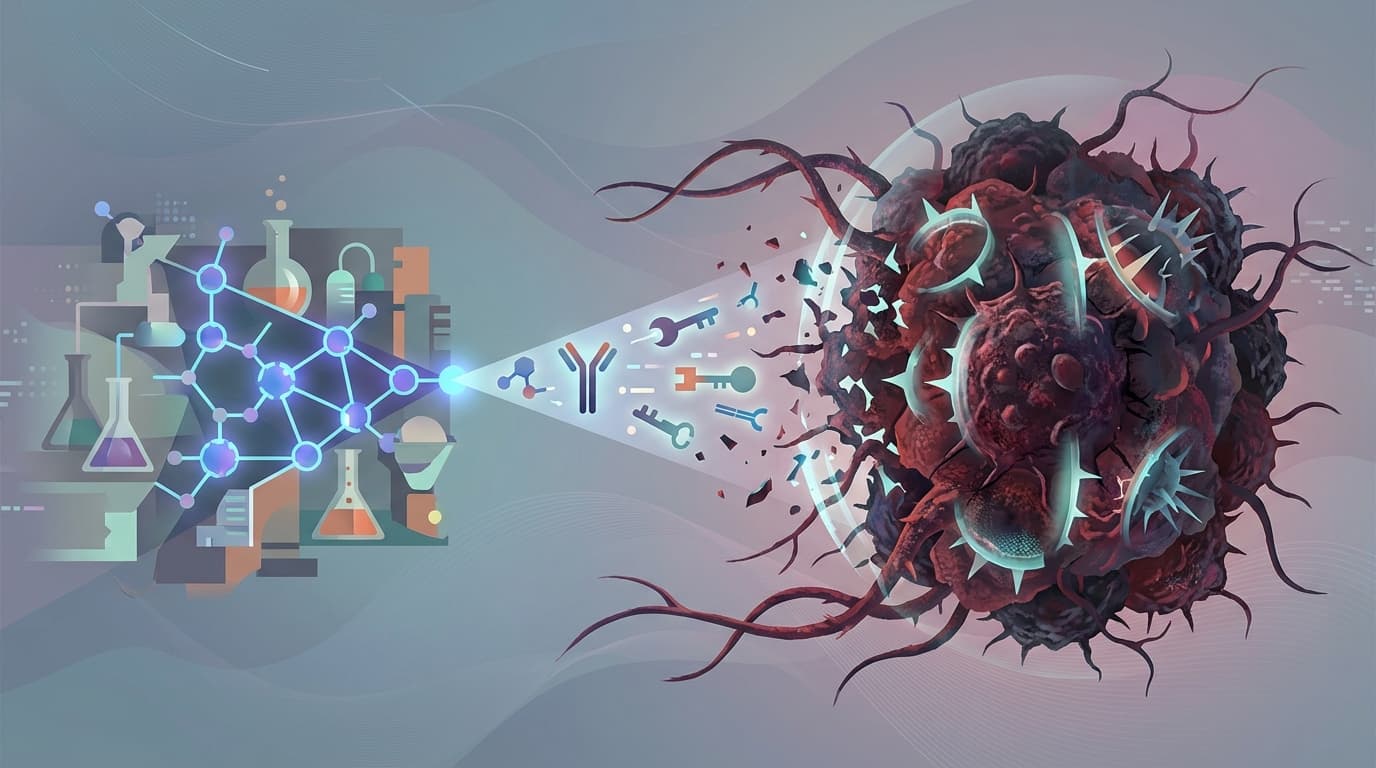
To understand why QEQ278 failed, you need to understand the trick tumors play. Cancer cells are stressed, and when cells are stressed, they display little molecular distress signals called NKG2D ligands on their surface. Think of them like flares: they're supposed to attract your immune system's natural killer (NK) cells to come destroy the threat.
But tumors are sneaky. They figured out how to shed those flares into the bloodstream, essentially tossing them away from the tumor surface. Without the flares attached to the cancer cells, NK cells cruise right past. The tumor becomes invisible.
QEQ278 was designed to block this shedding and flag tumor-bound ligands so NK cells could finally spot them. On paper, it was elegant. In patients, it was useless.
The Phase 1 trial enrolled patients with advanced non-small cell lung cancer, esophageal cancer, kidney cancer, and HPV-related head and neck cancer. These were people who had already exhausted standard treatments. They were running out of options, and QEQ278 was supposed to be a new one.
It wasn't. Not a single patient experienced tumor shrinkage. Nearly 87% of patients discontinued because their cancer kept progressing despite treatment. The drug was safe enough (adverse events weren't alarming) but a safe drug that doesn't work is just an expensive placebo.
Novartis made the call to halt the program back in 2024 after reviewing the early data. The trial status was recently updated after the last participant finished, making the failure official in the public record.

RTW Investments just agreed to hand Candel Therapeutics $100 million to launch a cancer-killing virus, but only if the FDA approves it first. The deal's clever structure and the Phase 3 data behind it could be a blueprint for small biotechs everywhere.


Join thousands of biotech professionals who start their day with our free, daily briefing.

If QEQ278 were the only NKG2D program to crash, you might chalk it up to bad luck or imperfect drug design. But it's not alone. Nkarta and Astellas both tried targeting the NKG2D pathway in solid tumors and hit the same wall. Astellas terminated an early CAR-T candidate using NKG2D in January 2025.
This is starting to look less like individual failures and more like the pathway itself is a dead end for solid tumors. It's the biotech equivalent of three different people trying to open the same door and all finding it locked.
The scientific challenges are real and stacking up. Tumors don't just shed their NKG2D ligands; they also create an immunosuppressive microenvironment that exhausts any immune cells that do manage to show up. It's like trying to fight a battle in quicksand. Your soldiers arrive tired, outnumbered, and sinking.
On top of that, NKG2D ligands aren't exclusive to tumors. They also appear on healthy intestinal cells, raising toxicity concerns for any therapy that gets aggressive enough to actually work.
QEQ278 wasn't the only program Novartis sent to the chopping block. The company cut six Phase 1 oncology programs total, including candidates for prostate cancer, lung cancer, blood cancers, and other solid tumors. The full list of casualties: AAA802, MGY825, KFA115, HRO761, DFV890, and PIT565.
But this isn't a retreat from oncology. Novartis simultaneously added two new Phase 1 programs: AMO959, a DNA repair inhibitor for prostate cancer, and GCJ904, a solid tumor candidate with an undisclosed mechanism. The overall clinical pipeline holds steady at roughly 99 projects.
The message from Novartis is clear: kill what isn't working fast and redeploy the resources. CEO Vas Narasimhan has emphasized pursuing the "highest value medicines," and the company is projecting 5–6% sales growth through 2030 with over 30 potential high-value pipeline assets.
Not entirely, but the big pharma crowd has largely left the building. The programs still active are mostly run by smaller biotechs and academic centers, think scrappy underdogs rather than pharmaceutical giants.
Several Phase 1 trials are still running. There's a CAR-NK/CAR-T combination study targeting liver metastases in colorectal cancer patients. There's a pediatric sarcoma trial using allogeneic memory NKG2D-CAR T cells. A few others are testing multi-targeted constructs that combine NKG2D with other receptors, hoping that hitting tumors from multiple angles will succeed where single-target approaches have flopped.
These next-generation approaches are incorporating tricks to overcome the known obstacles: better co-stimulatory domains for T-cell persistence, chemokine receptors to improve immune cell trafficking into tumors, and armored CAR designs that resist the immunosuppressive microenvironment.
Will any of them crack the code? Maybe. But the graveyard of NKG2D programs suggests that solid tumors have figured out how to neutralize this line of attack with ruthless efficiency.
Phase 1 trials fail all the time; that's literally what early-stage drug development looks like. But zero responses in 30 patients is a particularly brutal outcome. It's not "the drug showed modest activity but not enough." It's "the drug showed nothing."
Novartis deserves credit for cutting cleanly rather than running a larger trial hoping the numbers would somehow improve. In pharma, the most expensive mistake isn't a failed Phase 1. It's a failed Phase 1 you refuse to accept, pouring hundreds of millions into Phase 2 and Phase 3 trials chasing a signal that was never there.
The NKG2D story is a reminder that elegant biology doesn't guarantee good medicine. Sometimes the human body, and the tumors inside it, are just better at the game than we are. At least for now.
Roche's oral breast cancer drug giredestrant just got its FDA date, and its secret weapon isn't the drug itself. It's the combination strategy that cut disease progression by 62% in the patients who need it most.