Novartis Just Paid $1.1 Billion for a Drug That Doesn't Exist Yet
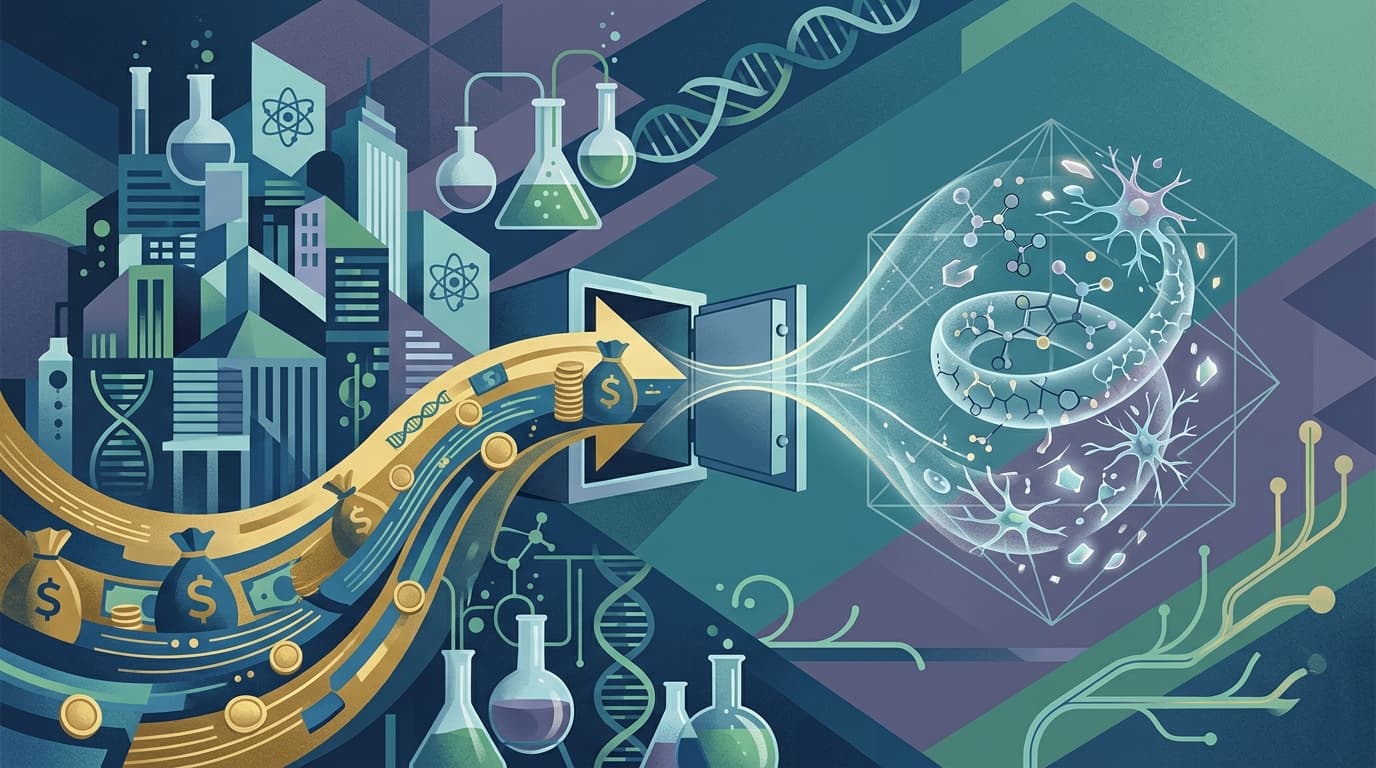
Novartis dropped $1.1 billion upfront on a UK biotech whose lead drugs have never been tested in humans. The bet: a completely new class of ADC payload that could rewrite the rules of cancer treatment, or become pharma's most expensive preclinical flameout.
A Billion Dollars for a Preclinical Bet
Most biotech acquisitions follow a familiar script. Big pharma buys a company with late-stage data, a clear regulatory path, and maybe even some revenue. Novartis just tore up that script.
The Swiss pharma giant agreed to acquire UK-based Myricx Bio for $1.1 billion in cash upfront, with another $400 million in potential milestone payments. Total deal value: up to $1.5 billion. The catch? Myricx's lead programs haven't even entered the clinic yet. No Phase 1. No human data. Just a novel technology platform and some very impressive mouse studies.
Stefan Schneider, an analyst at Vontobel, called it "surprising" that Novartis is targeting assets at such an early stage for this kind of money. He's not wrong to raise an eyebrow. But Novartis isn't buying a drug. It's buying a new kind of weapon.
The Payload Problem
To understand why Novartis wrote this check, you need to understand antibody-drug conjugates, or ADCs. Think of them as guided missiles for cancer. You take an antibody (the GPS system that finds the tumor) and attach a toxic payload (the warhead that kills it). The antibody delivers the poison directly to cancer cells, sparing healthy tissue.
ADCs are the hottest category in oncology right now. Pfizer spent $43 billion on Seagen to get its hands on ADC technology. Gilead paid $3.15 billion upfront for Tubulis in April 2026. Bristol Myers Squibb shelled out $800 million upfront for rights to a single SystImmune ADC asset. The global ADC market hit roughly $15 billion in 2025 and is projected to nearly double by 2035.
But there's a problem hiding inside all that excitement. Most ADCs use similar types of toxic payloads: chemicals that damage DNA or disrupt cell division. They work, but tumors can develop resistance to them. And the side effects can be brutal, because those payloads don't always stay where they're supposed to.
Novartis knows this firsthand. The company previously tried an ADC called HKT288, which targeted a protein called CDH6. It caused neurological side effects in patients and showed no clear benefit. The program was killed. That failure pushed Novartis toward radioligand therapies (a different kind of targeted cancer treatment) and away from ADCs for years.
Get tomorrow's biotech intelligence before your competitors.
Join thousands of biotech professionals who start their day with our free, daily briefing.
So what changed?
A Totally Different Kind of Warhead
Myricx Bio isn't building a better version of existing ADC payloads. It's building a completely new class.
The company's platform uses N-myristoyltransferase inhibitors (NMTi) as the toxic payload. That's a mouthful, so here's the plain English version: NMT is an enzyme that cancer cells need to keep their survival machinery running. It attaches a fatty molecule to key proteins, which allows those proteins to find the right spot inside the cell and do their jobs. Block NMT, and dozens of critical cancer proteins lose their footing simultaneously. It's like pulling the rug out from under a whole room full of bad guys at once.
What makes this mechanism especially appealing is its breadth. NMT inhibition doesn't just disrupt one signaling pathway. It scrambles several at the same time: growth signals, energy recycling, stress responses. Cancer cells that have learned to dodge conventional ADC payloads may have no defense against this kind of attack.
Myricx's preclinical data backs up the theory. Its B7-H3-targeted ADC produced complete, durable tumor regressions in aggressive prostate cancer models, including ones that didn't respond to standard ADC payloads. Its HER2-targeted ADC (called MYX2449) outperformed trastuzumab deruxtecan, the current gold-standard HER2 ADC, in a gastric cancer model. And tolerability looked clean in both mice and monkeys, with no significant body weight loss at high doses.
Those are animal results, not human results. That distinction matters enormously. But the signal was strong enough to get Novartis' attention.
Novartis Rewrites Its Oncology Playbook
For years, Novartis CEO Vas Narasimhan positioned the company as the anti-ADC pharma. At JPM 2024, he argued that ADCs carry "substantial toxicities" and that radioligand therapies could deliver better efficacy with fewer side effects. The company built Pluvicto and Lutathera into a dominant radiopharmaceutical franchise while rivals poured billions into ADC deals.
Now Novartis is doing both.
Urban Fritsche at ZKB noted that the Myricx deal fits Novartis' stated goal of diversifying its oncology technologies through acquisitions, and suggested more deals like this could follow. The logic is straightforward: if you can't beat the ADC wave, ride it, but ride it with something nobody else has.
The Myricx acquisition gives Novartis two lead ADC programs (targeting B7-H3 and HER2 in solid tumors) plus a platform that could be extended to many more targets. If the NMTi payload class works in the clinic, Novartis won't just have a couple of drugs. It'll have a factory for building next-generation ADCs across a wide range of cancers.
That platform logic is exactly why the price tag, steep as it looks, isn't crazy. Gilead paid roughly $5 billion total for Tubulis' payload-linker platform. Johnson & Johnson acquired Firefly Bio in 2026 for its degrader-antibody conjugate technology. The market has made its verdict clear: owning a differentiated ADC platform is worth billions, even before human data exists.
The Risk Nobody's Ignoring
Let's not sugarcoat it. Paying $1.1 billion upfront for preclinical assets is a high-wire act. Myricx raised about $114 million in its 2024 Series A. Two years later, Novartis is paying nearly ten times that amount before a single patient has been dosed.
The deal's closing is expected in the second half of 2026, subject to standard regulatory approvals. Once it closes, the clock starts. Novartis needs to move these programs into the clinic, generate human safety and efficacy data, and prove that NMT inhibition works as well in patients as it does in mice. Plenty of drugs that looked spectacular in animals have flopped in people.
But Novartis has a track record of making big, early bets that pay off. It acquired Endocyte in 2018 for its radioligand technology before the category was proven. That bet became Pluvicto, now a multi-billion-dollar product.
The Bigger Picture
The ADC arms race isn't slowing down. Average deal sizes in the space nearly doubled from 2024 to 2025, and every major oncology player is scrambling to lock down next-generation technology.
Novartis spent years watching from the sidelines. With Myricx, it's not just joining the race; it's betting that the next generation of ADC payloads will look nothing like the current one. If it's right, $1.5 billion will look like a bargain. If it's wrong, it'll be the most expensive mouse study in pharma history.
Either way, the ADC gold rush just got a lot more interesting.
5 min read
Sarepta's Worst Week: Two Deaths, a Black Box, and 500 Pink Slips
Sarepta's Duchenne gene therapy Elevidys just got the FDA's most severe safety warning after fatal liver failures, while the company slashes 36% of its workforce and pivots away from gene therapy entirely. It's a brutal week that raises big questions about the future of the entire field.