The NIH Director Quoted a Dead Scientist. Scientists Aren't Having It.
NIH Director Jay Bhattacharya quoted the father of American science funding at CPAC to defend the Trump administration's research overhaul. Scientists say he got the history exactly backward, and the real-world numbers back them up.
A History Lesson That Backfired
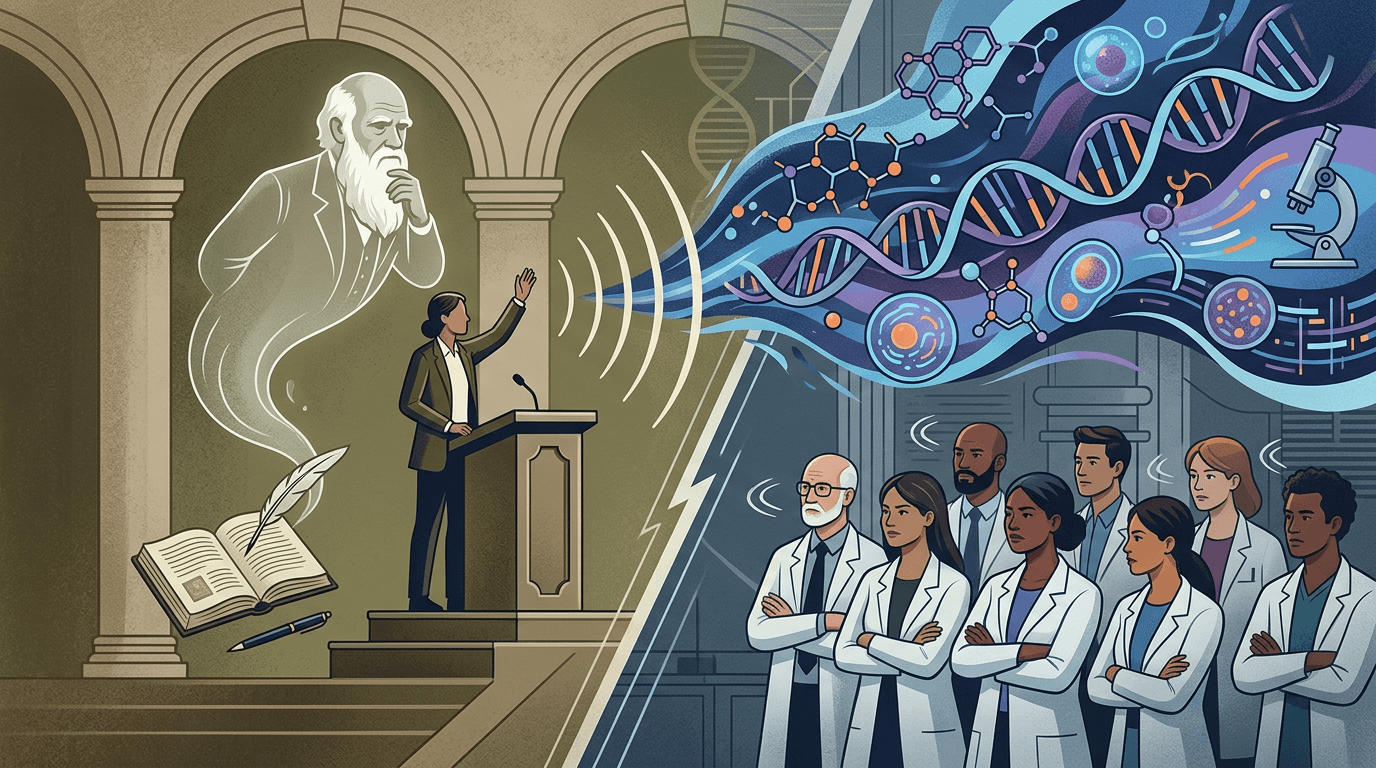
Imagine quoting Abraham Lincoln at a rally to justify burning down a library. That's roughly how parts of the scientific community felt when NIH Director Jay Bhattacharya took the stage at CPAC on March 28, invoked the legacy of Vannevar Bush, and used it to defend an agenda that many researchers say is tearing the U.S. research enterprise apart.
Bush, for the uninitiated, was the architect of America's entire modern science funding system. His 1945 report, Science, the Endless Frontier, convinced the federal government to pour money into university research, fund curiosity-driven science, and trust researchers to chase ideas without political interference. That vision eventually gave us the National Science Foundation, turbocharged the National Institutes of Health, and turned the U.S. into the world's undisputed biotech superpower.
Bhattacharya told the CPAC crowd that Bush "warned that the scientific progress in the United States was becoming unevenly distributed" and that "too much research capacity was concentrated in a small number of institutions." He framed the Trump administration's NIH overhaul as a continuation of Bush's mission: spreading research dollars more broadly, breaking up elite institutional monopolies, and making America healthy again.
The audience loved it. Scientists did not.
What Bush Actually Said (and Why It Matters)
Bush's report did call for expanding scientific opportunity across the country. That part checks out. But the core of his argument was something else entirely: the federal government should fund basic research generously and let scientists decide where the money goes. Peer review, not politics, should allocate dollars. Curiosity, not ideology, should drive discovery.
That's a pretty awkward foundation for an administration that has terminated thousands of grants, slashed international research collaborations, and let 15 of NIH's 27 institutes operate without permanent directors.
It's a bit like quoting Julia Child to defend a ban on butter.
Get tomorrow's biotech intelligence before your competitors.
Join thousands of biotech professionals who start their day with our free, daily briefing.
The gap between Bhattacharya's CPAC rhetoric and his agency's reality is wide enough to park a clinical trial in. Since taking office in March 2025 (confirmed 53-47 along party lines), he has presided over a cascade of disruptions that look nothing like Bush's vision of robust federal support.
Over $12 billion in grants and contracts have been terminated. The cuts targeted research on COVID-19, health disparities, climate change, and workforce diversity. Subawards to international institutions were eliminated entirely, severing collaborations that took decades to build.
The White House initially proposed slashing NIH's budget by roughly 40%, from about $47 billion to under $28 billion. Congress ultimately rejected that number and approved a modest increase to $47.2 billion for FY2026, preserving $1.5 billion for ARPA-H (the government's moonshot biomedical research agency). But the damage from 2025's grant freezes and cancellations hasn't been undone.
For early-career researchers, the math is devastating.
"It's No Longer Tony Fauci's NIH"
That line from the CPAC speech drew boos for Fauci and cheers for Bhattacharya. It also neatly captures the philosophical divide at the heart of this fight.
Bhattacharya, a Stanford physician and health economist, rose to prominence during COVID as a co-author of the Great Barrington Declaration, which advocated letting the virus spread among low-risk populations while shielding the vulnerable. Former NIH Director Francis Collins called its authors "fringe epidemiologists" and sought a "devastating takedown," while Fauci called the approach "flawed both conceptually and in practice." That history colors everything about his tenure.
NIH staff have pushed back with their own document: the Bethesda Declaration (a pointed nod to the Great Barrington Declaration), calling on Bhattacharya to reverse his major policy moves. Virologist Angela Rasmussen called him "a self-interested extremist who gives cover to anti-vaxxers." Keith Yamamoto, a biochemist and former president of the American Association for the Advancement of Science, said Bhattacharya's pandemic record should have been "disqualifying."
Not everyone is hostile. Economist Bruce Weinberg has noted that some of Bhattacharya's pandemic critiques, like questioning prolonged school closures, have gained wider acceptance. Even Collins has acknowledged some of those concerns. But qualified support and full-throated endorsement are very different things.
The China Card
Bhattacharya also played the geopolitical hand at CPAC, warning of a "Sputnik moment" as China ramps up its biotech capabilities. He urged American research standards rooted in "openness, scientific integrity, and respect for human dignity."
He's not wrong about the competition. The National Security Commission on Emerging Biotechnology, a bipartisan congressional body, has recommended $15 billion over five years to keep the U.S. ahead in biotech. Their warnings about China's aggressive investments in biomanufacturing and defense biotech are serious.
But critics see an obvious contradiction: you can't sound the alarm about falling behind China while simultaneously gutting the research engine that keeps you ahead. NIH is the largest single public funder of biomedical research in the world. Cutting that pipeline while invoking national security is like draining the gas tank and then wondering why the car won't start.
Why Biotech Should Pay Attention
This isn't just an academic food fight. The NIH funding ecosystem is the bedrock of the entire U.S. biotech industry. University labs funded by federal grants produce the early-stage discoveries that biotech companies license, develop, and eventually turn into drugs. When grants freeze, pipelines dry up; not next quarter, but five to ten years from now, when the science that should have been funded today would have been ready for clinical trials.
Bhattacharya has pushed for market-based competition in grant funding, drug repurposing for chronic diseases like cancer and diabetes, and faster translation of research into health outcomes. Those aren't inherently bad ideas. Some researchers even welcome the focus on getting discoveries out of labs and into patients faster.
The problem is context. Restructuring how you allocate money is one thing. Doing it while the agency's advisory committees are disbanded, leadership positions sit empty, and billions in grants have been vaporized is something else entirely. It's like remodeling your kitchen while the house is on fire.
The Bigger Picture
Vannevar Bush wrote Science, the Endless Frontier at a moment when the U.S. government had just seen what happened when you invested aggressively in science: radar, penicillin, the atomic bomb. His argument was simple. Keep investing, keep trusting researchers, and the frontier never ends.
Eighty-one years later, his name is being invoked to justify a very different approach. Whether that approach strengthens or undermines American science will take years to fully measure. But the scientists who build on that frontier every day are making their opinion clear right now.
Clinical & Regulatory4 min read
From $100M IPO to Liquidation in Five Years
IO Biotech went from a $100M IPO and "most innovative biotech" honors to total Chapter 7 liquidation in five years, all because its cancer vaccine trial missed statistical significance by the thinnest of margins. It's the most brutal cautionary tale in immuno-oncology right now.